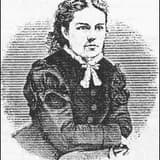
Oliver brought the first test case on women's ordination before the Methodist Episcopal Church General Conference in 1880.
In 1880, Anna Oliver brought forward a pivotal test case on the ordination of women before the Methodist Episcopal Church General Conference, one of the most consequential ecclesiastical bodies governing American Methodism. Having already earned her Bachelor of Divinity degree in 1876, Oliver sought the next logical step: formal ordination and full clergy rights equal to her male counterparts.
Her case forced the General Conference to directly confront the question of whether women could be ordained as ministers—a question that many church leaders had previously avoided or dismissed outright. Though the conference ultimately declined to grant her ordination, her challenge was historically significant as one of the earliest formal, documented efforts to compel a major American denomination to reckon with gender exclusion in its clergy.
Oliver's advocacy placed her within a broader wave of nineteenth-century women reformers who used institutional and legal mechanisms to advance women's rights, paralleling contemporaneous efforts in suffrage and professional licensure. Her test case is frequently cited by historians of Methodism and women's religious history as a foundational moment that kept the ordination question alive within the denomination, eventually contributing to incremental changes that would unfold over subsequent decades, culminating in full clergy rights for women in the Methodist Church in the twentieth century.
Though she did not live to see full ordination rights granted to women in her denomination, her courage in bringing this case is remembered as an act of significant barrier-breaking activism.