← All women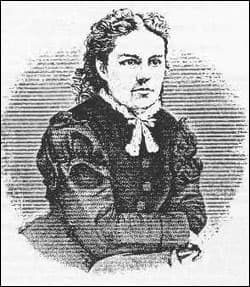
American · Activism · Science
Anna Oliver
April 12, 1840 – November 21, 1892
Early life and background
Anna Oliver was born Vivianna Olivia Snowden on 12 April 1840, near New Brunswick, New Jersey, in the United States.[1] She later adopted the professional name Anna Oliver, under which she became known in church and public life.[1] Her family background placed her within the world of American Methodism, a denomination that emphasized personal holiness, lay preaching, and social reform, but that nonetheless maintained strong restrictions on women’s formal authority in church governance and ordained ministry during the nineteenth century.
Details of her parents, siblings, and early schooling are sparse in surviving records, but biographical accounts agree that she was raised in a devout Methodist context and was exposed early to preaching and revival traditions that encouraged lay testimony and public religious expression.[1] Within this environment, women frequently led prayer meetings, organized charitable work, and spoke in informal religious gatherings. Such practices provided a model for Oliver’s later vocation, demonstrating that women’s spiritual leadership could be both powerful and widely accepted at the grassroots level even when formal ecclesiastical structures excluded them.
As a young woman, Oliver felt a call to preach and to pursue theological study at a time when very few institutions would admit women to formal ministerial training. Her vocational aspirations developed amid broader nineteenth-century movements for women’s rights and education in the United States. Campaigns for women’s higher education, property rights, and suffrage helped create the ideological space in which a woman might imagine herself as a trained theologian and potential minister. Oliver’s decision to seek advanced religious education thus reflected both personal conviction and the growing influence of these reform currents.
Education and formation for ministry
Oliver’s most significant educational step came when she enrolled at the Boston University School of Theology, the principal theological seminary of the Methodist Episcopal Church in New England.[1] At the time, it was highly unusual for a woman to be admitted to a professional degree program in theology. Many seminaries either refused women altogether or allowed them to attend selected lectures without the possibility of earning a degree. Boston University’s willingness to admit Oliver represented a limited but crucial breach in those barriers.
In 1876, Oliver completed the program and received the degree of Bachelor of Divinity (B.D.), which was then the standard professional credential for Protestant ministers in the United States.[1][gcah] According to institutional and denominational histories, she thereby became the first woman in the United States to receive a theology degree and the first woman to graduate from a Methodist seminary.[1][gcah] This achievement required not only intellectual ability but also sustained persistence in a male-dominated environment in which many faculty and students believed that women did not belong in professional ministerial training.
Oliver’s theological education exposed her to biblical studies, church history, pastoral theology, and homiletics, equipping her with the same intellectual tools that her male colleagues carried into ordained ministry. The Boston University alumni office and the United Methodist General Commission on Archives and History emphasize that her graduation in 1876 marked a turning point, demonstrating that a woman could complete the full seminary curriculum and meet the academic standards traditionally associated with the clergy.[gcah] That the Methodist Episcopal Church still refused to ordain women underscores the disjunction between educational opportunity and ecclesiastical recognition in this era.
Career beginnings and local ministry
Even prior to and during her theological studies, Oliver was active as a preacher within the Methodist Episcopal Church, serving in roles that were open to women but fell short of full ordination. Nineteenth-century Methodism relied heavily on women as class leaders, exhorters, and organizers of mission and social work. These roles provided a platform for Oliver to develop her preaching skills and to gain recognition for her abilities.
Following her graduation in 1876, Oliver continued to work within the church as a preacher and pastor-like figure, although she did so without the full sacramental and institutional authority accorded to ordained clergy.[1][gcah] Accounts of her ministry emphasize that she was effective in the pulpit and in pastoral care, and that she attracted congregational support. Her success in local ministry served as an implicit argument that the church’s policies were out of alignment with the demonstrated gifts and preparation of at least some women in its ranks.
At the same time, Oliver participated in broader currents of women’s rights activism, aligning herself with efforts to expand women’s access to education, church leadership, and public influence. Her preaching frequently addressed not only personal salvation but also issues of justice and the moral responsibilities of Christian institutions. In doing so, she stood in continuity with earlier Methodist women preachers and reformers, while pressing further toward formal recognition of women’s equality in the church.
Major accomplishments and barrier‑breaking initiatives
Oliver’s first landmark accomplishment, widely recognized by historians of Methodism and women’s religious history, was her 1876 graduation from Boston University School of Theology with the Bachelor of Divinity degree.[1][gcah] This made her the first woman in the United States to earn a formal theology degree and the first woman graduate of a Methodist seminary. Her success challenged the pervasive assumption that theological scholarship and professional ministerial preparation were inherently male domains.
Her second major accomplishment involved a direct challenge to denominational policy on women’s ordination. In 1880, Oliver’s situation was brought as a test case before the General Conference of the Methodist Episcopal Church, the denomination’s highest law‑making body.[gcah] The question placed before the conference was whether a woman who had completed the regular seminary course and demonstrated ministerial competence could be admitted to full ordination and membership in the annual conference. This was the first such formal test case on women’s ordination in the Methodist Episcopal Church.
Although the General Conference decided against ordaining women, the case was historically significant. It ensured that the issue of women’s ordination had to be addressed openly and officially at the highest level of Methodist governance, rather than being dismissed as a local irregularity or private grievance. By putting her own vocational aspirations forward as the focus of this challenge, Oliver helped to create a documented precedent that later advocates for women’s ordination could cite as evidence that the question had been long and seriously contested.
These accomplishments are closely linked: Oliver’s theological degree in 1876 provided the basis for arguing that any continued refusal to ordain her rested not on questions of competence or training but on gender alone. By 1880, when her case reached General Conference, she embodied a combination of academic preparation, preaching experience, and denominational commitment that made the exclusion of women from ordination increasingly difficult to defend on theological or practical grounds.
Advocacy, writings, and public voice
While specific titles of Oliver’s sermons and any published writings are not widely documented in surviving sources, biographical accounts describe her as an articulate advocate for women’s rights within the church and as a preacher whose messages engaged both spiritual and social themes.[1][gcah] In an era when women’s voices were often confined to private or domestic settings, Oliver’s presence in the pulpit—and her insistence on the legitimacy of that presence—carried a powerful symbolic message.
Her advocacy took several forms. She preached regularly in Methodist congregations that accepted her leadership, thereby normalizing the image of a woman proclaiming the gospel and offering pastoral guidance. She also participated in denominational debates, directly or through allies, on the theological and legal dimensions of women’s ordination. The 1880 General Conference case, though unsuccessful in the immediate term, represents the most visible institutional manifestation of that advocacy.
Oliver’s efforts intersected with the broader women’s movement of the late nineteenth century, which included campaigns for temperance, suffrage, and educational equality. Methodist women were active in organizations such as the Woman’s Christian Temperance Union and various missionary societies, all of which provided spaces where women could exercise administrative and speaking gifts. Oliver’s insistence on ordination extended these arguments into the core structures of ecclesiastical power, pressing for recognition not only of women’s worthiness but also of their right to hold offices historically reserved for men.
Awards, honors, and contemporary recognition
During her lifetime, Oliver did not receive the kind of formal ecclesiastical honors that might have accompanied her achievements had she been male. The Methodist Episcopal Church’s refusal to ordain women effectively limited the official recognition it could bestow on her as a ministerial leader. Nevertheless, her graduation from the Boston University School of Theology in 1876 was itself a form of institutional acknowledgment, signaling that the seminary considered her fully qualified by its academic standards.[1][gcah]
Subsequent historical recognition has focused on her status as a pioneer. The Boston University alumni office commemorates her as a notable figure in the institution’s history, emphasizing that she was the first woman in the United States to receive a theology degree and the first woman to graduate from a Methodist seminary.[bu] The United Methodist General Commission on Archives and History similarly highlights her as a key figure in the denomination’s journey toward accepting women’s ordination.[gcah]
In the late twentieth and early twenty‑first centuries, scholars of women’s religious history have increasingly cited Oliver in discussions of early women seminarians and the long struggle for women’s ordination in American Protestantism. While these forms of recognition are largely retrospective, they underscore the enduring significance of her contributions, even though they were not fully honored in her own time.
Personal life
Surviving biographical sources focus primarily on Oliver’s public vocation and her conflict with Methodist institutional structures; they provide very limited information about her private life. There is no well‑documented evidence in major historical accounts that she married or had children. The absence of such details in denominational and academic treatments suggests that her contemporaries and later historians primarily remembered her as a religious professional and activist rather than as a figure defined by domestic roles.
This silence also reflects the nature of nineteenth‑century record‑keeping, in which the lives of women were often documented only insofar as they intersected with male relatives or public controversy. In Oliver’s case, the controversy over her theological education and ordination prospects appears to have eclipsed other aspects of her personal story in the historical record. What can be said with confidence is that she devoted a substantial portion of her adult life to preaching, to theological study, and to pressing for institutional change within the Methodist Episcopal Church.[1][gcah]
Later life and death
Following the 1880 General Conference decision against the ordination of women, Oliver continued her ministry and remained a symbol of the unresolved tensions within Methodism over women’s roles. She had demonstrated that a woman could successfully complete seminary, preach effectively, and provide pastoral leadership, yet the denomination’s highest authority had declined to recognize such a woman as a fully ordained minister. This outcome placed Oliver, and others like her, in a liminal status: highly trained and active in ministry, but without the ecclesiastical authority that ordination conferred.
Oliver’s health and circumstances in the final decade of her life are less thoroughly documented, but the basic facts of her death are clear. She died on 21 November 1892 at the age of fifty‑two.[1] By that time, the Methodist Episcopal Church had not yet changed its stance on women’s ordination, and it would be decades before women achieved full clergy rights. Oliver thus did not live to see the institutional reforms for which she had struggled.
Her death nevertheless marked not an end but a transition in the movement for women’s religious equality. Later Methodist women who continued to press for ordination rights looked back on figures like Oliver as predecessors whose efforts had laid the groundwork for later victories. The documentation of her life and work, though incomplete, ensured that her role in this struggle would not be entirely forgotten.
Legacy and historical impact
Anna Oliver’s legacy lies primarily in two intertwined achievements: her role as the first woman in the United States to receive a theology degree and her part in bringing the first formal test case on women’s ordination before the General Conference of the Methodist Episcopal Church.[1][gcah] These milestones have made her a reference point in the historiography of women’s religious leadership, theological education, and ecclesiastical reform.
Her 1876 Bachelor of Divinity from Boston University School of Theology demonstrated that women could meet the intellectual and professional standards associated with the Protestant ministry. This achievement challenged the view, widely held in the nineteenth century, that women were naturally unsuited to rigorous theological study or to positions of doctrinal responsibility. In doing so, it contributed to a broader rethinking of women’s capabilities and roles within both church and society.
The 1880 General Conference case ensured that women’s ordination became a matter of official debate rather than a peripheral issue. By pressing the denomination’s highest legislative body to confront the question, Oliver helped to establish that the exclusion of women from ordained ministry was not a self‑evident norm but a policy that could be contested and would eventually have to be justified or abandoned. Later advances in Methodism, including the eventual ordination of women and their appointment to positions of episcopal leadership, can be seen as developments along a trajectory in which Oliver’s efforts were an early and essential stage.
Within the wider history of American religion, Oliver stands as part of a generation of women who expanded the boundaries of what was thinkable and possible for women in ecclesiastical contexts. Her life illustrates both the opportunities and limitations of the nineteenth century: she gained access to advanced education and significant ministerial responsibility, yet she was denied the formal recognition that would have fully validated her vocation. This tension has made her story particularly compelling for historians, theologians, and church leaders reflecting on the unfinished work of gender justice in religious institutions.
Today, Oliver is remembered in institutional histories of Boston University and in denominational archives of the United Methodist Church as a pioneering figure whose determination helped to open the way for subsequent generations of women ministers and theologians.[1][gcah] Her example continues to be cited in discussions about the importance of inclusive theological education and the need for ecclesiastical structures that fully recognize the gifts and callings of all believers, regardless of gender.
Dated achievements
4 indexed.
- Apr121840Science
Birth of Anna Oliver
Anna Oliver, born Vivianna Olivia Snowden, was born on April 12, 1840, in New York.
View details Anna Oliver - Wikipedia - Jan011876Science
First woman in the U.S. to receive a theology degree
Oliver received a Bachelor of Divinity from Boston University, becoming the first American woman with a theology degree.