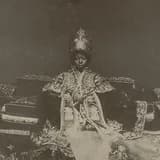
Empress Zewditu died on April 2, 1930, in Addis Ababa, reportedly from grief and illness following her husband's defeat, ending her 13-year reign.
Empress Zewditu died on April 2, 1930, in Addis Ababa, Ethiopia. Her death came shortly after her estranged husband, Ras Gugsa Welle, was killed in the Battle of Anchem while leading a rebellion against the modernizing regent Ras Tafari Makonnen. Historical accounts suggest that the emotional shock and grief following her husband's death, compounded by long-standing illness (reportedly diabetes), contributed to her sudden decline and death.
Her death marked the end of a thirteen-year reign characterized by an uneasy balance between her role as a traditionalist, deeply religious monarch and the modernizing ambitions of her regent and heir, Ras Tafari. Just two days after her death, Ras Tafari was proclaimed Emperor, taking the throne name Haile Selassie I, beginning a new and transformative era in Ethiopian history that would last until 1974.
Zewditu's passing closed a significant chapter in Ethiopian and African history. As the first reigning empress of Ethiopia and among the first female heads of state in Africa's modern history, her death represented not just a personal tragedy but a pivotal transition point, paving the way for one of the 20th century's most internationally recognized African monarchs. She was buried with full imperial and religious honors befitting her status within the Ethiopian Orthodox Church and Solomonic dynasty.