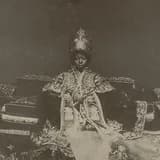
Zewditu was proclaimed Empress of Ethiopia on September 27, 1916, becoming the first woman to head an internationally recognized African state.
On September 27, 1916, following the deposition of Lij Iyasu—who had alienated the nobility and clergy through controversial policies and rumored conversion to Islam—Zewditu was proclaimed Empress of Ethiopia by a coalition of nobles, church leaders, and military commanders. This made her the first woman to rule as monarch of Ethiopia in her own right in the modern era, and one of the very few female heads of state anywhere in the world at that time.
Her ascension was a compromise between competing factions: the conservative nobility and clergy wanted a ruler committed to Ethiopian Orthodox tradition, while progressive elements pushed for modernization. As part of the arrangement, Zewditu's cousin Ras Tafari Makonnen (the future Emperor Haile Selassie I) was named Regent and heir apparent, effectively sharing power with her for the duration of her reign.
Zewditu's coronation was historically significant as it placed a woman at the pinnacle of one of Africa's oldest continuous monarchies, the Solomonic dynasty, which traced its lineage back over a thousand years. Despite holding the imperial title, her actual authority was constrained by the regency arrangement and the influence of Ras Tafari, whose modernizing agenda often conflicted with her more traditionalist, religiously conservative outlook. Nonetheless, her reign represented a crucial and unprecedented moment for women's visibility in African governance.