← All women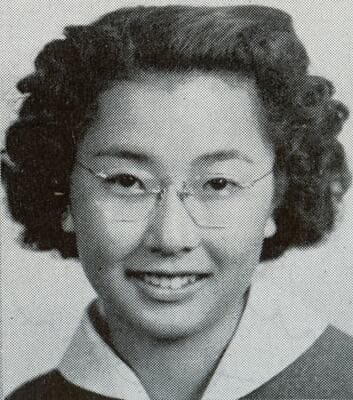
American · Activism · Politics · Law
Yuri Kochiyama
May 19, 1921 – June 4, 2014
Early Life and Background
Yuri Kochiyama was born Mary Yuriko Nakahara on May 19, 1921, in San Pedro, California, to Japanese immigrant parents. Her father, Seiichi Nakahara, ran a successful fish market and wholesale seafood business, giving the family a degree of financial stability and social standing within their community. Growing up in a predominantly white, middle-class neighborhood, Yuri was by her own later accounts a fairly conventional, assimilation-minded young woman: she was active in her church, played tennis, wrote for her school newspaper, and served in student government at San Pedro High School, from which she graduated in 1939. She went on to attend Compton Junior College, studying English and journalism, and showed no early signs of the radical political consciousness that would come to define her later life.
Everything changed on December 7, 1941, the day of the attack on Pearl Harbor. Because her father had regular contact with Japanese naval officers through his business (entertaining visiting dignitaries as a matter of commercial courtesy), he was immediately arrested by the FBI as a suspected spy, along with thousands of other Japanese immigrant community leaders across the West Coast. He was held for six weeks under harsh conditions and, gravely ill by the time of his release, died the day after returning home. Yuri Kochiyama later described this as the event that first "cracked open" her understanding of American racism and government injustice.
In the following months, the U.S. government issued Executive Order 9066, authorizing the forced removal and incarceration of over 120,000 Japanese Americans. Yuri and her family were first sent to the Santa Anita Assembly Center, a hastily converted racetrack, and then to the Jerome War Relocation Center in the swamps of Arkansas. It was in the camps that she first encountered organized racial discrimination directed explicitly at her community and began, tentatively, to question the assumptions of her earlier, more assimilated worldview. She also volunteered to write letters to Japanese American soldiers serving in the U.S. Army's segregated 442nd Infantry Regiment, corresponding with hundreds of servicemen — an activity that connected her to Bill Kochiyama, a soldier she would later marry.
Marriage, Move to New York, and Early Community Work
After the war, Yuri married Bill Kochiyama, a Japanese American veteran of the highly decorated 442nd Regimental Combat Team, in 1946. The couple settled first briefly on the West Coast before relocating to New York City in 1948, eventually raising six children together in the working-class, multiracial Harlem neighborhood of Manhattan. Living in Harlem exposed the Kochiyamas directly to the realities of Black urban life, housing discrimination, police brutality, and poverty, and it was here that Yuri's political transformation accelerated.
The Kochiyama household became known as an informal community hub — open to activists, students, and organizers of all backgrounds, hosting what became known as "Freedom Fighters" gatherings. Yuri immersed herself in local tenants' rights campaigns, school integration battles, and civil rights organizing throughout the 1950s and early 1960s, steadily deepening her ties to Harlem's Black activist community.
Alliance with Malcolm X and Black Liberation Politics
Kochiyama's activism reached a turning point through her involvement with the Harlem Parents Committee, an organization fighting for school integration, where she first crossed paths with Malcolm X in 1963. She was drawn to his message of Black self-determination, anti-imperialism, and internationalism, and the two developed a close political friendship. Kochiyama joined Malcolm X's Organization of Afro-American Unity as one of its few non-Black members, reflecting her deep commitment to cross-racial solidarity at a time when such alliances were rare and often viewed with suspicion by both Black and Asian American communities.
This relationship culminated tragically on February 21, 1965, when Kochiyama attended a rally at Harlem's Audubon Ballroom where Malcolm X was assassinated. She rushed to the stage as gunfire erupted and cradled his head in her lap in his final moments — an act captured in a now-famous photograph published in Life magazine. This image endures as one of the most poignant visual documents of the civil rights era and a lasting symbol of Afro-Asian political solidarity.
Expanding Activism: Political Prisoners, Redress, and International Solidarity
Following Malcolm X's death, Kochiyama's activism broadened considerably. She became a vocal advocate for political prisoners, supporting incarcerated Black Panthers, members of the Puerto Rican independence movement (including Puerto Rican nationalists convicted in the 1954 U.S. Capitol shooting), and other activists she believed were unjustly imprisoned by the state. She was a fixture at rallies, prison visits, and letter-writing campaigns, maintaining correspondence with numerous political prisoners over decades.
Kochiyama was also deeply involved in the Asian American Movement that emerged in the late 1960s and 1970s, helping to found or support organizations rooted in pan-Asian identity and solidarity with Third World liberation struggles, including opposition to the Vietnam War. She linked Asian American identity explicitly to global anti-imperialist and anti-colonial movements, rejecting narratives that framed Asian Americans as a "model minority" separate from the struggles of Black and Latino communities.
Simultaneously, Kochiyama became one of the most prominent grassroots voices in the Japanese American redress movement, which sought a formal government apology and reparations for the WWII incarceration. Drawing on her own family's traumatic experience, she organized alongside groups such as the National Coalition for Redress/Reparations. This decades-long campaign achieved a landmark victory with the passage of the Civil Liberties Act of 1988, signed by President Ronald Reagan on August 10, 1988, which formally apologized to Japanese American internees and provided reparations payments to survivors.
Later Life, Recognition, and Continued Activism
Kochiyama remained politically active well into her later decades, mentoring younger generations of activists, speaking at universities, and participating in causes ranging from opposition to the Gulf and Iraq wars to advocacy for Puerto Rican independence and Mumia Abu-Jamal's case. She authored an autobiography, Passing It On: A Memoir (2004), reflecting on her decades of activism and offering guidance to new organizers.
Her contributions were recognized with numerous honors over the years, including being named a "Woman of Achievement" by various civil rights and Asian American organizations, and she has been the subject of documentaries, academic studies, and curricula in ethnic studies programs nationwide. In 2016, Google commemorated what would have been her 95th birthday with a Google Doodle, introducing her legacy to a new generation.
After her husband Bill's death in 1993, Kochiyama eventually relocated from Harlem to Oakland, California, to be closer to her children, continuing her activism from the West Coast. She died in her sleep on June 4, 2014, in Berkeley, California, at the age of 93.
Legacy
Yuri Kochiyama's life stands as one of the most significant examples of sustained, cross-racial coalition-building in modern American history. She is remembered not only for her personal courage and decades of grassroots organizing but for fundamentally reshaping how Asian American identity is understood in relation to Black liberation, Puerto Rican independence, and global anti-imperialist movements. Her insistence that "freedom" for any oppressed community was linked to freedom for all continues to influence contemporary movements for racial and social justice, and she remains a foundational figure studied in Asian American Studies, ethnic studies, and civil rights history programs across the United States.
Dated achievements
4 indexed.
- May191921Science
Birth of Yuri Kochiyama in San Pedro, California
Mary Yuriko Nakahara was born in San Pedro, California, to Japanese immigrant parents, later becoming one of the most influential Asian American civil rights activists in U.S. history.
View details Yuri Kochiyama | Densho Encyclopedia - Feb211965Activism
Present at the assassination of Malcolm X
Kochiyama was in the Audubon Ballroom in Harlem and cradled Malcolm X's head as he lay dying after being shot, becoming a lasting symbol of Afro-Asian solidarity.