← All women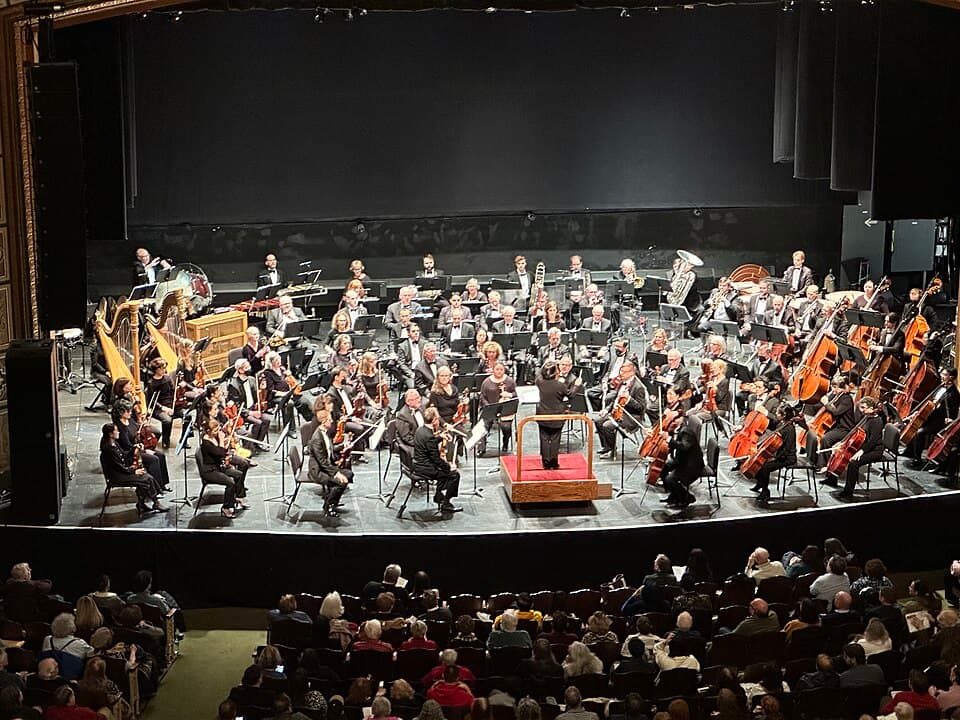
Chinese, American · Arts
Xian Zhang
1973 – present
Early Life and Background
Xian Zhang (Chinese: 张弦) is a Chinese-American conductor born in 1973 in Dandong, Liaoning Province, China.[1][4][5] Growing up just after the Cultural Revolution, she came of age in a period when Western classical music was only beginning to re-emerge in China’s public sphere.[5] As later commentators note, Western symphonic repertoire had been largely forbidden during the Cultural Revolution, so Zhang’s early exposure to orchestral music was both limited and precious.[5]
One formative influence widely cited in profiles of Zhang was a cassette tape of the Cincinnati Pops Orchestra, which she heard as a child.[7] This recording introduced her to the sound world of a Western orchestra and sparked a fascination that would shape her career. She subsequently studied at Beijing’s Central Conservatory of Music, the country’s leading music academy, where she earned both her Bachelor and Master of Music degrees in conducting.[3][6][9] At the Conservatory, she trained under established conductors, including female mentors, an experience that provided both technical grounding and an early model of women in leadership on the podium.[7]
After completing her graduate studies, Zhang joined the conducting faculty at the Central Conservatory for one year.[3][6] This early teaching position allowed her to refine her skills and engage with the next generation of Chinese musicians at a pivotal moment in the country’s cultural opening.
Career Beginnings and Development
Zhang’s professional debut came remarkably early. At the age of 20, she conducted a performance of Mozart’s Le nozze di Figaro (The Marriage of Figaro) at the Central Opera House in Beijing, leading the orchestra of the China National Opera.[3][4][6][9][12] This engagement established her as a promising young conductor in China’s burgeoning opera and orchestral scene, demonstrating her ability to handle major classical repertoire at an age when many conductors are still students.
In 1998, Zhang moved to the United States to continue her studies at the University of Cincinnati College-Conservatory of Music, where she pursued doctoral-level training in conducting.[3][4][9] Her relocation reflected both a desire to deepen her education and an ambition to build an international career. While in Cincinnati, she strengthened her connections with American orchestras, fulfilling the promise first inspired by her childhood exposure to the Cincinnati Pops recording.[7][9]
A major breakthrough came in 2002, when Zhang won first prize in the Maazel-Vilar Conductors’ Competition, an international contest organized by conductor Lorin Maazel to identify emerging talent.[2][10][13] That same year, she was appointed Assistant Conductor of the New York Philharmonic, one of the United States’ premier orchestras.[2][6][9][10][12][13] Her appointment at the Philharmonic marked a significant step for a young conductor from China navigating the highly competitive American orchestral world.
Within the New York Philharmonic, Zhang quickly advanced. She later became Associate Conductor and was named the first holder of the Arturo Toscanini Associate Conductor’s Chair, a role created to recognize and support the orchestra’s leading associate conductor.[2][3][6][9][10][12][13] During her years in New York, she regularly assisted and occasionally led the orchestra, gaining wide exposure and experience with core symphonic repertoire.
International Emergence and Major Appointments
Alongside her work in New York, Zhang began to build an international guest-conducting career. She conducted orchestras across Europe, Asia, and North America, including performances with the London Symphony Orchestra and the Royal Concertgebouw Orchestra in Amsterdam.[3][10][12] Her growing profile led to increasingly prominent invitations.
One frequently cited milestone in her European career occurred in 2008, when Zhang conducted the renowned Staatskapelle Dresden, one of Germany’s oldest and most prestigious orchestras, in its principal hall.[1][7][8] She was described as the first woman to conduct the Staatskapelle Dresden in that venue, a breakthrough that underscored the slow pace of gender change within top-tier German orchestras.[1][7][8]
Zhang’s most significant early leadership position came in 2009, when she was appointed Music Director of the Orchestra Sinfonica di Milano Giuseppe Verdi (La Verdi) in Milan.[1][3][8][10][12][13] This appointment made her the first woman to be music director of a major Italian symphony orchestra and, indeed, of any orchestra in Italy.[1][8] She took up the role at the start of the 2009–10 season and held it until 2016, after which she was named conductor emeritus.[3][8][10]
During her tenure in Milan, Zhang oversaw a broad range of programs, including standard symphonic works and contemporary music. She led tours and recordings that enhanced La Verdi’s international visibility and helped cement Milan’s reputation as a vibrant center for orchestral music beyond its famous opera house, La Scala.[3][8][10] Her leadership in Italy was widely noted as a milestone for women in European orchestral administration and artistry.
Breaking Barriers at the BBC and in the UK
Zhang’s career also brought her into close collaboration with British orchestras and the BBC. In 2015, the BBC announced that she would become Principal Guest Conductor of the BBC National Orchestra of Wales (BBC NOW).[1][6] On 1 December 2015, media coverage highlighted that this appointment made her the first woman to hold a titled conducting role with any BBC orchestra and the orchestra’s first female principal guest conductor.[1][6]
As principal guest conductor, Zhang led multiple programs each season and participated in BBC broadcasts and recordings, bringing her dynamic style and international perspective to audiences across the United Kingdom.[6][8] Her role at BBC NOW was part of a broader effort by the BBC to diversify its artistic leadership, and it was frequently cited as an example of the institution’s gradual progress toward gender equality in its orchestras.
In addition to her BBC work, Zhang has been a regular guest conductor with major British ensembles such as the London Symphony Orchestra.[6][10] Her appearances in the UK have included both staple repertoire and new works, reflecting her interest in engaging with contemporary composers and broadening the canon.
Leadership in the United States: New Jersey Symphony
In the mid-2010s, Zhang’s career reached a new level of prominence in the United States. In 2016, she was selected as Music Director of the New Jersey Symphony Orchestra (NJSO), becoming the orchestra’s first female music director.[1][3][6][9][13] September 2016 was widely reported as marking the beginning of a "new era" for the NJSO as she assumed the helm as its 14th music director.[9]
Under Zhang’s leadership, the NJSO has pursued innovative programming and outreach. She has championed works by contemporary composers, including commissioning pieces by figures such as Qigang Chen and new voices in orchestral music.[7] Her tenure has also seen the introduction of an annual Lunar New Year Celebration, reflecting her heritage and helping the orchestra connect with diverse communities in New Jersey.[7]
Zhang’s work with the NJSO has received critical acclaim, with reviewers noting her energetic podium presence, clear beat, and thoughtful interpretations. She has guided the orchestra through seasons that balance core repertoire with underrepresented works and has supported educational and community initiatives that extend the ensemble’s reach beyond the concert hall.[6][9]
Seattle Symphony and West Coast Historic First
In the mid-2020s, Zhang’s leadership expanded to the American West Coast. She was appointed Music Director of the Seattle Symphony, with her tenure scheduled to begin in the 2025–26 season.[1][9][13] In September 2025, she made her historic debut as music director, becoming the first woman to serve as music director of a major West Coast orchestra.[9]
The Seattle Symphony is recognized as one of the leading orchestras in the western United States, noted for its commitment to new music and community engagement. Zhang’s appointment was widely heralded as a landmark for gender representation in American orchestral life, since major West Coast ensembles had historically been led by male music directors.[9] Her move to Seattle, while continuing to serve as music director of the New Jersey Symphony, underscored her status as one of the most influential conductors of her generation.[1][11][13]
In Seattle, Zhang has been expected to further the orchestra’s tradition of commissioning new works and to deepen its engagement with diverse audiences. Her dual role on the East and West Coasts places her at the center of discussions about the future of American orchestras and the evolving profile of their leaders.
Awards, Honors, and Recognition
Beyond her appointments, Zhang has accumulated significant recognition. Her first prize in the Maazel-Vilar Conductors’ Competition in 2002 brought her international attention and directly facilitated her appointment at the New York Philharmonic.[2][10][13] She later received an honorary doctorate from the Juilliard School, acknowledging her contributions to the art of conducting and her influence on contemporary orchestral practice.[10][11]
As a recording artist and collaborator, Zhang has worked with major orchestras on projects that have received industry accolades. In 2023, recordings conducted by Zhang with The Philadelphia Orchestra won Grammy Awards, adding a high-profile recognition to her discography, although the awards are formally attributed to the orchestra and production rather than solely to her.[3]
Multiple institutions, including the New Jersey Symphony, IMG Artists, and the National Arts Centre of Canada, describe her as a "trailblazer" and emphasize her pioneering status as a woman and Asian conductor in major Western orchestras.[6][10][14] Media profiles consistently highlight her historic firsts in Dresden, Milan, at the BBC, in New Jersey, and in Seattle.[1][5][7][8][9]
Personal Life
While Zhang maintains a professional focus in public interviews, some biographical sources provide glimpses into her personal life. The Internet Movie Database (IMDb) biography notes that she is married to Yang Lei and that the couple has two children.[12] These details underscore the fact that Zhang has balanced an intensive international conducting schedule with family responsibilities, a point often raised in broader discussions of women in demanding leadership roles.
Her transnational life—born in China, educated in Beijing and Cincinnati, and professionally active across Europe and North America—has shaped her perspective and artistic identity. She regularly returns to China to conduct major ensembles such as the China Philharmonic, Beijing Symphony, and Guangzhou Symphony, maintaining strong ties to her country of origin.[12][14]
Legacy and Historical Impact
Xian Zhang’s legacy is defined by a succession of barrier-breaking firsts and her sustained excellence at the helm of major orchestras. She has been the first woman to conduct Staatskapelle Dresden in its principal hall, the first woman music director of a major Italian symphony orchestra, the first woman with a titled conducting role at a BBC orchestra, the first female music director of the New Jersey Symphony Orchestra, and the first woman music director of a major West Coast orchestra with the Seattle Symphony.[1][3][6][7][8][9]
These milestones have made her a central figure in the movement to diversify orchestral leadership. For aspiring conductors—particularly women and musicians of Asian descent—her career offers a powerful example of how persistence, skill, and international engagement can overcome entrenched structural barriers. Commentators often frame her story as emblematic of the "glass ceiling" being gradually broken in classical music.[5]
At the same time, Zhang’s impact extends beyond symbolic firsts. Through her programming choices, commissioning activity, and outreach initiatives, she has contributed to the evolution of orchestral repertoires and audience engagement, especially in New Jersey and Seattle. Her emphasis on contemporary works and cultural celebration, such as Lunar New Year concerts, reflects a broader trend toward more inclusive and globally aware orchestral practice.[6][7][9]
Later Career and Continuing Work
As of the mid-2020s, Zhang remains an active and influential figure in international classical music. She serves as Music Director of the New Jersey Symphony, Music Director of the Seattle Symphony, Conductor Emeritus of the Orchestra Sinfonica di Milano Giuseppe Verdi, and Principal Guest Conductor of the Melbourne Symphony Orchestra
Her official website and management materials emphasize both her artistic leadership and her role as an advocate for contemporary composers and diverse programming.[10][11] With ongoing recordings, performances, and educational activities, Zhang’s career remains dynamic, and she continues to shape the discourse around who leads major orchestral institutions. While her story is still unfolding, the documented achievements and positions she has held already secure her place in the history of women in music. As orchestras and audiences look toward the future of classical performance, Zhang stands as one of the key figures demonstrating that excellence and representation can advance together on the world’s most prominent stages.
Dated achievements
6 indexed.
- Jan012008Arts
First woman to conduct Staatskapelle Dresden in its principal hall
Xian Zhang became the first woman to conduct the Staatskapelle Dresden in its principal hall, breaking a major gender barrier.
View details Xian Zhang (conductor) - Wikipedia - Mar012009Arts
First female music director of a major Italian symphony orchestra
Zhang was appointed as the first woman to be music director of Orchestra Sinfonica di Milano Giuseppe Verdi.