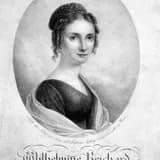
Wilhelmine Reichard became the first German woman to pilot and ascend in a hydrogen balloon alone, launching from Braunschweig on 1 September 1811.
Wilhelmine Reichard made history on 1 September 1811 when she ascended alone in a hydrogen-filled balloon from Braunschweig, becoming the first German woman known to pilot a balloon by herself. At a time when ballooning was an exotic and dangerous novelty dominated almost exclusively by men, her solo flight was a remarkable act of courage and technical competence.
Reichard had studied the principles of balloon construction and gas-filling techniques, partly through her connection to balloonist Ludwig Berlin, whom she later married. Her solo ascent required not only bravery but also genuine skill in managing the delicate balance of gas volume, ballast, and altitude control—skills for which women of the era were rarely credited or permitted to demonstrate publicly.
The flight captured public attention across German-speaking lands and helped establish her reputation as a serious aeronaut rather than a novelty act. It opened the door for her subsequent career of more than two decades giving public balloon ascents throughout German states, during which she became known as the "Luftschifferin" (aeronaut) and a pioneering figure in the early history of aviation.
Her achievement stands as one of the earliest documented instances of a woman independently operating an aircraft of any kind, predating most other women's aviation milestones by nearly a century.