← All women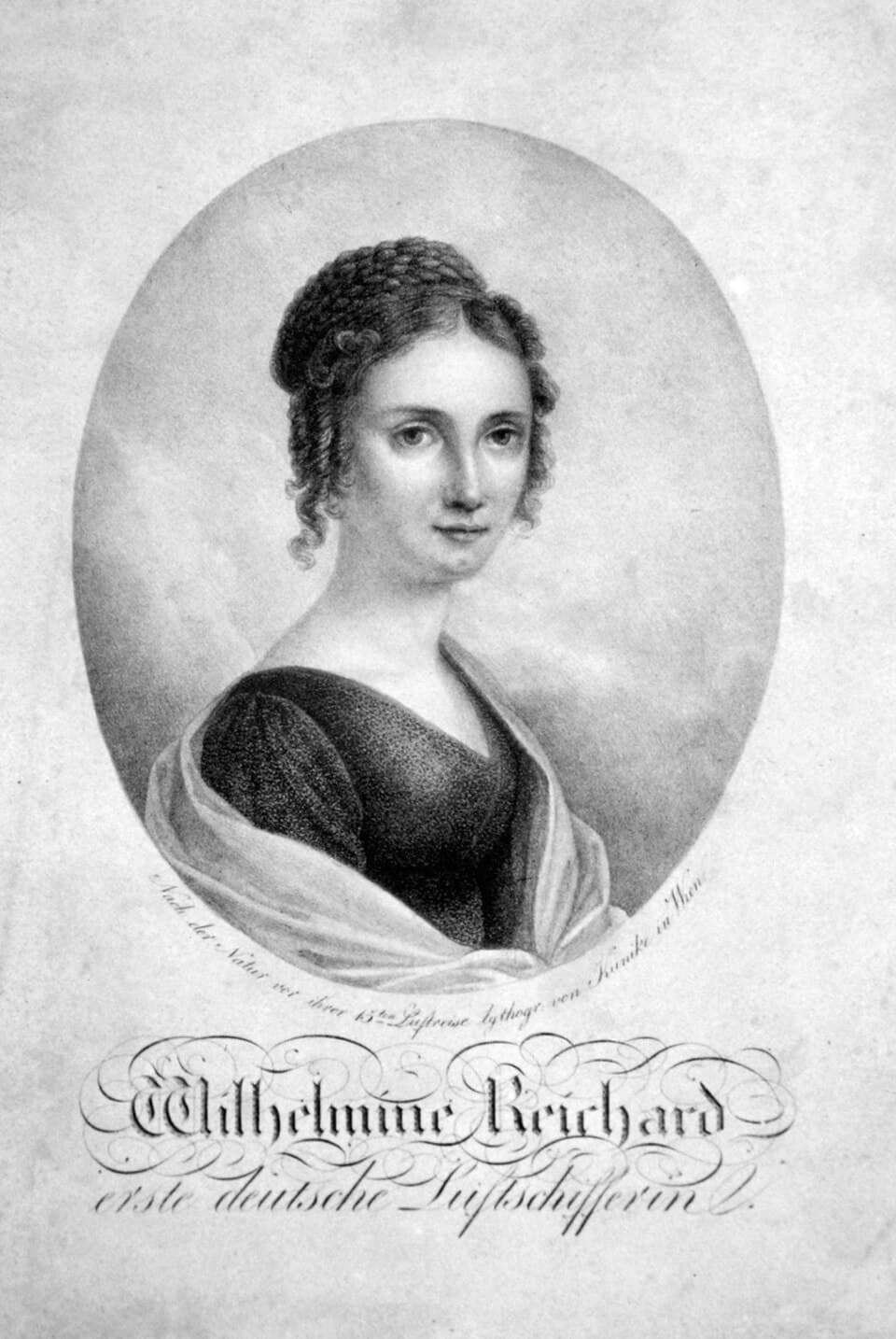
German · Exploration · Aviation
Wilhelmine Reichard
April 2, 1788 – February 20, 1848
Early Life and Background
Wilhelmine Reichard was born on April 2, 1788, in Braunschweig, Germany. Although information about her early life is sparse, it is known that she grew up in a modest family during a time when women's participation in scientific and exploratory pursuits was exceptionally rare.
During her formative years, she was influenced by the scientific explorations of the era, particularly those undertaken by balloonists. Her exposure to ballooning likely stemmed from her marriage to Gottlieb Reichard, a pharmacist and an enthusiast of balloon flights.
Career Beginnings and Development
Wilhelmine Reichard embarked on her ballooning career under the guidance of her husband. She made her first documented flight on April 16, 1811, in Berlin, becoming one of the first women in Germany to pilot a balloon. Her initial flight, which ascended to a height of approximately 5,800 meters, marked the beginning of a notable career in aviation.
Known for her daring spirit, Reichard continued to make multiple ascensions across Germany, contributing to the broader understanding of aerostatics at the time. Her flights were often fraught with danger, including one notable incident where her balloon lost control and she was forced to make an emergency landing.
Major Works and Accomplishments
Reichard's career was filled with pioneering ascents that broke barriers for women in science and exploration. Her flight on September 3, 1811, is particularly noteworthy for reaching a then unprecedented altitude, providing valuable data for meteorology and atmospheric studies.
Despite the dangers inherent in ballooning, Reichard's accomplishments garnered attention from the scientific community, though societal constraints of the time often limited the recognition she received.
Personal Life
Wilhelmine was married to Friedrich Gottlieb Reichard. Together, they shared a passion for ballooning, which significantly influenced her career and provided the support she needed in an era when women’s activities were often restricted.
Legacy and Historical Impact
Wilhelmine Reichard's adventurous spirit and contributions to early aviation have left an enduring legacy. As a female pioneer in a male-dominated field, she broke through societal barriers, demonstrating that women were capable not only of participating in but also leading scientific exploration.
Her legacy is honored in Germany, where her name is remembered in various biographies and historical accounts celebrating her courage and pioneering spirit.
Later Life and Death
After a tumultuous career of ballooning, Wilhelmine Reichard passed away on February 20, 1848. She left behind a legacy of inspiration for future generations of women in aviation and exploration.
Dated achievements
3 indexed.
- Aug011788Aviation
Birth of Wilhelmine Reichard
Wilhelmine Reichard, pioneering German balloonist, was born on 1 August 1788 in Zerbst.
View details Wilhelmine Reichard - Wikipedia - Sep011811Aviation
First solo balloon ascent by a German woman
Wilhelmine Reichard became the first German woman to pilot and ascend in a hydrogen balloon alone, launching from Braunschweig on 1 September 1811.