← All women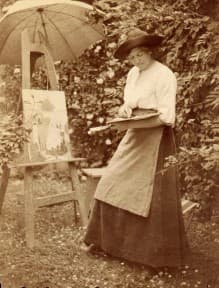
American · Arts
Wilhelmina Weber Furlong
November 24, 1878 – May 25, 1962
Early life and background
Wilhelmina Weber Furlong was born in St. Louis, Missouri, on 24 November 1878. Biographical sources describe her as coming from a prosperous family and as showing artistic talent early in life, with family support that allowed her to pursue serious study in an era when many women had fewer opportunities for professional artistic training. Her early background mattered because it positioned her to move into the emerging network of American modern art at a time when that world was still taking shape and still dominated by restrictive conventions regarding both style and gender.
Accounts of her life indicate that she began painting in her youth and that her formal development unfolded through a long apprenticeship-like path rather than a single academic route. She studied in St. Louis and in New York, and she later worked in Paris and Mexico City. That transnational experience became central to her identity as an artist. In the late nineteenth century, it was still unusual for an American woman painter to sustain an international, multi-city career; Weber Furlong’s trajectory therefore reflects both unusual determination and access to artistic networks that were not easily available to most women of her generation.
Training and formative influences
Weber Furlong is associated with the Art Students League of New York, a school noted for offering women opportunities that were uncommon in the nineteenth century. Her training also included study in St. Louis, and biographical summaries place her in the orbit of early modernist experimentation that would later become associated with impressionism, expressionism, and other avant-garde currents. Sources describe her as part of the early American modernist movement and as a pioneer in modern impressionistic and expressionistic still-life painting.
Her career was shaped by the intellectual and artistic ferment of the period around the turn of the twentieth century, when American artists increasingly traveled, exchanged ideas internationally, and challenged inherited academic standards. Weber Furlong’s work developed in conversation with these changes. She is also associated in later accounts with influential European and transatlantic modernists, reflecting the extent to which her artistic formation was tied to broader cross-cultural encounters rather than a single regional school.
Career beginnings
Weber Furlong’s artistic career is generally described as beginning in 1892 and continuing until her death in 1962. That long span gives her a remarkable place in American art history: she worked across the transition from late nineteenth-century realism into the modernist experimentation of the early twentieth century and remained active into the postwar period. Sources describe her as one of America’s earliest avant-garde modernist painters and as a painter who helped pioneer modern impressionistic and expressionistic still life.
During the 1890s and early 1900s, she worked in St. Louis before moving into larger artistic centers. Her career was not confined to studio practice alone. Like many modernists, she moved through cities and institutions that helped shape her ideas, including New York, Paris, and Mexico City. This mobility is crucial to understanding her significance: she was part of the generation of artists who built modernism through travel, contact, and experimentation, rather than through attachment to a single academy or school.
Some accounts place her in Paris between 1897 and 1906 and in Mexico City between 1906 and 1913, periods that are often cited as formative for her style. Those years exposed her to European modernism and to the visual culture of Mexico, both of which helped inform the boldness and color associated with her work. She emerged as an artist whose practice bridged impressionist sensitivity and modernist structure, and whose still lifes and other compositions were part of the visual language that American modernism was developing at the time.
Modernist innovation and major accomplishments
One of Weber Furlong’s best-documented accomplishments was the opening of her modernist studio and gallery at 3 Washington Square North in Manhattan in 1913. This venue, associated with the name the Yellow Shop, placed her directly within the New York avant-garde just as modernism was becoming visible to a larger public. Contemporary descriptions later praised it as a place where viewers could encounter the “new things to come,” underscoring its role as a site of exhibition, exchange, and instruction.
The significance of this achievement lies not merely in the fact that she had a studio, but that she helped create a public-facing modernist space at a time when women artists were still often excluded from the most influential institutions. By running a gallery and teaching there, she asserted artistic authority in a period when women were frequently treated as amateurs or assistants rather than as leaders. Her studio became part of the larger infrastructure of American modernism, helping legitimize a style that was still controversial to many viewers and critics.
Weber Furlong’s broader career also included sustained involvement in artistic networks that shaped the early modernist scene. She is identified in multiple sources as one of the earliest American avant-garde modernist painters and, in some accounts, the first female modernist painter in the United States. While that label is best understood as a retrospective critical judgment rather than a single event, it captures the scale of her contribution: she was among the women who made it possible for modernism to be imagined as an American project rather than only a European one.
Her work is often described in terms of modern impressionism, expressionism, and still-life innovation. These descriptors point to a painter who did not simply imitate European models but adapted modernist ideas to her own visual concerns. The endurance of her reputation is visible in later museum and institutional recognition, as well as in exhibition projects that have aimed to restore her to the history of American art.
Teaching, networks, and personal life
Teaching was an important dimension of Weber Furlong’s career. She was not only an exhibiting artist but also an educator whose presence in art schools and studio communities influenced younger artists. One of the best-known examples of her later network is her connection to the Art Students League, where she met the modernist painter and sculptor Dorothy Dehner in 1925. That meeting illustrates Weber Furlong’s continuing relevance within the art world well after her earliest breakthroughs.
Her personal life is closely tied to her artistic identity through her marriage to Tomás Furlong, an Irish American muralist and art teacher. The two are often discussed together in later institutional histories, and the Weber Furlong Collection emphasizes his role alongside hers in the development of American modern art. While available sources focus more on her career than on domestic details, the marriage appears to have been part of a shared artistic life rather than a separation from it.
In many women artists’ biographies of the period, marriage and family could have narrowed professional opportunities. Weber Furlong’s life suggests a different pattern: although much about her private life remains less documented than her artistic activity, she sustained a long career across multiple cities and decades. That in itself is significant, because it demonstrates the persistence required for women to remain publicly visible in a field that often overlooked them.
Recognition and posthumous reputation
During her lifetime and especially afterward, Weber Furlong was recognized in various ways as a pioneering modernist. Later sources describe her as a “foremother” of American modern art and as a major early woman modernist. These claims reflect a growing effort among historians and institutions to revise older narratives that centered male artists and minimized the role of women in the formation of modernism.
Her reputation has been strengthened by museum and archival attention, including collection records and exhibition materials that place her work in dialogue with other twentieth-century modernists. The Hyde Collection, for example, preserves material related to her, and later exhibitions and essays have used her career to illuminate the broader history of women in American modern art. Such attention is important because Weber Furlong’s career had long been underrecognized relative to her historical importance.
Institutions and scholarly projects also emphasize that she worked in an era when women faced substantial structural barriers: limited access to elite training, few opportunities for solo exhibitions, skepticism toward avant-garde styles, and art criticism that often diminished female achievement. Her success across these conditions is central to her historical significance. She did not merely participate in modernism; she helped build its early American infrastructure while navigating the constraints placed on women artists.
Later life and death
In her later years, Weber Furlong lived and taught in Glens Falls, New York, where she maintained a studio on Ridge Street. Sources describe these final years as productive and connected to the local artistic community. This period matters because it shows that her influence was not limited to the cosmopolitan centers of New York and Paris; she also contributed to regional art life and continued working outside the most famous modernist circles.
She died in Glens Falls on 25 May 1962. By then, her life had encompassed nearly seven decades of artistic practice. The span of her career, from the early 1890s to 1962, makes her one of the more durable figures in American modernism. She lived long enough to see the movement she had helped pioneer become historically legible, even if full recognition of her importance came later.
Legacy
Wilhelmina Weber Furlong’s legacy lies in her role as an early advocate and practitioner of American modernism, especially in modern still-life painting. She is remembered as a painter who helped shift the visual language of American art toward abstraction, color experimentation, and expressive form. Just as importantly, she did so as a woman working in a period when such ambition was often discounted or overlooked.
Her career also offers a broader lesson in art history: major movements are often sustained not only by the most famous names but also by artists who create spaces, teach, exhibit, and connect communities. Weber Furlong did all of those things. Her studio at Washington Square, her years in Paris and Mexico City, her teaching in New York and later in Glens Falls, and her long association with the modernist avant-garde collectively establish her as a substantive figure in twentieth-century art. Contemporary scholarship has increasingly restored her to that place, confirming that her contributions were foundational rather than incidental.
Dated achievements
3 indexed.
- Nov241878Arts
Birth of Wilhelmina Weber Furlong
Born Wilhelmina Weber Furlong in St. Louis, Missouri.
View details Wilhelmina Weber Furlong: Pioneering American Modernist - Jan011913Arts
Opening of Studio at Washington Square North
Opened a modernist studio and gallery at 3 Washington Square North.