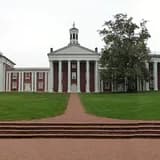
Helen Schaefer Gibson begins a two‑decade tenure as First Lady of Washington College, shaping the college’s social and public life.
On or about September 1, 1950, Helen Schaefer Gibson began her tenure as First Lady of Washington College, a role she would hold until 1970 alongside her husband, President John S. Toll’s predecessor, during two transformative decades for the institution.[1] As First Lady, she hosted events, cultivated alumni and community relationships, and served as an unofficial ambassador for the college. Though unpaid and often informal, such roles were crucial to the social and philanthropic networks that sustained small private colleges in the mid‑twentieth century.
Gibson’s long service spanned the postwar enrollment boom, the expansion of campus facilities, and the beginnings of the modern civil‑rights era. Within that context, her work helped shape Washington College’s public face and institutional culture. The Winter 1991 college magazine later reflected on her years as First Lady as part of a broader celebration of women’s contributions to the college’s history, highlighting how spouses and partners performed vital, if often under‑documented, labor in higher education.[1] Her assumption of the role in 1950 thus stands as a reminder that women’s leadership in academia has not been limited to formal titles; it has also involved extensive, gendered forms of social, cultural, and diplomatic work that enabled institutions like Washington College to thrive.