← All women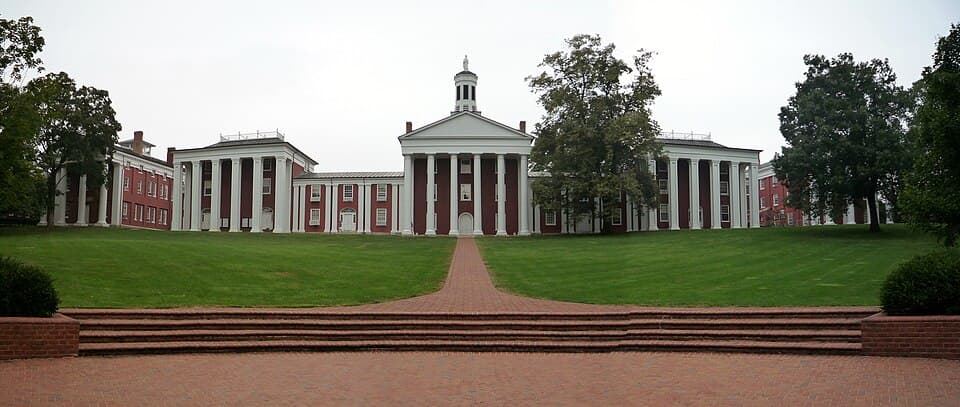
American · Arts · Activism
Washington College
1782 – present
Overview
Washington College, founded in 1782 in Chestertown, Maryland, is one of the oldest colleges in the United States and the first to receive a charter after American independence.[1][2] Although it is an educational institution rather than an individual woman, its history is deeply intertwined with the experiences of women who studied, taught, worked, and lived on its campus. Over more than two centuries, Washington College evolved from a colonial boys’ academy to a coeducational liberal‑arts institution, and in that process it became a site where women and other marginalized people challenged barriers in education, employment, athletics, and racial integration.
This profile treats Washington College as a historical locus for women’s history. It focuses on women and gender‑related milestones associated with the college: early women students like Mary L. Matthews, the first woman recorded as completing the college’s academic course; faculty pioneers such as Bertha M. Stiles, the first woman appointed to the teaching staff; early women graduates including Anna Melvin Hague; athletic barriers broken by Jean Harshaw Lesko; and the social and cultural labor of Helen Schaefer Gibson as First Lady of the college.[7][1] It also situates these women’s achievements alongside those of Black students such as Thomas Edgar Morris and Patricia Godbolt White, whose presence forced the historically white college to confront its racial boundaries.[2][7] Together, these figures illuminate how one small institution became a microcosm of broader struggles over gender and race in American higher education.
Early Institutional History and Educational Context
Washington College traces its roots to the Kent County Free School, established by the Maryland Assembly in 1723 as an academy for boys in what was then called Chester Town.[7] In 1782, amid the political reordering that followed the American Revolution, the Maryland General Assembly granted a corporate charter establishing a new college on the foundation of that school. The institution took the name Washington College in honor of General George Washington, who consented to the use of his name, contributed 50 guineas to its founding, and served on the Board of Visitors and Governors.[1][2][3] Maryland confirmed the charter on October 15, 1782, and the college held its first commencement on May 14, 1783.[2]
Like most eighteenth‑century American colleges, Washington College initially served an almost exclusively white, male clientele drawn from the region’s elite families. Its early mission, as articulated by first president William Smith, emphasized preparing young men for civic leadership in the new republic.[10] The curriculum focused on classical languages, moral philosophy, mathematics, and rhetoric. Women were excluded from formal study, reflecting a broader belief that advanced education was unnecessary or even harmful for them. Educational opportunities for women on Maryland’s Eastern Shore were limited to female academies or home instruction, which seldom granted degrees.
Over the nineteenth century, national debates about women’s education gradually altered this landscape. Women’s seminaries, normal schools, and, eventually, coeducational colleges emerged. Washington College remained slow to change, but local pressures and changing norms eventually pushed the institution toward admitting women. Archival evidence indicates that by the late nineteenth century, at least one woman, Mary L. Matthews of Kent County, had completed the college’s academic course, and in 1891 the college formally became coeducational.[1][7][8] These steps laid the groundwork for more substantive female participation in the intellectual and social life of the college.
Early Women Students: Mary L. Matthews and the Question of “Firsts”
The earliest documented woman associated with degree‑level study at Washington College is Mary L. Matthews of Kent County. The institutional history Washington: The College at Chester identifies her as the first woman to graduate from the college, while a 1991 Washington College magazine article refers to her as the first woman to “complete the academic course.”[7][1] The surviving excerpts do not fully clarify whether Matthews received a formal degree in the modern sense or a certificate indicating completion of the curriculum, nor do they resolve discrepancies in the class year attributed to her. Nonetheless, historians of the college treat Matthews as a foundational figure in its women’s history.
Matthews’s achievement, likely in the mid‑ to late nineteenth century, occurred in a period when most American women who pursued advanced study did so in single‑sex institutions or teacher‑training schools rather than in traditional colleges bearing the classical curriculum.[7] For a woman from the rural Eastern Shore to undertake the full collegiate course in a formerly all‑male institution represented a bold departure from prevailing gender norms. Her presence in the Washington College classroom would have challenged assumptions about women’s intellectual capacities and proper social roles. Although there is little published information about her later life, the fact that a 1991 institutional initiative singled her out underscores her symbolic importance as the first woman whose academic achievements at Washington College can be documented.
The ambiguity surrounding Matthews’s exact credential illustrates a broader methodological challenge in women’s educational history: early women’s “firsts” are often obscured by incomplete records and shifting definitions of graduation. Even so, Matthews stands as an early exemplar of women’s determination to claim space in a collegiate setting that had not been designed with them in mind.
Coeducation and the Arrival of Women Faculty: Bertha M. Stiles
Washington College formally became coeducational in 1891, opening its doors to women students in a more systematic way.[1][8] Yet the presence of women as students did not immediately translate into their inclusion among the faculty. That barrier began to break in the early 1890s with the appointment of Bertha M. Stiles.
Stiles was appointed in 1893 as the college’s first woman faculty member, serving as an instructor in English, mathematics, and German.[7] Her multi‑disciplinary responsibilities reflected the flexible staffing patterns of small colleges, but also testified to her broad training. For a woman to teach not only in language and literature but also in mathematics was notable in an era when women educators were often confined to primary and secondary levels or to subjects coded as feminine. Stiles’s appointment signaled that Washington College was willing to entrust a woman with core components of its collegiate curriculum.
Stiles’s influence extended beyond the classroom. When Normal Hall, a women’s residence, opened in the spring of 1897, Stiles became the college’s first housemother.[7] The housemother role, common in late nineteenth‑century coeducational and women’s colleges, involved supervising behavior, providing moral guidance, and fostering community among women students. By placing a faculty woman in this position, Washington College knitted together academic and residential oversight. Stiles thus operated at the intersection of intellectual and social life, embodying the college’s thinking about how to integrate women into a previously male space.
From a women’s‑history perspective, Stiles’s dual role—teacher and housemother—illustrates both progress and constraint. On one hand, her faculty appointment represented a clear breach of an all‑male academic hierarchy. On the other, the expectation that she shoulder domestic and supervisory responsibilities in the residence hall reflected persistent gendered assumptions about women’s caregiving roles. Nonetheless, her presence reconfigured the campus’s gender dynamics and helped normalize women’s intellectual authority at Washington College.
Early Women Graduates: Anna Melvin Hague and Her Contemporaries
By the early twentieth century, the college’s experiment with coeducation had produced its first clearly documented women graduates. Among them was Anna Melvin Hague, a member of the Class of 1905.[7][1] Institutional histories cite Hague as one of the first women to complete a full degree program at Washington College, though they do not always list a comprehensive roster of her female classmates. Her graduation, along with that of other early women, demonstrated that the coeducational project had moved beyond isolated cases like Mary L. Matthews to a more regular presence of women in each class.
Hague’s graduation came at a time when coeducation in the United States remained contested, particularly in the East. Some critics argued that mixed‑sex schooling would harm women’s health or lead them away from traditional domestic roles, while others feared that admitting women would lower academic standards. Washington College’s recognition of Hague as an early woman graduate indicates that the institution considered her academic performance fully consistent with its expectations for a bachelor’s degree. Her success thus functioned as an implicit rebuttal to arguments against women’s higher education.
Although detailed biographical information about Hague’s life after college is limited in accessible sources, her symbolic status within Washington College’s narrative of women’s education is clear. She stands as one of the first women to move through every stage of the collegiate experience—from admission through senior year—to emerge with a credential that carried social and professional weight.
Women and Athletics: Jean Harshaw Lesko’s Tennis Breakthrough
In 1936, another Washington College woman made history in a different arena. Jean Harshaw Lesko, a student with strong tennis skills, joined the men’s varsity tennis team, breaking a gender barrier in intercollegiate athletics at the college.[1] A retrospective article in the Winter 1991 Washington College magazine highlighted Lesko’s role as a pioneer, emphasizing how unusual it was for a woman to compete on a men’s varsity team decades before Title IX mandated gender equity in educational programs and activities receiving federal funds.
At the time, women’s collegiate athletics were typically limited to intramural play, physical‑education classes, or informal clubs. Competitive opportunities for women existed but were not always institutionally supported, and they were often framed in terms of recreation rather than serious competition. Lesko’s inclusion on the men’s team indicated that her talent was sufficiently recognized to warrant a place in intercollegiate matches, despite norms favoring gender segregation.
Lesko’s breakthrough is particularly notable given the regional and institutional context. Washington College, a small liberal‑arts institution in a rural town, did not have the same level of media attention as large universities. Yet on its courts, a quiet revolution unfolded as a woman stepped into a role traditionally reserved for men. Her example prefigured later debates about women’s right to equitable athletic facilities, coaching, and competition. For historians of sport and gender, Lesko’s 1936 season offers an early case study of how individual women negotiated—and sometimes transcended—gendered boundaries in college athletics.
Women’s Social Leadership: Helen Schaefer Gibson as First Lady
From 1950 to 1970, Helen Schaefer Gibson served as First Lady of Washington College, a title commonly used to describe the spouse of the college president.[1] While not a formal administrative office, the role involved extensive responsibilities: hosting official functions, welcoming visiting dignitaries, building alumni and donor relationships, and serving as a cultural and social leader on campus.
Gibson’s two‑decade tenure coincided with dramatic changes in higher education. The postwar G.I. Bill swelled enrollments, prompting physical expansion of campuses nationwide. The 1960s brought both student activism and debates over civil rights, gender roles, and the purpose of liberal education. Against this backdrop, Gibson’s work as First Lady helped provide continuity and hospitality in a period of rapid change. Oral histories and magazine retrospectives depict her as a gracious and steady presence in the life of the college.[1]
Despite the importance of such work, mid‑century First Ladies of colleges rarely received formal recognition. Their contributions were often framed as extensions of wifely duty rather than as institutional labor. Washington College’s later decision to honor Gibson with an honorary Doctor of Fine Arts degree in 1991 represented a belated acknowledgement of the skill, creativity, and emotional work involved in her role.[1] For historians of women in higher education, her experience exemplifies a category of semi‑official positions—dean’s wife, president’s wife, hostess—that both drew upon and reinforced gendered expectations, yet also offered women a measure of influence in academic communities.
Racial Integration and Black Students’ Firsts
Although this dossier centers on women’s history, Washington College’s story of inclusion also involves crucial milestones in racial integration, particularly for Black students whose experiences intersected with gender in complex ways. Two figures stand out: Thomas Edgar Morris and Patricia Godbolt White.
In 1962, Thomas Edgar Morris graduated as the first Black graduate of Washington College.[2] His achievement is acknowledged in the college’s official "Brief History" as a landmark in its long‑delayed desegregation. At that time, many institutions in Maryland and the broader South were facing legal and social pressure to dismantle segregation. Morris’s successful completion of a degree at a historically white Eastern Shore college demonstrated both the possibility and the challenges of integration in a small‑town context.
Two years later, Patricia Godbolt White of the Class of 1964, along with Dale Patterson Adams (Class of 1965) and Marvin M. Smith (Class of 1967), were recognized as among the first African Americans to integrate Washington College more broadly.[7] These students helped transform the campus from one where a single Black graduate could be seen as an exception to one in which Black enrollment, though still small, held the potential to reshape classroom and social dynamics.
For White in particular, being an early Black woman student meant confronting both racial and gender barriers within a predominantly white, historically male institution. The precise details of her campus experiences are not widely documented in published sources, but the college’s decision to highlight her in its historical narrative acknowledges the significance of her presence. Her story underscores an important point: women’s history at Washington College cannot be separated from the institution’s racial history. The struggles of women like White exemplify how race and gender intersected in the quest for educational opportunity.
Reckoning with History: The Washington College History Project
In the early twenty‑first century, Washington College undertook explicit efforts to reassess its past, including its relationship to slavery and racial exclusion. The Washington College History Project, launched in 2020, aims to illuminate the college’s connections to enslavement and race, acknowledge this history through public statements and symbolic actions, and "work for change" in campus culture.[13] While the project’s primary focus is on race, it intersects with ongoing attempts to recover the stories of women and other under‑represented groups whose contributions were obscured in earlier commemorations.
These initiatives build upon the work of earlier institutional historians who, in the late twentieth century, began to document the achievements of women such as Mary L. Matthews, Bertha M. Stiles, Anna Melvin Hague, Jean Harshaw Lesko, and Helen Schaefer Gibson.[7][1] The digitization of college magazines, archival finding aids, and special‑collections materials has made it easier for researchers to trace women’s firsts and to contextualize them within broader narratives. Projects focused on slavery and freedom at Washington College have also encouraged cross‑cutting research into how gender shaped experiences of enslavement, emancipation, and education on the Eastern Shore.
Awards, Honors, and Later Recognition of Women’s Contributions
One of the most visible modern acknowledgements of women’s historical labor at Washington College came with the 1991 honorary degree conferred upon Helen Schaefer Gibson. During the Fall Convocation that year, she received an honorary Doctor of Fine Arts, explicitly linked to her twenty years as First Lady of the college.[1] The same period saw the college’s magazine and historical publications highlighting earlier women like Matthews, Stiles, Hague, and Lesko, making 1991 something of a commemorative moment for women’s history on campus.
These formal recognitions, though relatively recent, underscore a broader pattern: women’s contributions at Washington College were often essential yet only belatedly acknowledged. Faculty appointments like Stiles’s were recorded in institutional histories, but their gendered significance was rarely emphasized until the late twentieth century. Student firsts, whether in academics or athletics, were sometimes remembered informally and only later codified in written histories. Honorary degrees and special features in college publications thus serve both as symbolic reparations and as catalysts for further research.
Legacy and Historical Impact
Washington College’s legacy in women’s history lies not in a single towering figure but in a series of incremental breakthroughs that, taken together, transformed the institution. The path from an eighteenth‑century boys’ academy to a coeducational liberal‑arts college integrated by race and gender was neither smooth nor swift. Yet key women and allies pushed the boundaries of what was possible at each stage.
- Mary L. Matthews demonstrated that a woman could complete the college’s full academic course at a time when such an endeavor was rare in the region.[7][1]
- Bertha M. Stiles established women’s presence on the faculty and in residential life, blending intellectual and pastoral roles.[7]
- Anna Melvin Hague and other early women graduates proved that women’s degree‑level achievements were sustainable and academically rigorous.[7]
- Jean Harshaw Lesko challenged gender divides in athletics, foreshadowing later movements for sports equity.[1]
- Helen Schaefer Gibson embodied the often‑unpaid social and cultural labor that undergirded mid‑century academic life and later received formal recognition.[1]
- Patricia Godbolt White and her contemporaries linked gender and racial integration, showing that women of color were central to the college’s transformation.[7][2]
For scholars of women’s and gender history, Washington College offers a case study in how a small regional institution reflects national changes in higher education, feminism, and civil rights. Its archives, including college catalogues, magazines, and special collections, provide rich material for tracing the careers of individual women and situating them in their social and institutional contexts.[5][13] The college’s ongoing efforts to confront its past, particularly regarding race, suggest that future work may further illuminate how gender, class, and race intersected in the experiences of students, faculty, and staff.
Personal Lives and Community Ties
Because Washington College is an institution rather than an individual, there is no single "personal life" to recount. However, many of the women highlighted here were deeply embedded in the local community of Chestertown and the broader Eastern Shore. Figures like Mary L. Matthews and Bertha M. Stiles appear in institutional histories primarily through their college roles, but they were also daughters, perhaps wives and mothers, and community members in a small town where the boundaries between campus and town life were porous.
For someone like Helen Schaefer Gibson, the role of First Lady of Washington College meant that her domestic and social life was thoroughly intertwined with the institution. The president’s house functioned as both a family home and a public venue, blurring private and public spheres. Her long tenure illustrates how women’s familial roles could become instruments of institutional leadership in mid‑century academia.
Similarly, early Black students such as Thomas Edgar Morris and Patricia Godbolt White navigated not only the academic demands of college but also the social pressures of living and studying in a predominantly white environment in a region with a long history of racial inequality. While detailed personal histories for these individuals remain to be written, the existing record makes clear that their lives and identities cannot be separated from the communities and conflicts that shaped Washington College in their eras.
Continuing Research and Unanswered Questions
Despite the progress made in documenting women’s roles at Washington College, many questions remain open for further research. The precise details of Mary L. Matthews’s academic credential and post‑college life, the full roster of early women students and graduates in the late nineteenth and early twentieth centuries, and the lived experiences of figures such as Jean Harshaw Lesko and Patricia Godbolt White are areas where surviving archival materials could yield richer narratives.[7][1]
The college’s archives, hosted through its library and special collections, contain catalogues, commencement programs, personal papers, and photographs that could help establish more precise dates and biographies. Digital initiatives and the Washington College History Project have already begun making some of these materials more accessible.[5][13] As scholars continue to mine these sources, the stories summarized here are likely to be refined, expanded, and, in some cases, revised.
In this sense, Washington College’s significance for women’s history is not static. It is an ongoing project of recovery and reinterpretation, in which each newly discovered letter, program, or photograph can shed light on how women and other marginalized people shaped the life of a small college—and, by extension, contributed to the broader history of American higher education.
Dated achievements
9 indexed.
- Jan011893Arts
Bertha M. Stiles becomes first woman faculty member at Washington College
Bertha M. Stiles is appointed as Washington College’s first woman faculty member, teaching English, mathematics, and German.
View details Washington: The College at Chester (full text) - Mar011897