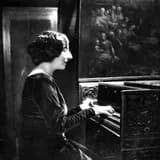
Wanda Landowska died on August 16, 1959, at her home in Lakeville, Connecticut, after decades as the world's leading harpsichordist.
Wanda Landowska died on 16 August 1959 at her home in Lakeville, Connecticut, where she had settled after fleeing Nazi-occupied France in 1941. She was 82 years old and had continued to record, teach, and write about early music until shortly before her death.
Her passing marked the end of an era for the early-music revival movement she had almost single-handedly created. Landowska had fled France with her longtime companion and student Denise Restout following the German invasion, leaving behind her home and instrument collection at Saint-Leu-la-Forêt, which was later looted by occupying forces.
In the United States, she rebuilt her career, giving celebrated performances at Town Hall in New York and completing her landmark recording of Bach's Well-Tempered Clavier on harpsichord, a project of enormous scholarly and artistic significance. Her death was mourned internationally by musicians and scholars who recognized her as the founder of the modern harpsichord revival and a pioneering advocate for historically informed performance practice, a movement that would flourish in the decades after her death and permanently change how early music is understood and performed.