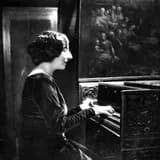
Landowska's Paris performances on the harpsichord in the early 1900s reintroduced the instrument to modern concert audiences.
After settling in Paris in 1900 with her husband Henry Lew, Landowska began to champion the harpsichord as a legitimate concert instrument at a time when it had been almost entirely supplanted by the piano for over a century. Her scholarly research into historical performance practice, combined with her extraordinary technical skill, allowed her to perform works by Bach, Couperin, and Scarlatti in a manner she believed approximated their original intent.
Her Paris recitals and lectures, delivered around the turn of the century and into the 1900s, marked a turning point in the early-music revival movement. She argued passionately, both through performance and in her writings (including her influential 1909 book Musique ancienne), that Baroque keyboard music demanded the harpsichord's distinct timbre and articulation rather than the piano's dynamic range.
This work established her as the foremost harpsichordist of her generation, directly influencing instrument makers such as Pleyel, who built a modern concert harpsichord to her specifications in 1912. Her advocacy reshaped twentieth-century early-music scholarship and performance, inspiring generations of historically informed performers who followed her example.