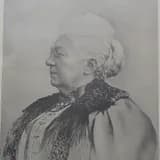
Virginie Loveling died on 1 December 1923 in Ghent, having become one of the most significant Flemish women novelists of her generation.
Virginie Loveling died on 1 December 1923 in Ghent, at the age of 87, bringing to a close a literary career that had spanned more than six decades and had helped shape Flemish realist and naturalist prose.
By the time of her death, Loveling had achieved recognition as one of the foremost Dutch-language women writers of Belgium, admired for novels and short stories that combined psychological insight with unflinching social critique. She had outlived her sister and early collaborator Rosalie by many decades, continuing to write and publish well into old age, and had lived through profound historical upheavals including the First World War, which she documented in a war diary later recognized as an important historical and literary document.
Her death marked the end of an era for Flemish letters: she was among the last surviving links to the mid-19th-century generation of writers who had helped establish a modern, socially engaged Dutch-language literary tradition in Belgium, at a time when French still dominated cultural and intellectual life in the country. Her passing was noted in Flemish literary and cultural circles, and her body of work continued to be studied, republished, and reassessed by later generations of literary historians, particularly as interest in women's literary history and Flemish naturalism grew across the 20th and 21st centuries.
Her legacy is preserved today through archival collections, critical editions of her work, and continued scholarly attention to her role in Flemish literary history.