← All women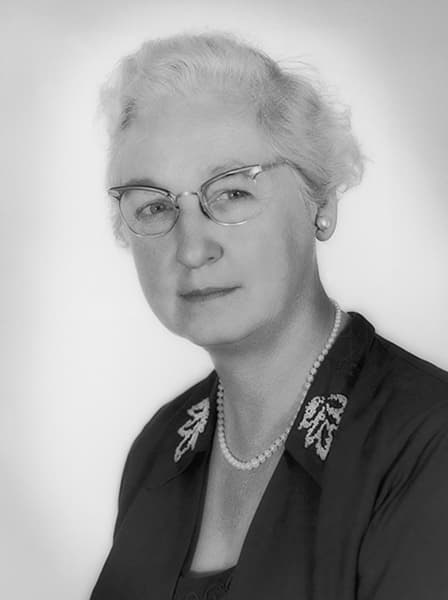
American · Medicine · Science
Virginia Apgar
June 7, 1909 – August 7, 1974
Early Life and Background
Virginia Apgar was born on June 7, 1909, in Westfield, New Jersey, the youngest of three children of Charles E. Apgar and Helen May Clarke Apgar.[2][3][10] Her father worked as an insurance executive and was an enthusiastic amateur inventor and radio operator, while her mother managed the household and supported the children’s wide-ranging interests.[2][8][13] Apgar later described her family as one that "never sat down," reflecting a culture of energy, curiosity, and constant activity.[2]
Music played a central role in her upbringing. She studied violin seriously, performing in local ensembles and developing the discipline that would later characterize her medical career.[2][13] At the same time, she was drawn to practical science and mechanics, influenced by her father’s technical hobbies and experiments with radio equipment.[2] This combination of artistry and technical focus would shape her approach to medicine, where precision and creativity were both essential.
Apgar attended Westfield High School, graduating in 1925, by which time she had already decided to become a physician.[13] Her ambition was notable in an era when women faced substantial barriers entering medicine; women were still a small minority in American medical schools and were often steered away from surgical and leadership roles.[2][10] Despite these obstacles, she pursued higher education at Mount Holyoke College, a women’s college in Massachusetts with a strong tradition of encouraging women in science.
At Mount Holyoke, Apgar majored in zoology and took extensive coursework in physiology and chemistry while continuing to play the violin.[1][12][13] She worked part-time to support herself financially, demonstrating the persistence and resourcefulness that would distinguish her later career.[13] She earned her bachelor’s degree in 1929.[13] Mount Holyoke’s scientific environment and the mentorship of women faculty helped reinforce her determination to enter medicine at a time when such a path was still unconventional for women.
Medical Education and Career Beginnings
After college, Apgar was admitted to the College of Physicians and Surgeons of Columbia University (P&S), one of the leading medical schools in the United States.[1][3][13] She entered in the late 1920s and completed her medical degree in 1933, graduating fourth in her class.[11][13] During these years, she initially aspired to become a surgeon, a specialty in which women were particularly rare.[1][11]
Upon graduation, Apgar began a surgical internship at Columbia Presbyterian Medical Center and became the fifth woman to intern in surgery there.[14] Her performance was highly regarded, but she confronted structural barriers common to women in surgery at the time. Her mentor, Dr. Allen Whipple, advised her that, given the limited prospects for women surgeons and the emerging importance of anesthesiology, she might make a greater impact by training in anesthesia.[2][10][13]
Heeding this advice, Apgar undertook specialized training in anesthesiology, including work with established anesthetists and laboratory research.[2][13] Anesthesiology was then a relatively new and evolving discipline, often considered subordinate to surgery. Few formal training programs existed, and the field had yet to establish the academic status and rigorous standards it holds today.[2][9] Apgar’s decision positioned her at the forefront of a specialty that would become crucial for safe surgery and obstetric care.
She completed a residency in surgery in 1937 but increasingly devoted her professional focus to anesthesia.[13] Her dual grounding in surgery and anesthesiology gave her a deep understanding of perioperative physiology and the complexities of care during childbirth, knowledge that would later underpin her innovations in newborn assessment.
Leadership in Anesthesiology at Columbia
In 1938, Apgar was appointed director of anesthesia at Columbia University’s College of Physicians and Surgeons and Columbia Presbyterian Medical Center.[12][14] This appointment made her the first woman to head a specialty division at the college, a significant barrier-breaking achievement in academic medicine.[12][4][14] At the time, anesthesiology was only beginning to be recognized as a distinct medical specialty, and Apgar’s leadership contributed to its professionalization.
As director, she organized the anesthesiology service, improved training for residents and staff, and emphasized careful monitoring of patients’ vital signs during surgery and obstetric procedures.[2][9][13] Her work helped demonstrate that anesthesiology required as much scientific rigor and clinical judgment as surgery itself. She advocated for better equipment, standardized procedures, and closer collaboration between surgeons, anesthetists, and obstetricians.[2][9]
During the late 1940s, Apgar achieved another milestone: she became the first woman to be appointed a full professor at Columbia University College of Physicians and Surgeons.[4][2] Although sources do not provide the exact year, they agree that this promotion came roughly a decade after her 1938 appointment as director.[4][12] In the context of mid-20th-century academic medicine, professorships for women were extremely rare, and her advancement signaled a gradual, though still limited, shift in institutional attitudes toward women physicians.
In this period, Apgar’s clinical work remained focused largely on obstetric anesthesia. She observed high rates of infant mortality and morbidity in the immediate postpartum period, noting that the condition of newborns was not being systematically assessed at birth.[2][6][9] These observations set the stage for her most influential contribution: the development of a standardized scoring system for newborns.
Development of the Apgar Score
By the early 1950s, Apgar had turned her attention to the problem of evaluating newborns immediately after delivery. In 1952, she introduced a simple, standardized scoring method to assess an infant’s physical condition in the first moments of life.[1][3][9] This system, later known as the Apgar Score, was designed to be performed quickly at the bedside and to focus clinicians’ attention on the newborn’s vital signs.
The score evaluates five key criteria: heart rate, respiratory effort, muscle tone, reflex irritability, and color.[1][6][12] Each criterion is assigned a value of 0, 1, or 2, yielding a total score from 0 to 10. Scores are typically recorded at one and five minutes after birth, and sometimes at ten minutes if needed.[6][7] A low score signals that the infant requires immediate resuscitation or support, while a higher score indicates that the newborn is adapting well to extrauterine life.
In 1953, Apgar published her landmark paper describing the score and its clinical utility, formally introducing the system to the medical literature.[6][12][13] The publication demonstrated that systematic assessment could correlate with outcomes and offered a practical tool for comparing different obstetric practices and anesthetic techniques. Within a few years, the Apgar Score was widely adopted in hospitals across the United States and around the world.[2][6][9]
The term "APGAR" soon became a backronym, commonly expressed as Appearance, Pulse, Grimace, Activity, Respiration, aiding teaching and recall for clinicians.[1][6][12] This mnemonic, popularized in the 1960s, reinforced the method’s presence in both medical education and daily practice.[1][6] The score’s elegance lay in its simplicity: it required no special equipment and could be conducted in seconds, yet it transformed how the newborn period was conceptualized—turning birth into a moment of systematic physiological evaluation rather than a largely unmeasured transition.
Historically, the Apgar Score is regarded as the foundation of modern neonatology.[2][7][9] By enabling early identification of distressed infants, it contributed to lower neonatal mortality and encouraged the development of specialized neonatal intensive care units. It also provided a framework for research into the effects of anesthesia, maternal health, and delivery practices on newborn outcomes.[2][6][9]
Research, Public Health, and the March of Dimes
Although best known for the Apgar Score, Virginia Apgar’s career extended far beyond this single innovation. In the late 1950s and 1960s, she increasingly dedicated herself to the study of birth defects and to public health advocacy around maternal and infant welfare.[2][9][10]
In 1960, she earned a master’s degree in public health from Johns Hopkins University, further strengthening her expertise in epidemiology and population health.[2][9] She then joined the March of Dimes, initially founded to combat polio, and played a central role in redirecting the organization’s mission once polio vaccines had been successfully developed.[1][10]
Throughout the 1960s, Apgar helped lead the March of Dimes’ transition toward addressing birth defects, preterm birth, and other infant health problems.[1][10] She served in senior positions, often described as director of the Division of Congenital Malformations, and traveled extensively to give lectures, consult with clinicians, and advocate for stronger policies and research funding related to maternal and infant health.[2][10][15]
Her advocacy emphasized that many birth defects could be prevented or mitigated through improved prenatal care, avoidance of harmful substances, and early diagnosis.[2][10] She also became a prominent voice encouraging women to seek adequate medical care during pregnancy and to understand the risks associated with alcohol, smoking, and certain medications.[10] In this phase of her career, Apgar combined her clinical insights with public communication skills, bringing complex scientific issues to broader audiences.
Awards, Honors, and Recognition
Virginia Apgar’s contributions were widely recognized during her lifetime and posthumously. In 1973, she received the Gold Medal for Distinguished Achievement in Medicine and was named Woman of the Year in Science and Research by Ladies’ Home Journal, honors that celebrated her pioneering work in neonatal care and birth defects research.[14]
Professional societies and institutions also honored her leadership. Columbia University highlighted her as the first woman to become a full professor at its College of Physicians and Surgeons, and the National Library of Medicine’s "Changing the Face of Medicine" exhibition later recognized her as a trailblazer among women physicians.[4][10]
Her name has been commemorated in various ways, including academic initiatives and collections. The Virginia Apgar, M.D. Collection at the Wood Library-Museum of Anesthesiology preserves her papers, instruments, and memorabilia, documenting her role in the history of anesthesiology and neonatology.[13] Columbia University established the Virginia Apgar Academy of Medical Educators, reflecting her influence not only on clinical practice but also on medical training.[1]
Beyond formal awards, Apgar’s most enduring recognition lies in the ubiquity of the Apgar Score itself. Every time a newborn is assigned an Apgar Score, her legacy is implicitly acknowledged. The eponymous test, routinely performed around the world, stands as a living monument to her work.
Personal Life
Virginia Apgar never married and had no children, a personal choice that allowed her to focus intensely on her demanding medical and public health career.[2][10] In an era when societal expectations for women often centered on domestic roles, her professional path and independent lifestyle distinguished her from many of her contemporaries.
Outside of her clinical and research responsibilities, Apgar maintained her passion for music. She continued to play the violin throughout her life and reportedly enjoyed performing in chamber groups and community orchestras when her schedule allowed.[2][13] She was also known for her enthusiasm for outdoor activities and travel, frequently journeying across the United States and abroad to lecture and consult.
Colleagues and students described her as energetic, direct, and deeply committed to patient care. She combined a no-nonsense approach with a sense of humor and an ability to make complex ideas accessible.[2][11] Her demeanor helped her navigate male-dominated professional environments and advocate effectively for improvements in obstetric and neonatal practice.
Legacy and Historical Impact
Virginia Apgar’s legacy is multifaceted, spanning clinical innovation, academic leadership, and public health advocacy. Most prominently, the Apgar Score is widely credited with launching the modern field of neonatology by reframing the first minutes of life as a critical window for systematic assessment and intervention.[2][6][9] By providing an objective, reproducible measure of newborn status, the score enabled researchers and clinicians to compare outcomes across institutions, techniques, and patient populations.
In practical terms, the Apgar Score helped reduce neonatal mortality by identifying infants who needed immediate resuscitation or special care.[2][6][8] It strongly influenced the creation of neonatal intensive care units and protocols for high-risk births, and it remains an essential tool in global obstetric practice. Its simplicity allowed for rapid adoption in settings with limited resources, further extending its impact.
As one of the first women to hold senior leadership positions in academic anesthesiology and to become a full professor at Columbia P&S, Apgar also stands as a landmark figure in the history of women in medicine.[4][2] Her career demonstrated that women could not only enter medicine but lead departments, drive research agendas, and shape national health policy. In this sense, her achievements contributed to the gradual normalization of women’s presence in clinical and academic authority roles.
Her work with the March of Dimes influenced public understanding of birth defects and maternal-fetal health, shifting the organization’s focus from a single infectious disease (polio) to a broad agenda encompassing congenital conditions, prematurity, and infant morbidity.[1][10] This pivot helped secure long-term research funding and public attention for these issues, with benefits extending well beyond the United States.
Scholars and clinicians have referred to Apgar as the "mother of neonatal resuscitation" and a "monumental pioneer" in obstetric anesthesiology, underscoring her role in connecting anesthesia, obstetrics, and newborn care into a coherent, evidence-based practice.[8][9][15] The continuing use of the Apgar Score in the 21st century attests to the durability of her ideas.
Later Life and Death
In her later years, Apgar remained actively engaged in public health, teaching, and advocacy. She continued to work with the March of Dimes, lecture widely, and serve on advisory committees focused on maternal and infant health.[1][2][10] Even as she shifted away from direct clinical practice, she maintained a heavy travel and speaking schedule, promoting prevention of birth defects and better prenatal care.
Virginia Apgar died on August 7, 1974, in New York City, New York.[3][5] She was 65 years old. Obituaries and tributes emphasized both her groundbreaking clinical work and her role as a pioneer for women physicians. The institutions where she had worked—Columbia University, the March of Dimes, and professional anesthesiology societies—recognized her death as a major loss to medicine and public health.[2][4]
In the decades following her death, historical studies, museum exhibitions, and professional articles have continued to highlight her contributions. The National Library of Medicine’s "Changing the Face of Medicine" project and several scholarly reviews have reaffirmed the importance of her innovations and leadership.[4][6][9] Today, Virginia Apgar is remembered not only as the originator of a ubiquitous clinical tool but also as a symbol of women’s expanding role in medicine and science in the 20th century.
Dated achievements
3 indexed.
- Jun071909Medicine
Birth of Virginia Apgar
Virginia Apgar was born in Westfield, New Jersey, United States.
View details Encyclopedia Britannica: Virginia Apgar - Jan011938Medicine
First woman to head a specialty division at Columbia
In 1938, Virginia Apgar became the first woman to head a specialty division at Columbia.