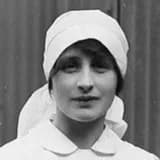
Brittain published her landmark memoir Testament of Youth, chronicling her WWI experiences and establishing her as a major literary and pacifist voice.
On 1 August 1933, Victor Gollancz published Vera Brittain's autobiographical memoir Testament of Youth, subtitled An Autobiographical Study of the Years 1900–1925. The book recounted her transformation from a sheltered provincial girl to an Oxford undergraduate, then to a Voluntary Aid Detachment (VAD) nurse who served in London, Malta, and near the front lines in France during the First World War.
The memoir movingly detailed the deaths of her fiancé Roland Leighton, her brother Edward, and two close friends, Victor Richardson and Geoffrey Thurlow — all killed in the war — making Brittain's personal grief emblematic of a generation's loss. Unlike much war literature of the period, which centred on male combatants, Testament of Youth gave voice to women's wartime experiences, both as caregivers and as bereaved sisters, fiancées, and daughters.
The book was an immediate critical and commercial success, establishing Brittain as a leading literary figure and pacifist intellectual. It has never gone out of print and is regarded as one of the most powerful personal accounts of the First World War, alongside works by Siegfried Sassoon and Robert Graves. Its unflinching honesty about trauma, gender, and mourning helped shape twentieth-century memoir writing and remains a touchstone of feminist and anti-war literature, later adapted into a BBC television serial (1979) and a feature film (2014).