← All women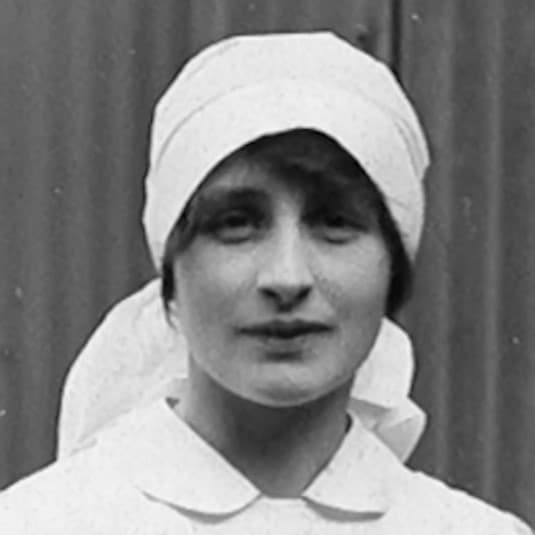
British · Literature · Activism
Vera Brittain
December 29, 1893 – March 29, 1970
Early Life and Background
Vera Mary Brittain was born on December 29, 1893, in Newcastle-under-Lyme, Staffordshire, England. She was the daughter of Thomas Arthur Brittain and Edith Bervon, growing up in a comfortable middle-class family. Her upbringing was marked by the Edwardian societal norms which largely confined women's roles to the domestic sphere. Despite this, Vera harbored ambitions beyond the parlor, aspiring for higher education.
Educated initially at home by a governess and then at St. Monica's, a boarding school in Kingswood, Vera was determined to break free from the constraints imposed on women of her class. She entered Somerville College, Oxford, in 1914, a journey cut short by the outbreak of World War I, which altered the trajectory of her life dramatically.
Career Beginnings and Development
With the onset of World War I, Vera left Oxford in 1915 to become a Voluntary Aid Detachment (VAD) nurse, a decision driven by personal loss as her fiancé, Roland Leighton, and her brother Edward were conscripted into the war. Her nursing took her from England to Malta and France, where she witnessed the war's devastating toll firsthand.
After the war, Brittain returned to Oxford and completed her degree in history in 1921. Her experiences as a nurse, though, had profoundly transformed her, setting her on a path of writing and activism. Her early works included a novel, The Dark Tide, but her major achievement came with Testament of Youth, published in 1933, which recounted her wartime experiences and personal losses.
Major Works and Accomplishments
Published in 1933, Testament of Youth is perhaps Vera Brittain's most enduring legacy. This memoir explored the grief and devastation wrought by World War I, both personally and societally. It is considered one of the most important sources on the impact of the war on British society, and particularly on the women who served as VADs.
Aside from her literary career, Brittain was an ardent pacifist. She joined the League of Nations Union and worked with the Peace Pledge Union, vociferously advocating against militarization and for women's rights until her death. Her pamphlet, Seeds of Chaos, critiqued the bombing of cities in World War II.
Awards, Honors, and Recognition
Although Brittain herself did not receive many formal awards during her lifetime, her literary and activist work earned her posthumous recognition as a pioneering voice for peace and feminism. Her writings continue to be celebrated for their emotional depth and historical insight.
Personal Life
Vera Brittain married political scientist George Catlin in 1925. The couple had two children: John Brittain-Catlin, an artist and writer, and politician Shirley Williams, who went on to become a prominent figure in British politics.
Legacy and Historical Impact
Vera Brittain's legacy is deeply entwined with her contributions to literature and peace activism. Her honest portrayal of World War I in her writings reshaped perceptions of the conflict, emphasizing the profound personal and societal costs. Her work has had a lasting impact on how the war is remembered, particularly regarding women's roles.
As a feminist, Brittain's advocacy for women's rights was significant. Her intertwining of personal narrative with political activism served as an early example of how personal history could influence broader socio-political discourse.
Later Life and Death
In later life, Brittain continued to write and speak against war and for social justice. Her later works include Testament of Experience (1957) and the manuscript One Voice: Pacifist Writings from the Second World War. She died on March 29, 1970, in Wimbledon, London, leaving behind a transformative legacy in both literature and activism.
Dated achievements
3 indexed.
- Dec291893Literature
Birth of Vera Brittain
Vera Mary Brittain was born in Newcastle-under-Lyme, Staffordshire, England, into a prosperous manufacturing family.
View details Vera Brittain - Wikipedia - Aug011933Literature
Publication of Testament of Youth
Brittain published her landmark memoir Testament of Youth, chronicling her WWI experiences and establishing her as a major literary and pacifist voice.