← All women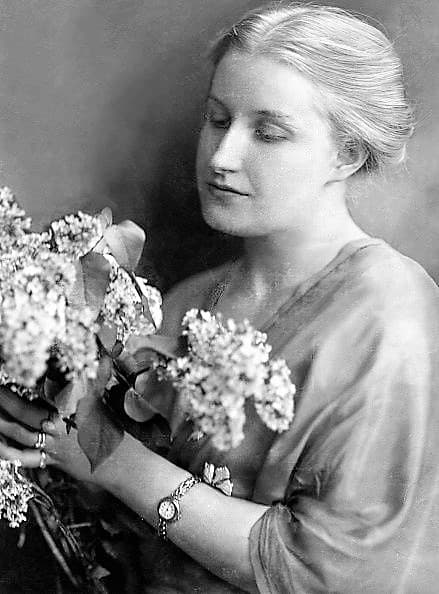
German · Literature · Arts
Thea von Harbou
December 27, 1888 – July 1, 1954
Early Life and Background
Thea Gabriele von Harbou was born on December 27, 1888, in Tauperlitz, a small village near Hof in the Franconian region of the Kingdom of Bavaria, then part of the German Empire. She was born into a family of minor aristocracy; her father was a forester, and the family, while not wealthy, held a noble title that afforded some measure of social standing. Von Harbou grew up in an environment that valued education and the arts, and from an early age she displayed a talent for writing and performance.
She was educated privately, as was customary for girls of her social class in the era, and she developed a passion for literature, theater, and storytelling. Rather than following the conventional path expected of women of her background—marriage and domesticity—von Harbou pursued a career on the stage, training as an actress. This early theatrical experience would prove formative, giving her an intuitive understanding of dramatic structure, character, and spectacle that she would later apply to her screenwriting.
Career Beginnings: Actress and Novelist
Von Harbou began her professional life as a stage actress, performing in provincial German theaters in the years before World War I. She toured with theatrical companies and gained experience in the practical craft of dramatic performance. During this period, she also began writing fiction, publishing her first novels in the 1910s. Her early novels were popular, often melodramatic works that reflected the nationalist and romantic sensibilities of the late Imperial and wartime periods in Germany. She wrote prolifically, producing numerous novels, novellas, and stories throughout the 1910s, establishing herself as a commercially successful author even before she entered the film industry.
Her literary reputation and her connections in Berlin's cultural scene eventually led her into the world of cinema, which was rapidly expanding as a popular art form in Germany during and after World War I. She began adapting her own novels and writing original screenplays for the German film industry in the late 1910s and early 1920s, a period during which German cinema—particularly the Expressionist movement—was gaining international recognition for its visual innovation and psychological depth.
Collaboration with Fritz Lang
Von Harbou's most significant professional and personal relationship began when she met director Fritz Lang. The two began collaborating professionally in the early 1920s and married in 1922 (she had previously been married to actor Rudolf Klein-Rogge, with whom she remained professionally connected, as he continued to act in films she wrote). Von Harbou and Lang would become one of the most celebrated creative partnerships in the history of German cinema, co-writing a remarkable series of films that defined the aesthetic and thematic ambitions of Weimar-era cinema.
Their collaborations included Der müde Tod (Destiny, 1921), the two-part epic Die Nibelungen (1924), Metropolis (1927), Spione (Spies, 1928), Frau im Mond (Woman in the Moon, 1929), and M (1931). Von Harbou wrote the screenplays, often adapting her own novels, while Lang directed with his distinctive visual style, combining Expressionist aesthetics with increasingly sophisticated narrative and technical ambition.
Metropolis and Major Works
Von Harbou's novel Metropolis, published in 1925, served as the basis for the 1927 film of the same name, widely regarded as one of the most important and influential films in cinema history. The film's depiction of a dystopian, class-divided futuristic city—with a wealthy elite living in luxury above an oppressed subterranean working class—captured the anxieties of industrialization, class conflict, and technological change that permeated Weimar Germany. The film's visual innovations, including its depiction of the robotic "Machine-Man" (a humanoid robot that becomes a duplicate of the heroine Maria), established enduring iconography for the science-fiction genre.
Metropolis was, at the time of its release, the most expensive film ever made, and though it was a commercial failure upon release and was subsequently cut and altered by distributors, it was rediscovered and restored in the following decades and is now recognized as a towering achievement of silent cinema. In 2001, it became the first film inducted into UNESCO's Memory of the World Register.
Von Harbou also wrote the screenplay for M (1931), a psychologically dense thriller about a child murderer that is considered one of the first great films of the sound era and a precursor to film noir. Her range as a writer—moving from the mythic grandeur of Die Nibelungen to the futuristic spectacle of Metropolis to the gritty realism of M—demonstrated exceptional versatility and cemented her reputation as one of the most important screenwriters in German film history.
Later Career and Nazi-Era Controversy
Von Harbou and Lang divorced in 1933, the same year the Nazi Party seized power in Germany. While Lang, whose mother was Jewish, chose to emigrate—first to France and then to the United States—von Harbou remained in Germany and joined the Nazi Party (NSDAP) that same year. She continued to work prolifically as a screenwriter and, eventually, as a director throughout the Nazi era, writing and directing films that were compatible with, or supportive of, the regime's ideological aims.
This period of her career has remained deeply controversial. Unlike many of her former collaborators who fled Germany, von Harbou's continued and apparently willing participation in the German film industry under the Nazi regime—including her party membership—has led historians to view her legacy with considerable ambivalence. She directed several films herself during this period and remained active in the German film industry throughout the 1930s and into the war years.
Personal Life
Von Harbou was married three times. Her first marriage was to actor Rudolf Klein-Rogge, who would later appear in several films she wrote, including as the mad scientist Rotwang in Metropolis. Her most significant marriage was to director Fritz Lang, whom she married in 1922; their partnership produced some of the most celebrated films in German cinema history before their divorce in 1933. She had no children.
Later Life and Death
After World War II, von Harbou continued to work in the West German film industry, though her postwar career was considerably more modest than her Weimar-era output. She wrote screenplays and continued her literary work into the early 1950s. She died on July 1, 1954, in West Berlin, reportedly after being struck by a car, at the age of 65.
Legacy
Thea von Harbou remains one of the most significant screenwriters of the silent and early sound film eras, credited with co-writing some of the most enduring and influential films in cinema history, including Metropolis, M, and Die Nibelungen. Her novels and screenplays helped define the visual and thematic language of German Expressionist and science-fiction cinema, and her contributions to the medium continue to be studied by film historians and scholars worldwide.
At the same time, her embrace of Nazism and continued career under the Third Reich have complicated her historical legacy, prompting ongoing scholarly reassessment of the relationship between artistic achievement and political complicity. Her body of work—spanning over 30 screenplays, numerous novels, and several directorial credits—remains a crucial document of German cultural history across two profoundly different political eras, and her role as one of the few women to achieve major creative authority in early cinema is a significant, if complicated, aspect of women's film history.
Dated achievements
4 indexed.
- Dec271888Science
Born in Tauperlitz, Bavaria
Thea von Harbou was born on December 27, 1888, in Tauperlitz, near Hof, Bavaria, into a family of minor aristocracy.
View details Thea von Harbou - Wikipedia - Jan101927Science
Metropolis premieres in Berlin
Thea von Harbou co-wrote the screenplay for Metropolis, which premiered January 10, 1927, becoming a landmark of science-fiction cinema.