← All women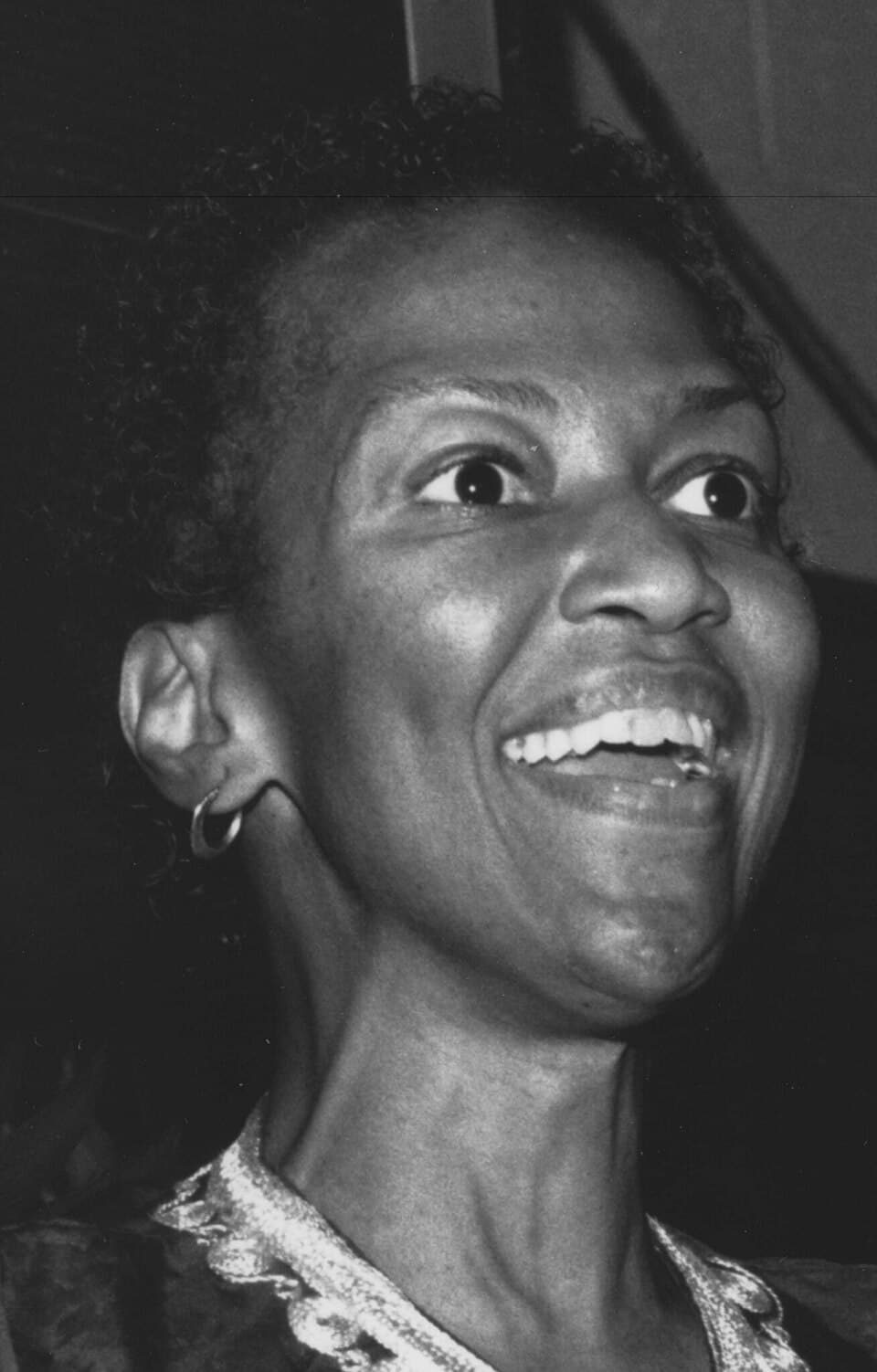
American · Activism · Literature · Arts
Thea Bowman
December 29, 1937 – March 30, 1990
Early Life and Background
Mary Thea Bowman, born Bertha Elizabeth Bowman, entered the world on December 29, 1937, in Yazoo City, Mississippi.[2][10][11][12] She was the only child of Dr. Theon Edward Bowman, a physician, and Mary Esther (Coleman) Bowman, a schoolteacher.[1][3][10] Her family soon settled in nearby Canton, Mississippi, where she grew up in a segregated town shaped by Jim Crow laws, limited opportunities for African Americans, and enduring racial tension.[1][10][11]
Bowman’s family history included grandparents who had been enslaved, a legacy that profoundly informed her understanding of Black suffering and resilience.[5][8][9] At home she encountered stories of struggle and determination, while in the wider community she saw both the vibrancy of Black religious and cultural life and the daily indignities imposed by discrimination.[1][11] Her parents’ professional status placed her within a Black middle class that prized education, respectability, and civic participation, even as racial barriers constrained their lives.
Raised initially in the Methodist tradition, Bertha was exposed to robust Black Protestant worship, with its preaching, music, and storytelling. Yet her life took a decisive turn when she came into contact with the Franciscan Sisters of Perpetual Adoration and the Missionary Servants of the Most Holy Trinity, who staffed local Catholic schools and missions.[4][5][10] Their example and teaching fascinated her. At age nine she asked her parents for permission to become Catholic, and in 1947 she was received into the Church; one account notes that she was baptized on June 8, 1947.[4][5][10] Her conversion made her part of a relatively small Black Catholic community in Mississippi and introduced her to a sacramental and liturgical tradition she would later help re-shape.
As a girl and teenager, Bowman attended segregated schools before being sent to a private Catholic school run by the Franciscan Sisters of Perpetual Adoration.[7] There she experienced a different educational environment, with strong academic expectations and immersion in Catholic devotional practices. The sisters’ commitment to her learning and spiritual growth reinforced her attraction to their way of life. These early experiences—Black Protestant worship, Catholic schooling, the legacy of slavery, and the reality of segregation—formed the complex spiritual and cultural foundation of the woman who would later insist on being both fully Black and fully Catholic.
Call to Religious Life and Formation
By her mid‑teens, Bertha Bowman discerned a vocation to religious life. Inspired by the Franciscan sisters who had taught her, she sought entry into the Franciscan Sisters of Perpetual Adoration (FSPA), headquartered in La Crosse, Wisconsin.[4][5][10] On September 2, 1952, at age fifteen, she entered St. Rose Convent, becoming the first African-American member of the congregation.[2][4]
Her decision to join a predominantly white Midwestern community was courageous. In the early 1950s, U.S. Catholic religious life remained largely segregated by race, and African Americans—especially women—often found their applications discouraged or rejected.[1][11] Bowman’s acceptance into FSPA therefore represented a significant breakthrough. Within the convent, she navigated cultural differences, racial prejudice, and the loneliness of being the only Black sister in formation, experiences that later shaped her sensitivity to marginalization and her insistence on hospitality and inclusion.
Bowman began her novitiate in 1956 and professed simple vows in 1958.[1] She took final vows in 1963, choosing the religious name Sister Mary Thea in honor of both the Virgin Mary and her father, Theon.[1][5] Her name signaled her desire to honor her family and to root her vocation in both Marian devotion and her Black familial heritage. During formation she studied, prayed, and worked in the convent, while also preparing for a teaching apostolate.
Education and Academic Career
From the beginning of her religious life, Bowman’s superiors recognized her intellectual gifts. She pursued higher education at Viterbo College in La Crosse, Wisconsin, earning a B.A. in English, Speech, and Drama in 1965.[3] Her training in language and performance would later inform her distinctive style as a teacher and speaker, blending rigorous analysis with storytelling, singing, and dramatic delivery.
Bowman then moved to Washington, D.C., to study at the Catholic University of America. She completed an M.A. in English in 1969 and a Ph.D. in English Language, Literature, and Linguistics in 1972.[3][6] Catholic University sources note that she received her doctoral degree on May 13, 1972, with a dissertation on St. Thomas More’s "Treatise on the Passion".[6] At a time when very few African American women held doctorates in English, especially from major Catholic institutions, her advanced degrees were themselves barrier-breaking.
During her graduate studies and afterwards, Bowman taught at multiple levels. She began teaching in a local Catholic primary school shortly after professing vows and later taught at secondary schools and universities, including Viterbo College and the Catholic University of America.[1][4][6] Over roughly sixteen years, she developed a reputation as a demanding yet inspiring educator who integrated literature, theology, and cultural history.
At Catholic University, Bowman is credited with creating and teaching the institution’s first Black literature course, bringing African American authors and themes into a curriculum that had largely centered European and white American texts.[6] This curricular innovation reflected her conviction that Black voices belong at the heart of Catholic intellectual life and that literature can be a powerful vehicle for exploring issues of race, identity, suffering, and hope.
Ministry in the Diocese of Jackson and National Outreach
After years of teaching, Bowman was invited by the bishop of Jackson, Mississippi, to return to her home state and serve in diocesan ministry.[4][5] In the 1970s she became director of an office focused on intercultural or cultural awareness—often described as the Office of Intercultural Affairs or Office of Cultural Awareness—for the Diocese of Jackson.[4] In this role she worked directly to foster better understanding among racial and ethnic groups within the church, to confront prejudice, and to promote liturgical practices that respected diverse cultural expressions.
Bowman’s work soon extended beyond Mississippi. Throughout the late 1970s and 1980s she traveled extensively across the United States and abroad, offering workshops, retreats, and lectures that combined preaching, teaching, and music.[4][5] She was known for her dynamic presentations that invited participants to sing African American spirituals, clap, and engage heart and body as well as mind. Her style drew from Black Protestant worship, Southern storytelling traditions, and Catholic sacramental theology.
She became a key figure in founding and shaping the National Black Sisters’ Conference, which brought together African American women religious from various congregations to support one another and advocate for racial justice within the church.[2][11] She also helped establish the Institute for Black Catholic Studies at Xavier University of Louisiana, a pioneering program dedicated to theological education rooted in Black Catholic experience.[2][7][11] These institutions offered structural support for Black Catholic scholarship and leadership, ensuring that Bowman’s concerns would outlast her individual ministry.
Liturgical and Musical Contributions
Bowman’s ministry consistently highlighted the role of music and liturgical inculturation. She taught that African American spirituals, gospel music, and call‑and‑response forms were not merely cultural artifacts but profound theological expressions that belonged in Catholic worship.[2][5]
Her influence was central to the creation of "Lead Me, Guide Me: The African American Catholic Hymnal", published on September 11, 1987 by GIA Publications.[2][5] She served as a principal contributor, advising on song selections, language, and the pastoral needs of Black Catholic communities. The hymnal is widely recognized as the first major Catholic hymnal designed specifically for African American congregations, and its publication marked a watershed in the church’s efforts to honor Black musical traditions in liturgy.[5]
Bowman’s work on "Lead Me, Guide Me" formed part of a broader movement for liturgical inculturation encouraged after the Second Vatican Council. She argued that the Catholic Church must be truly catholic, or universal, by embracing rather than suppressing the cultural gifts of its diverse communities. In her view, African American worship—its rhythms, stories, and emotional intensity—offered the whole church a deeper experience of joy, lament, and hope.
Major Works, Public Speaking, and Advocacy
While Bowman published scholarly work and contributed to liturgical resources, much of her impact came through public speaking and recorded talks. From the late 1970s through the 1980s she became one of the most sought‑after Catholic speakers on race, spirituality, and evangelization.[2][4][5] Her events drew diverse audiences, including priests, sisters, lay leaders, students, and ecumenical groups.
Bowman’s lectures and retreats often addressed themes such as being "Black and Catholic," overcoming racism, the importance of community, and the need for joy and song in Christian life. She insisted that racial justice was integral to the Gospel and that the church must stand with the oppressed, drawing on both Catholic social teaching and the Black freedom struggle.[2][5][9]
Among her most celebrated public interventions was her address to the U.S. Conference of Catholic Bishops on March 6, 1989. Speaking at their spring meeting at Seton Hall University, she became the first African-American woman ever to address the bishops’ conference.[2][9] In a wheelchair due to advancing cancer, she invited the bishops to join her in singing spirituals and challenged them to combat racism in their dioceses. Her talk is frequently cited as a turning point in episcopal awareness of Black Catholic concerns.
Awards, Honors, and Recognition
Bowman’s contributions were recognized with multiple honors. On May 21, 1989, Boston College awarded her an honorary Doctorate in Religion and identified her as the first African-American woman to receive an honorary doctorate in Religion from the university.[3] The degree acknowledged her intellectual and spiritual leadership and her role in advancing racial justice and cultural inclusion within the church.
Beyond formal degrees, Bowman received widespread informal recognition. Many dioceses, universities, and religious communities invited her repeatedly, regarding her as a prophetic voice. Media outlets covered her talks, and recordings of her speeches and interviews circulated widely. By the late 1980s, she was often described as a "modern-day saint" by American Catholics who were inspired by her courage, joy, and honesty.[1][4]
Personal Life and Spirituality
As a Franciscan Sister of Perpetual Adoration, Bowman lived a vowed life of poverty, chastity, and obedience within her religious community. She did not marry or have children, but she cultivated extensive spiritual and pastoral relationships, referring to those she served as part of her "family" in the Lord. Her community life included participation in common prayer, Eucharistic adoration—a central FSPA practice—and service assignments determined in collaboration with superiors.[4][10]
Bowman’s spirituality drew deeply from both Franciscan and Black cultural sources. She emphasized joy, simplicity, and care for the marginalized, echoing the spirit of St. Francis of Assisi. At the same time, she cherished the story‑telling, singing, and emotional expressiveness of the Black church. She spoke often of "getting down" with people, meeting them where they were, and walking with them in struggle and celebration.[4][5]
Her prayer life integrated traditional Catholic devotions with spontaneous song and heartfelt testimony. Those who encountered her frequently remarked on her ability to radiate joy even in suffering and to make others feel seen and valued. She saw her vocation as helping people "to live fully" and "to affirm one another," grounded in a conviction that every person is beloved by God.[4][5]
Illness, Later Life, and Death
In 1984, Bowman’s life took a painful but transformative turn when she was diagnosed with breast cancer; sources from FSPA and other institutions mark the date specifically as May 17, 1984.[4][7] Rather than withdrawing from public ministry, she continued her work, adjusting her schedule as her health allowed. She underwent treatment while maintaining a demanding itinerary of talks and retreats.
As the disease progressed, Bowman increasingly used a wheelchair and required assistance, but she insisted on continuing to travel and speak. Her final years featured some of her most powerful public interventions, including her 1989 address to the U.S. bishops.[2][9] She framed her illness within a theology of the cross and resurrection, teaching that suffering can be a participation in Christ’s passion and a source of solidarity with others who suffer.
On March 30, 1990, Bowman died in Canton, Mississippi, at age 52.[1][2][10][11] Her death came after six years of living openly with cancer and ministering from a wheelchair. Friends, colleagues, and admirers across the country mourned her passing, many convinced of her sanctity. Obituaries and memorial tributes emphasized her role as a teacher, evangelist, and advocate for racial justice.[1][4]
Legacy and Historical Impact
In the decades since her death, Sister Thea Bowman has become one of the most influential figures in Black Catholic history. Her insistence that one can be both deeply Black and deeply Catholic challenged assimilationist pressures and helped many African American Catholics embrace their heritage within the church.[2][5][11] She modeled a form of evangelization rooted in joy, song, and storytelling, connecting doctrine and liturgy to everyday experiences of suffering and hope.
Institutionally, Bowman’s work contributed to the strengthening of Black Catholic structures, including the National Black Sisters’ Conference and the Institute for Black Catholic Studies at Xavier University.[2][7][11] Her role in developing "Lead Me, Guide Me" transformed Catholic liturgical music by providing a widely used resource centered on African American spiritual traditions.[2][5]
Her memory is preserved in numerous ways. Schools and centers bear her name, such as the Sister Thea Bowman Center for Women at Siena College and various educational programs across the United States.[7][3] Dioceses and parishes hold events in her honor, and her speeches and songs remain available through recordings and transcripts. She is regularly cited in studies of Black Catholicism, women’s religious history, and liturgical inculturation.
Bowman’s influence extends beyond Catholic circles. As a Black woman religious who combined scholarship, activism, and artistry, she offers a significant case study for historians of African American religion, feminist theology, and civil rights. Her life illustrates how religious women contributed to the broader struggle for racial justice, not only through marches and protests but through education, liturgy, and pastoral work.
Canonization Cause and Continuing Relevance
The enduring impact of Bowman’s life led to growing advocacy for her canonization. On June 1, 2018, the Diocese of Jackson formally opened her cause, granting her the title "Servant of God" and initiating official investigation into her holiness.[1][2][9] This step placed her among a small group of African Americans whose lives are under review for possible recognition as saints.
The canonization cause involves gathering documentation, testimonies, and archival materials about Bowman’s life, virtues, and reputation. Many Catholics, particularly African Americans, view this process as an important recognition of Black holiness and leadership in a church that has often marginalized their contributions.[9][11] While some devotional sources describe her as one of the first U.S.-born African American women to have a cause opened, historians note the need to consider other African American candidates; nevertheless, her cause is widely seen as symbolically significant.[9]
Today, Bowman’s words and example continue to resonate amid ongoing conversations about racism, social justice, and cultural inclusion in the Catholic Church and beyond. Her call to "teach the true truths" and to welcome the gifts of every culture remains a challenge to institutions struggling with inequality. For many, she embodies a hopeful vision of a church where all voices are heard, all cultures are honored, and justice and joy walk together.
Dated achievements
9 indexed.
- Dec291937Activism
Birth in Yazoo City, Mississippi
Bertha Elizabeth Bowman (later Sister Thea Bowman) was born in Yazoo City, Mississippi.
View details Knights of Peter Claver - Servant of God Thea Bowman - Sep021952Activism
First African-American member of the Franciscan Sisters of Perpetual Adoration
At age 15, Bertha Bowman became the first African-American member of the Franciscan Sisters of Perpetual Adoration.