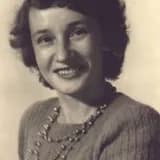
Born on January 23, 1909, in Tomsk, Russian Empire, to a family that would emigrate to the United States following the Russian Revolution.
Tatiana Avenirovna Proskouriakoff was born on January 23, 1909, in Tomsk, in what was then the Russian Empire. She was the youngest of three daughters born to Avenir Proskouriakoff, a chemical engineer, and Alexandra Proskouriakoff, a physician.
Her father traveled to the United States in 1915 to help oversee munitions contracts for the Russian Imperial government during World War I. The outbreak of the Russian Revolution in 1917 stranded the family abroad, and rather than return to a Russia transformed by Bolshevik rule, the Proskouriakoffs settled permanently in the United States, eventually making their home in Pennsylvania.
This early upheaval — the loss of homeland, status, and financial security that had once been assured under the old imperial order — shaped Tatiana's resourcefulness and independence. She grew up between cultures, absorbing a rigorous, science-oriented household ethos from her physician mother and engineer father, which would later manifest in her meticulous, almost architectural approach to archaeological illustration and epigraphy.
Though largely remembered for her later scholarly breakthroughs in Maya studies, her birth into a family of Russian intelligentsia displaced by revolution set the stage for a life defined by adaptability, self-teaching, and an eventual second career built without formal advanced credentials — a remarkable path for a woman in a field then dominated by male academics.