← All women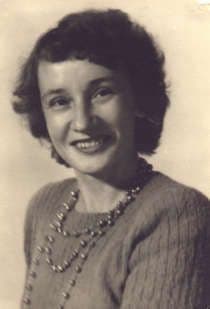
Russian, American · Science
Tatiana Proskouriakoff
January 23, 1909 – August 30, 1985
Early Life and Background
Tatiana Avenirovna Proskouriakoff was born on January 23, 1909, in Tomsk, Russia, to parents whose academic backgrounds influenced her intellectual upbringing. Her family emigrated to the United States in 1915, settling in Pennsylvania, where her father worked as a chemist at a steel company. Tatiana demonstrated a passion for learning and graduated from Pennsylvania State College in 1930 with a degree in architecture, a field that honed her attention to detail, later crucial in her archaeological work.
Career Beginnings and Development
Proskouriakoff's career in archaeology began somewhat serendipitously. After creating detailed reconstructions of Mayan architecture at the University of Pennsylvania Museum, her drawings impressed Sylvanus G. Morley of the Carnegie Institution. In the late 1930s, she joined their team, focusing on Mesoamerican studies. Her role expanded beyond architecture as she engaged in significant epigraphic work, specifically with Mayan hieroglyphics.
Major Works, Discoveries, and Accomplishments
One of Proskouriakoff's most transformative contributions was her 1960 paper that demonstrated inscriptions on monuments at Piedras Negras recorded the history of Mayan kings. This breakthrough fundamentally reshaped the understanding of Mayan hieroglyphics as historical texts rather than purely ceremonial. Her meticulous examination and reconstruction of these inscriptions opened new windows into Mayan social and political structures.
Awards, Honors, and Recognition
Tatiana Proskouriakoff's pioneering contributions were recognized posthumously when she was inducted into the National Academy of Sciences in 1971, a rare honor for a woman in a predominantly male field at the time. Her work earned her immense respect and recognition in academic circles, and she is celebrated in exhibitions worldwide.
Personal Life
Proskouriakoff remained single throughout her life, dedicating her time to her work and studies. Her commitment to her field was notable, often spending extended periods working on site during archaeological digs and research projects. She formed strong professional relationships, influencing many students and academics in the field of archaeology.
Legacy and Historical Impact
Proskouriakoff's legacy is imprinted in the field of Mesoamerican archaeology, particularly through her epigraphic breakthroughs. Her work profoundly influenced the methods and approaches in deciphering Mayan scripts, paving the way for further discoveries. She is regarded as a leading figure in showing how archaeological and epigraphic work can collaboratively illuminate the past.
Later Life and Death
Toward the end of her career, Proskouriakoff continued to contribute to important publications and research initiatives. She passed away on August 30, 1985, in Cambridge, Massachusetts. Despite her death, her research and insights continue to guide and inspire current and future generations of archaeologists and epigraphers.
Dated achievements
3 indexed.
- Jan231909Science
Birth of Tatiana Proskouriakoff in Tomsk, Russia
Born on January 23, 1909, in Tomsk, Russian Empire, to a family that would emigrate to the United States following the Russian Revolution.
View details Tatiana Proskouriakoff - Wikipedia - May121960