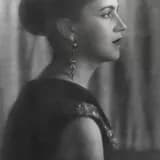
Tarsila gifts "Abaporu" to her husband, Oswald de Andrade, influencing the Anthropophagic movement.
On January 11, 1928, Tarsila do Amaral gifted her landmark painting "Abaporu" to her husband, writer Oswald de Andrade, as a birthday present. This work, featuring an elongated human figure set against a lush, abstract landscape, became the inspiration behind the Anthropophagic movement, a central tenet in modern Brazilian art that called for 'cannibalizing' foreign influences to create something uniquely Brazilian. The work's cultural resonance and Tarsila's role in its propagation underscored her influence in shaping a national artistic identity that was both modern and distinctly rooted in Brazilian culture.