← All women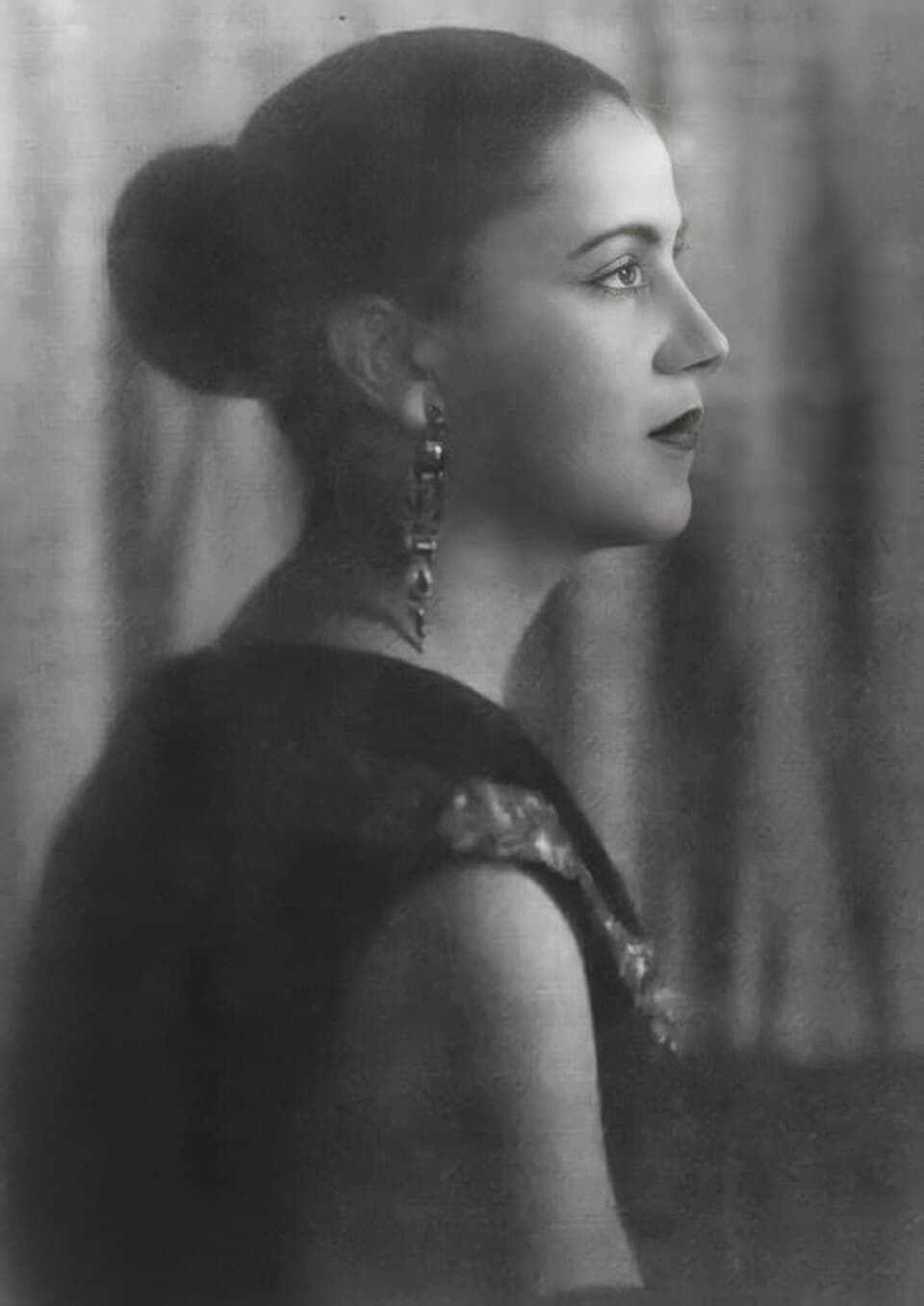
Brazilian · Arts
Tarsila Do Amaral
September 1, 1886 – January 17, 1973
Early life and background
Tarsila de Aguiar do Amaral was born on 1 September 1886 at Fazenda São Bernardo, in Capivari (today within the municipality of Rafard), in the state of São Paulo, then part of the Empire of Brazil.[1][2][4][7] She came from a wealthy family of coffee plantation owners and spent her childhood moving between several family fazendas in the interior of São Paulo and occasional trips to Europe.[5][7][14] Born two years before the abolition of slavery in Brazil and three years before the proclamation of the republic, she grew up in a social order still marked by slavery and by the consolidation of the coffee economy.[12][14]
Tarsila’s parents encouraged education and travel, and she received an upbringing that combined traditional expectations for elite girls with access to broader cultural experiences. She studied at a convent school in São Paulo and later spent time in Barcelona, where she continued her education.[4][7] This early exposure to European languages, manners, and art would later facilitate her insertion into Parisian artistic circles.
At the same time, life on the fazendas left a lasting imprint on her visual imagination. The rural landscapes, workers, animals, and vernacular architecture of the Brazilian interior would become central motifs in her mature painting. Art historians have emphasized that her childhood between plantation and city created a dual perspective—both privileged and observant—that later underpinned her project of forging a distinctively Brazilian modern art.[5][11][14]
Early artistic training and first works
Tarsila’s interest in drawing emerged in adolescence. In the early 1900s she began formal studies in São Paulo, and in 1902 she entered the Escola de Belas Artes, receiving an academic foundation in drawing and painting.[11] Like many women of her class, art was initially seen as an accomplishment rather than a profession, but Tarsila took her training seriously and continued to study with local masters.
By 1904, while studying in Barcelona, she painted “Sagrado Coração de Jesus” (Sacred Heart of Jesus), often cited in Brazilian educational sources as her first painting.[6] The work reflects a conventional religious subject, in keeping with the expectations of academic art and acceptable themes for a young woman artist. Nevertheless, it marks the beginning of her documented artistic production and her first engagement with European artistic environments.
Throughout the 1910s, Tarsila traveled periodically to Europe with her family. In 1916 she returned from Europe to São Paulo and studied with the painter Pedro Alexandrino, known for still lifes and landscapes.[11] Under his guidance she refined her technical skills, especially in the genres of still life and landscape, but her style remained essentially naturalistic and academic. At this stage she had not yet embraced modernism, and her work aligned with the conservative tastes of São Paulo’s bourgeoisie.
Entry into Brazilian modernism
The cultural climate of São Paulo changed rapidly in the 1910s and early 1920s as the city industrialized and a younger generation of writers and artists questioned academic conventions. Tarsila’s decisive turn toward modernism occurred after her contact with this milieu and her subsequent trips to Europe in the early 1920s.
In 1922, São Paulo hosted the celebrated Semana de Arte Moderna (Week of Modern Art), a multi-day event at the Municipal Theatre that showcased new trends in literature, music, and visual arts.[4][7][11] Although Tarsila was not one of the exhibitors at the week itself, she soon became closely associated with its protagonists and quickly emerged as a leading figure in the Brazilian modernist movement. She joined the circle that came to be known as the Grupo dos Cinco (Group of Five), alongside writer Mário de Andrade, writer and critic Oswald de Andrade, painter Anita Malfatti, and poet and journalist Menotti Del Picchia.[4][7][9] This group became central to the development of a new Brazilian avant-garde.
In 1923, Tarsila traveled to Paris for further artistic training and immersion in the European avant-garde.[1][2][4][11] She studied with Fernand Léger, André Lhote, and Albert Gleizes, key figures in Cubism and post-Cubist painting.[1][2][11][14] These studies exposed her to new conceptions of form, structure, and abstraction. She also visited studios and salons, observing the work of Picasso, Braque, and other modernists.
A letter she wrote to her family dated 16 January 1923 documents her enthusiasm for modern art and her efforts to reconcile it with her own sensibility.[14] In this and other letters, she described her lessons, the Parisian environment, and her determination to become a truly modern artist. These documents show her consciously positioning herself not as a passive admirer but as a participant in the avant-garde, with the ambition to develop a modern art rooted in Brazil.
Pau-Brasil phase and the “Viagem a Minas”
Upon returning to Brazil in the mid-1920s, Tarsila began to synthesize the formal lessons of Cubism with Brazilian subjects. This gave rise to what critics and the artist herself termed the Pau-Brasil (Brazilwood) phase, named after the wood that was one of colonial Brazil’s first export commodities.[11][14] The concept of Pau-Brasil modernism, elaborated in parallel by Oswald de Andrade in his Manifesto Pau-Brasil, sought a poetic and visual language that was at once modern and deeply Brazilian.
In 1924, Tarsila undertook the famous “Viagem a Minas” (Trip to Minas Gerais) with Oswald de Andrade, Mário de Andrade, and other intellectuals.[10][18] Traveling through historic colonial towns such as Ouro Preto and Sabará, they studied baroque churches, folk crafts, and the everyday life of local communities. For Tarsila, this journey proved decisive: she filled sketchbooks with images of churches, hills, animals, and people, which later informed a series of stylized, brightly colored landscapes and townscapes.
Works from this phase—such as E.F.C.B., São Paulo, and Morro da Favela—combine simplified, almost geometric forms with vibrant, non-naturalistic colors and motifs drawn from Brazilian urban and rural life.[3][11][12] The Pau-Brasil paintings present Brazil as simultaneously modern and archaic, industrial and pastoral, challenging stereotypes of the country as either purely tropical or underdeveloped. Art historians see this period as crucial in the formation of a distinctly Brazilian modernist idiom, with Tarsila at its center.[3][8][11]
Abaporu and the Anthropophagic movement
The apex of Tarsila’s experimentation in the 1920s came with the creation of Abaporu in 1928.[4][11][14] Painted in São Paulo, the work depicts a colossal, nude human figure with an enormous foot, tiny head bent toward the ground, and a single cactus under a small blazing sun. Executed in a simplified, surreal style, it condensed many of her concerns about the body, landscape, and Brazilian identity.
On 11 January 1928, Tarsila gave Abaporu as a birthday present to her husband, the writer Oswald de Andrade.[15] The unusual image fascinated him. Together with friends, they derived the title from the Tupi language—"aba" (man) and "poru" (to eat)—interpreting it as "man who eats people."[4][14] Oswald saw in this figure a metaphor for Brazil’s capacity to "devour" and transform foreign influences.
On 16 January 1928, Oswald published the “Manifesto Antropófago” (Anthropophagous Manifesto), widely regarded as one of the most important texts in Brazilian modernism.[4][8][14] Directly inspired by Abaporu, the manifesto proposed "cultural cannibalism" as a strategy: instead of imitating Europe, Brazilian artists and writers would symbolically consume European culture and re-create it in a Brazilian form. Tarsila’s painting became the emblem of this Anthropophagic movement.
Art historians and institutions such as the Metropolitan Museum of Art emphasize that Tarsila was not a mere muse but a co-founder of Anthropophagy.[8] Her visual imagination made the movement’s central metaphor possible, and subsequent works like Antropofagia (1929) further developed its themes.[4][11] In a modernist milieu often dominated by male writers and critics, Tarsila’s canvases provided the most enduring images of the movement, and Abaporu has been described as the most famous and most valuable painting in Brazilian art history.[11]
Later 1920s: Anthropophagic works and international exposure
In the wake of Abaporu and the manifesto, Tarsila produced a series of works that extended the Anthropophagic idea. In 1929 she painted Antropofagia, a canvas that merges imagery from Abaporu with another earlier work, A Negra, to portray two figures in a lush, abstracted landscape.[4][11][14] The painting has been interpreted as a synthesis of Indigenous, African, and European elements, symbolizing Brazil’s mixed cultural heritage and the cannibalization of influences.
During this period Tarsila continued to travel between Brazil and Europe. Her work attracted attention in artistic circles abroad for its combination of avant-garde form and non-European subject matter. In 1931, she held her first solo exhibition in Paris at Galerie Percier, presenting paintings from her Brazilian modernist phases to a European audience.[5][14] The show signaled that a woman artist from Latin America could stake a claim within the broader narrative of modernism.
However, the late 1920s also brought personal and financial turbulence. The stock market crash of 1929 and the ensuing economic crisis undermined the coffee-based fortunes of families like Tarsila’s. At the same time, her marriage to Oswald de Andrade came under strain and ultimately ended; their separation and divorce marked the close of the most intense phase of their artistic collaboration.[7][11] These changes would influence the shift in her themes during the 1930s.
Socially engaged work: Operários and the 1930s
In the early 1930s, amid political upheavals and the rise of industrial labor movements in Brazil, Tarsila’s work took on more explicitly social themes. The most celebrated painting from this phase is Operários (Workers), completed in 1933.[11][12] The canvas depicts a tightly packed group of industrial workers of diverse ethnic backgrounds, positioned in front of factory buildings and smokestacks. Their faces, arranged in a grid-like pattern, convey both individuality and collective presence.
Operários is widely interpreted as a response to the rapid industrialization of São Paulo and to growing social tensions between capital and labor.[11][12] By emphasizing the racial and ethnic diversity of the workers—descendants of Europeans, Africans, Indigenous peoples, and migrants—Tarsila highlighted the complexity of Brazil’s working class. The painting has been read as a critique of the coffee aristocracy from which she herself came, indicating a shift in her political consciousness.
Throughout the 1930s, Tarsila also produced other works that engaged with urbanization, poverty, and social inequality. Her visual language remained modernist, but her subject matter moved away from the fantasy-laden Anthropophagic landscapes toward more overtly critical scenes. This evolution reflected not only national politics but also her own changing circumstances after the loss of family wealth and personal upheavals.
Mid-century career, recognition, and challenges
After the pioneering phase of the 1920s and early 1930s, Tarsila’s visibility fluctuated. The Estado Novo dictatorship (1937–1945) and shifting cultural fashions in Brazil contributed to a relative marginalization of the early modernists. Nonetheless, she continued to work, exhibiting intermittently and executing murals, illustrations, and decorative projects.[7][10]
From the 1960s onward, there was a renewed interest in Brazil’s modernist heritage. Museums, critics, and younger artists began to reassess the contributions of the 1920s generation, and Tarsila’s paintings from the Pau-Brasil and Anthropophagic phases were rediscovered as foundational works of national art.[12][19] This period saw important acquisitions of her works by institutions and the organization of retrospective exhibitions.
A key moment in this revival was the major retrospective at the Museu de Arte de São Paulo (MASP) in 1969, which surveyed her career and effectively canonized her as a central figure in Brazilian art history.[5] By then, she was in her eighties and lived to see this public recognition on a grand institutional scale. The show helped cement her reputation for subsequent generations of critics and art historians.
Despite this late acclaim, Tarsila also faced personal and financial difficulties in these decades. The earlier loss of family wealth and the uneven market for modernist art meant that she did not enjoy the material security that might be expected of so celebrated an artist. Yet her commitment to painting remained steadfast, and she continued to rework themes and motifs from her earlier phases.
Personal life
Tarsila’s personal life intertwined closely with her artistic development. She was married more than once; her most historically significant relationship was with the writer Oswald de Andrade, an influential modernist poet and critic.[4][7] Their partnership, which included marriage in the late 1920s, formed one of the core alliances of Brazilian modernism.
As a couple, Tarsila and Oswald traveled to Europe, organized salons in São Paulo, and co-developed the concepts underlying the Pau-Brasil and Anthropophagic movements.[4][8] While Oswald articulated these ideas in manifestos and literary works, Tarsila gave them visual form. Their relationship was intellectually intense but also tumultuous, and it ended in separation and divorce around the time of the Great Depression.[7][11]
Biographical accounts portray Tarsila as a cosmopolitan figure who navigated multiple social roles: wealthy heiress, bohemian modernist, salon hostess, and later, elder stateswoman of Brazilian art.[3][12] She was known for her distinctive fashion sense and sociability, and contemporaries often remarked on her charisma. Yet she also faced gendered expectations and constraints, working in a male-dominated art world where women were often treated as muses or amateurs rather than equal creators. Her ability to assert herself as a professional artist and a leader of modernism represented a significant challenge to these norms.
Later life and death
In her later decades, Tarsila lived primarily in São Paulo, continuing to paint and to participate in exhibitions as opportunities arose.[7][10] As the historiography of Brazilian modernism matured, scholars and critics increasingly recognized her role as one of its principal architects. Younger generations of artists and intellectuals sought her out as a living link to the pioneering 1920s.
On 17 January 1973, Tarsila do Amaral died in São Paulo at the age of 86.[1][2][4][7][11][13] By then, she had produced an extensive body of work—hundreds of paintings, drawings, prints, and a small number of sculptures and murals.[13] Her death marked the end of a life that had spanned Brazil’s transition from empire to modern republic and had witnessed profound social and cultural changes.
Although she died before the full international expansion of interest in Latin American modernism, her reputation in Brazil was already secure, and her works were present in leading national collections. Subsequent decades would see her profile grow beyond Brazil as museums and scholars around the world revisited the contributions of women and of artists from the Global South.
Posthumous recognition and major exhibitions
After her death, Tarsila’s work continued to gain prominence. In Brazil, she has long been considered one of the most important modernist artists, and her painting Abaporu has achieved iconic status.[4][7][11][12] Internationally, however, her recognition developed more slowly, reflecting broader patterns of Eurocentric and male-centered art histories.
Major museums and research centers have increasingly acknowledged her significance. The Metropolitan Museum of Art’s Leonard A. Lauder Research Center for Modern Art describes her as one of the foremost artists of Brazil’s modernist movement and highlights her role, alongside Oswald de Andrade, in founding the Anthropophagic movement.[8] MoMA, the Art Institute of Chicago, and other institutions have acquired and exhibited her work, integrating it into narratives of global modernism.
A turning point in international visibility came with the exhibition “Tarsila do Amaral: Inventing Modern Art in Brazil”, which opened at the Museum of Modern Art (MoMA) in New York on 11 February 2018.[16] This was MoMA’s first solo show devoted to the artist and examined the years from the 1920s to the early 1930s, emphasizing how she helped shape modern art in Brazil and beyond. Reviews noted that the exhibition challenged traditional center–periphery models and highlighted the centrality of a Brazilian woman artist to modernism.
In Europe, recognition reached a new level with the exhibition “Tarsila do Amaral: A Modern Brazil” at the Musée du Luxembourg in Paris, which opened on 12 June 2023 and was described as the first retrospective of her work in France.[franceToday] Staged in the city where she had once been a student, the show symbolically reversed the earlier relationship in which Brazilian artists went to Paris primarily as learners. Now Parisian audiences encountered Tarsila as a canonical modernist whose work reshaped understandings of Brazil and modern art itself.
Major works and stylistic contributions
Tarsila’s oeuvre is often divided into distinct phases that correspond to shifts in subject matter and style:
- Early academic period: Including works such as Sagrado Coração de Jesus (1904), produced under academic and religious influences while studying in Europe.[6]
- Pau-Brasil phase: Beginning in the mid-1920s, characterized by simplified forms, bright colors, and Brazilian themes such as favelas, rural landscapes, and urban scenes. Representative works include E.F.C.B., Morro da Favela, and São Paulo.[3][11]
- Anthropophagic phase: Centered on Abaporu (1928) and Antropofagia (1929), in which she developed surreal, hybrid figures and landscapes to express the concept of cultural cannibalism and Brazil’s mixed heritage.[4][11][14]
- Socially engaged phase: In the 1930s, works like Operários (1933) addressed industrialization, labor, and class inequality, using a modernist vocabulary to depict contemporary social realities.[11][12]
Across these phases, certain formal and thematic concerns recur: the stylization and elongation of bodies, the combination of flat planes of color with volumetric forms, and the juxtaposition of industrial and natural motifs. Tarsila’s work consistently foregrounds Brazilian landscapes, people, and cultural references, making them vehicles for broader reflections on modernity, identity, and power.
Her contributions have been described as central to creating a visual identity for Brazilian modernism, especially alongside Anita Malfatti.[3] By integrating elements of Cubism, Futurism, and Surrealism with motifs from Brazilian folklore, architecture, and daily life, she produced an art that was at once cosmopolitan and rooted in local experience. This synthesis has led many scholars to regard her as one of the leading Latin American modernist artists.[4][7][10]
Awards, honors, and institutional legacy
During her lifetime, Tarsila received recognition in the form of exhibitions, critical attention, and inclusion in important collections, though the documentation of specific awards is less emphasized in standard references than her exhibitions and influence. Her greatest honors have arguably been posthumous: the elevation of her work to canonical status in Brazilian art history and its inclusion in major international institutions.
Her paintings are held in collections such as the Museu de Arte de São Paulo, the Museum of Modern Art in New York, and other leading museums.[4][16] Scholarly publications, research projects, and catalogues raisonnés continue to examine her oeuvre. The AWARE (Archives of Women Artists, Research and Exhibitions) platform, dedicated to women artists, features a detailed entry on Tarsila, underscoring her importance in both national and gender-focused art histories.[5]
In recent years, exhibitions like the MoMA show and the Paris retrospective have functioned as major honors in themselves, signaling that international art institutions now recognize her as a key figure worthy of large-scale scholarly and curatorial investment. These projects also contribute to the ongoing process of re-writing modernist history to more fully acknowledge women’s roles.
Legacy and historical impact
Tarsila do Amaral’s legacy operates on multiple levels. Within Brazil, she is widely regarded as the painter who best realized nationalist aspirations within a modernist style.[4][7] Her images of tropical landscapes, favelas, and workers have become shorthand for Brazilian modernism itself, reproduced in textbooks, museum displays, and popular culture.
Internationally, she is increasingly recognized as one of the most important modernist artists from Latin America. Her career challenges the traditional narrative in which modernism flows from Europe to the rest of the world: through Anthropophagy and Pau-Brasil, she proposed a model in which peripheral cultures actively transform and re-export modernism back to the center.[4][8][14] This has made her work especially compelling for contemporary theories of postcolonial and global art history.
From a gender perspective, Tarsila’s life illustrates both the obstacles and possibilities faced by women artists in the early twentieth century. She benefitted from class privilege and family support that allowed her to study abroad, yet she also had to assert her professional authority in milieus where women were often relegated to secondary roles. The fact that one of Brazil’s most enduring modernist movements was visually and conceptually catalyzed by a woman painter provides a powerful counterpoint to the male-dominated canon and has made Tarsila a central figure in feminist art historical scholarship.
Her influence extends to contemporary Brazilian and Latin American artists who draw on her combination of bold color, stylized forms, and critical engagement with national identity. Exhibitions, scholarly studies, and museum acquisitions continue to expand understanding of her work, ensuring that Tarsila do Amaral remains not only a symbol of Brazilian modernism but also a vital reference point in the global history of art.
Dated achievements
10 indexed.
- Sep011886Arts
Birth in Capivari, São Paulo
Tarsila do Amaral was born in São Paulo, marking the beginning of a legacy in Brazilian modernism.
View details Chronology: Tarsila do Amaral - Guggenheim Bilbao - Jan011904Arts
Paints "Sagrado Coração de Jesus" in Barcelona
Tarsila paints "Sagrado Coração de Jesus" in Barcelona in 1904, marking her early documented artistic work.