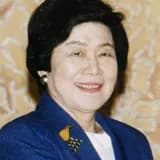
Takako Doi was born on November 30, 1928, in Kobe, Hyōgo Prefecture, Japan.
Takako Doi was born on November 30, 1928, in Kobe, Japan, the daughter of a physician. She grew up during a turbulent period in Japanese history, coming of age during World War II and the subsequent Allied occupation, an era that profoundly shaped her political consciousness.
She pursued higher education at a time when few Japanese women attended university, eventually earning a law degree from Doshisha University in Kyoto. This academic path was unusual for a woman of her generation and set the stage for her subsequent career as a constitutional law scholar and, later, a groundbreaking politician.
Her early exposure to postwar Japan's new pacifist constitution, which she would go on to teach and defend throughout her career, became a defining ideological commitment. Doi later became a lecturer in constitutional law, an academic grounding that informed her lifelong advocacy for Article 9, the war-renouncing clause of Japan's constitution.
This foundation in law and her formative experiences of a devastated, rebuilding Japan set her on a trajectory that would eventually lead her to become one of the most consequential female politicians in Japanese history, breaking multiple glass ceilings in a deeply male-dominated political system.