← All women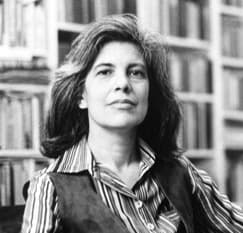
American · Literature
Susan Sontag
January 16, 1933 – December 28, 2004
Early life and education
Susan Lee Sontag (born Susan Rosenblatt) was born in New York City on January 16, 1933, to Jewish parents. She grew up largely in Tucson, Arizona, and later in Los Angeles, experiences that shaped both her cosmopolitan outlook and her early sense of being intellectually apart from her surroundings. Her father died when she was young, and her mother later remarried, circumstances that biographical accounts describe as formative in her development and self-conception. From childhood, Sontag displayed an intense appetite for reading and an ambitious seriousness about literature.
She was a gifted student and graduated from high school at an unusually young age. She entered the University of Chicago, where she studied with unusual breadth and speed, immersing herself in philosophy, literature, and the humanities. While still young, she married sociologist Philip Rieff in 1950; their son, David Rieff, was born in 1952. Sontag completed her undergraduate degree and later pursued graduate work at Harvard University, as well as at Oxford and the Sorbonne, experiences that deepened her intellectual range and exposed her to European critical traditions.
Early career and the rise of a critic
After her education, Sontag spent time teaching and writing while developing the voice that would make her famous. In the late 1950s and early 1960s, she began publishing essays that reflected her wide range of interests, from theology and philosophy to avant-garde art and modern culture. Her early essay “The Anthropology of Lenin” is often cited as an important early critical work. In 1960, she moved to New York City and entered the vibrant world of literary magazines, intellectual debate, and avant-garde art that would become the setting for much of her career.
Her breakthrough came with the essay “Notes on ‘Camp’”, published in 1964 in Partisan Review. The piece became a cultural event because it treated style, theatricality, and exaggerated artifice as serious subjects of criticism. Sontag’s tone was cool, compressed, and authority-laden, and it helped define a new model of the public intellectual: one who could write for a general audience without sacrificing intellectual rigor. She soon became a regular contributor to major journals, including The New York Review of Books, and emerged as a prominent voice in debates about modern art and culture.
Books, criticism, and literary achievement
Sontag published her first novel, The Benefactor, in 1963. The book introduced her as a novelist of formal ambition, even though her reputation would rest primarily on essay writing. Two years later, she published Against Interpretation and Other Essays (1966), which became a landmark in modern criticism. In it, she argued against interpretive habits that reduced art to hidden meanings, and she urged readers to recover the sensory and formal life of artworks. The book established her as one of the leading critics of her generation.
Her next major works broadened her influence further. On Photography (1977) examined the social and moral implications of photographs and became a foundational text in visual culture studies. Illness as Metaphor (1978) challenged the language used to describe disease, especially cancer, and remains a landmark in the medical humanities. Sontag later expanded that critique in AIDS and Its Metaphors, a work that extended her anti-stigmatizing approach to another major public-health crisis. She also published fiction throughout her career, including Death Kit (1967), The Volcano Lover (1992), and In America (2000), as well as short fiction and plays.
Her literary range was unusually broad. She wrote essays, novels, short stories, drama, film scripts, and criticism, often moving between genres in a way that challenged conventional literary categories. Her style was rigorous, allusive, and frequently aphoristic. She was equally interested in the history of ideas, the ethics of representation, and the moral responsibilities of intellectuals. Her work often insisted that art should be encountered not only for its meanings but for its form, texture, and power.
Filmmaking, theater, and public intellectual life
Sontag also directed films, beginning with Duet for Cannibals (1969). She went on to make additional features, including works produced in Sweden, Israel, and Italy. Her interest in film reflected a broader belief that criticism and artistic production were not separate occupations but related modes of inquiry. She also wrote and directed for the theater and remained attracted to experimental forms that tested audience expectations.
Beyond her artistic work, Sontag became a celebrated public intellectual and activist. She was deeply engaged in human-rights causes, especially the defense of writers and dissidents. From 1987 to 1989, she served as president of PEN American Center, where she supported campaigns on behalf of persecuted writers and freedom of expression. Her political commitments were often inseparable from her literary life, and she became known for speaking forcefully on issues of censorship, war, and international justice.
Her public role sometimes made her controversial. Sontag refused the comforts of easy consensus and was often critical of both American cultural complacency and simplistic political rhetoric. That independence could alienate readers, but it also made her one of the most visible and influential intellectual figures of her time. She was admired for taking ideas seriously in public and for treating criticism as a form of intellectual responsibility rather than mere evaluation.
Awards, honors, and recognition
Throughout her career, Sontag received major honors in recognition of both her criticism and fiction. She received the National Book Critics Circle Award for Criticism for On Photography and later the National Book Award for Fiction for In America in 2000. In 1993, she was named a MacArthur Fellow, reflecting the originality and breadth of her work. She was also honored internationally with awards including the Jerusalem Prize in 2001, the Prince of Asturias Prize in 2003, and the Peace Prize of the German Book Trade in 2003. In 1999, she was named a Commandeur de l’Ordre des Arts et des Lettres by France.
These honors are notable not only as markers of prestige but because they reflected the unusually wide readership and impact of her work. Sontag moved easily between literary and philosophical communities, and she became a rare figure whose essays, novels, and public interventions were all treated as culturally important. Her career illustrates how a writer could build authority across genres without being confined to any single one of them.
Personal life
Sontag married Philip Rieff in 1950 while still a student, and they divorced in 1958. Their son, David Rieff, later became a writer and commentator in his own right. Sontag’s personal life was often discussed publicly, sometimes against her wishes, and biographers have documented relationships with women as well as men. She was notably private in some respects and resistant to being reduced to a single identity, even as she became a symbol for many readers of intellectual freedom, literary daring, and queer visibility.
Her life was also marked by significant illness. She was first diagnosed with cancer in 1975 and later faced additional recurrences. Those experiences informed her thinking about disease, suffering, and the language used to describe them. Rather than accepting illness as metaphor or moral allegory, she insisted on the material reality of the patient’s experience, a position that gave her later essays unusual force and authority.
Later years and death
In her later years, Sontag remained active as a writer, essayist, and public speaker. She continued to publish fiction and criticism, and her work on war, photography, and representation remained influential into the twenty-first century. Her essay Regarding the Pain of Others extended her concerns about images, violence, and moral spectatorship, showing that her thinking remained urgent in an era of global media.
Susan Sontag died in New York City on December 28, 2004, from complications of acute myelogenous leukemia. She was 71 years old. Her death prompted broad reflection on her impact as a critic, novelist, and activist, and it cemented her status as one of the central intellectual figures of postwar American culture.
Legacy
Sontag’s legacy lies in the breadth of her ambition and the durability of her questions. She helped redefine criticism as a serious literary form and expanded its subject matter to include photography, camp, illness, war, and the ethics of looking. She also modeled a type of public intellectual life that refused specialization as a limitation. Her essays continue to be read for their style as much as for their arguments, and her fiction is valued for its formal intelligence and moral complexity.
As a woman in mid-century and late twentieth-century intellectual life, Sontag operated in environments that often privileged male authority and expected women writers to adopt narrower roles. She met those expectations by exceeding them, building a body of work that was at once literary, philosophical, political, and deeply personal. Her name remains associated with intellectual rigor, stylistic brilliance, and a willingness to challenge what culture takes for granted.
Dated achievements
9 indexed.
- Jan161933Literature
Birth of Susan Sontag
Susan Lee Sontag (born Susan Rosenblatt) was born in New York City, New York, United States.
View details Wikipedia - Susan Sontag - Sep091963Literature
Publication of first novel *The Benefactor*
Susan Sontag’s first novel, *The Benefactor*, was published by Farrar, Straus and Giroux.