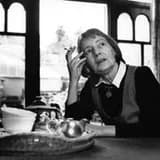
Smith received the Queen's Gold Medal for Poetry in 1969, a rare and prestigious lifetime honor for British poets, in recognition of her singular body of work.
In 1969, Stevie Smith was awarded the Queen's Gold Medal for Poetry, one of the most distinguished honors available to a British poet, granted by the reigning monarch in recognition of excellence in poetic work. The award came near the end of Smith's life, following decades during which her strikingly original, deceptively simple verse—often paired with her own whimsical line drawings—had been underestimated by segments of the literary establishment who found her work too idiosyncratic to categorize.
By the late 1960s, however, Smith had built a devoted following, particularly among younger readers and poets who appreciated her dark wit, her frank engagement with themes of loneliness, death, and religious doubt, and her subversive use of nursery-rhyme rhythms and childlike forms to convey profound psychological insight. Her poetry readings, delivered in a distinctive sing-song voice, had also become celebrated events in British literary life during this period.
The Queen's Gold Medal affirmed her position within the canon of major twentieth-century English poets alongside recipients such as W.H. Auden and Ted Hughes. It represented a vindication of her unconventional career, achieved largely on her own terms while she worked for decades as a secretary and lived a famously modest, unmarried life in the same suburban house. The award, along with the Cholmondeley Award she also received in 1969, marked the capstone of a literary career defined by resilience and singularity of vision.