← All women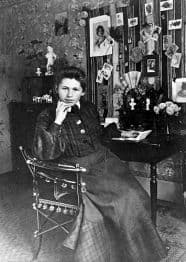
Swiss · Arts
Sophie Taeuber-Arp
January 19, 1889 – January 13, 1943
Early Life and Background
Sophie Henriette Gertrude Taeuber-Arp was born on January 19, 1889, in Davos, Switzerland, the youngest of five children of Emil Taeuber, a German pharmacist, and Sophie Taeuber-Krüsi, a Swiss woman of considerable artistic sensibility. Her father died of tuberculosis in 1891, when Sophie was only two years old, leaving her mother to raise the family alone. The family relocated to Trogen, in the canton of Appenzell, where her mother ran a guesthouse and instilled in her children an appreciation for craft, design, and self-sufficiency.
This upbringing amid Swiss folk and craft traditions—far from the academic art centers of Paris, Berlin, or Vienna—proved formative. Unlike many of her contemporaries, who trained exclusively in painting or sculpture within rigid academic hierarchies that privileged "fine art" over "craft," Taeuber-Arp grew up valuing textile work, embroidery, and applied design as legitimate creative pursuits. This foundation would later allow her to move fluidly between what were then considered separate worlds: painting, textile design, architecture, dance, and sculpture.
Education and Formative Influences
Taeuber began her formal art education in 1906 at the School of Applied Arts in St. Gallen, Switzerland, studying textile design. She continued her studies in Munich at the Debschitz School (1908–1910), an institution influenced by the Arts and Crafts movement and Jugendstil (German Art Nouveau), which reinforced her interest in integrating decorative and fine arts. She later studied in Hamburg under Wilhelm von Debschitz's associates, further developing her technical skills in textiles, embroidery, and design.
In 1914, she settled in Zurich, a city that—due to Switzerland's neutrality during the First World War—became a haven for artists, writers, and intellectuals fleeing the conflict. It was here that Taeuber encountered the emerging circle of radical artists who would soon found the Dada movement, including Hugo Ball, Emmy Hennings, Tristan Tzara, Marcel Janco, and Hans Richter. She began teaching textile design and weaving techniques at the Zurich School of Arts and Crafts (Kunstgewerbeschule) in 1916, a position she held for over a decade, which provided her financial independence and a platform to experiment with abstract geometric patterns in a medium still considered "applied" rather than "fine" art.
The Dada Years and Artistic Development
From 1916 onward, Taeuber became an active participant in the Dada movement centered at the Cabaret Voltaire and later the Galerie Dada in Zurich. She performed abstract, marionette-like dances—often wearing masks created by Marcel Janco—that combined geometric costume design with expressive, anti-rational movement. Contemporary witnesses, including Hugo Ball, praised her dance performances as embodying the radical spirit of Dada in ways that transcended verbal or painted expression.
During this period, she met the Alsatian artist Jean (Hans) Arp, and the two began a close creative collaboration, producing joint collage works and exploring chance-based composition methods characteristic of Dada. Unlike many artistic couples of the era, their collaboration was consistently one of mutual respect and shared authorship, though Sophie continued to develop and exhibit her own independent body of work—including turned-wood sculptures, textile designs, and geometric abstract paintings ("compositions")—throughout their relationship.
Taeuber married Jean Arp on October 20, 1922, in Pura, Switzerland (having adopted Swiss citizenship through this union, which also allowed her to retain professional and legal independence). The marriage marked the beginning of decades of joint artistic activity, though Sophie always signed and exhibited her solo work under her own name, insisting on recognition as an independent artist.
Major Works and Accomplishments
Throughout the 1920s, Taeuber-Arp's work increasingly moved toward pure geometric abstraction, characterized by grids, circles, and modular compositions rendered in disciplined, often small-scale formats. Her "Compositions" series of paintings and her textile and beadwork designs anticipated key tenets of the Constructivist and Bauhaus movements, even as she worked largely outside those institutional networks.
One of her most significant achievements came between 1926 and 1928, when she, Jean Arp, and the Dutch artist Theo van Doesburg (a leading figure of De Stijl) were commissioned to design the interior of the Café de l'Aubette in Strasbourg, France—a multi-room entertainment complex encompassing a cinema, dance hall, bar, and tea room. The Aubette project, sometimes called the "Sistine Chapel of abstract art," was a landmark instance of total environmental design, integrating architecture, color, furniture, and typography into a unified abstract vision. Taeuber-Arp served as the lead architect and designer for several key rooms, a remarkable professional achievement for a woman in the male-dominated field of architecture and interior design in the 1920s.
In 1927, she designed and helped build a house in Clamart/Meudon, near Paris, which became her and Arp's home and a meeting point for the European avant-garde, including figures such as Piet Mondrian, Wassily Kandinsky, and Constantin Brâncuși. She continued to publish and edit, co-founding and editing the journal Plastique/Plastic (1937–1939) with Arp and others, one of the few art journals of the period edited by a woman, dedicated to promoting abstract art internationally.
She was also a member of significant international avant-garde groups, including Abstraction-Création in Paris (joining in the early 1930s), which brought together practitioners of non-representational art from across Europe, further establishing her centrality to the abstract art movement independent of her husband's reputation.
Awards, Honors, and Recognition
During her lifetime, Taeuber-Arp received less formal institutional recognition than many of her male peers—a common pattern for women artists of her generation, whose contributions were frequently folded into or attributed to husbands, collaborators, or movements dominated by men. She did, however, achieve genuine respect within the tightly-knit European avant-garde and exhibited her work in group and solo shows in Zurich, Paris, and elsewhere throughout the 1920s and 1930s.
Posthumous recognition has been far more substantial. Switzerland honored her by featuring her portrait and one of her abstract compositions on the Swiss 50-franc banknote (in circulation from 1995), making her one of the few women and few visual artists ever depicted on Swiss currency. Major retrospectives have been mounted at institutions including the Museum of Modern Art (MoMA) in New York, Tate Modern in London, the Kunstmuseum Basel, and the Musée d'Art Moderne in Strasbourg, with a major traveling retrospective organized in 2021 by MoMA, Tate Modern, and the Kunstmuseum Basel that dramatically raised her international profile and cemented recognition of her as a pioneering figure of abstraction independent of Jean Arp's legacy.
Personal Life
Sophie Taeuber-Arp's personal and professional life were deeply intertwined with her husband, Jean Arp, whom she married in 1922. The couple maintained a home in Clamart/Meudon near Paris that Sophie herself designed, and they traveled extensively together within European avant-garde circles. They had no children. Their relationship has often been cited by historians as a rare example of genuine artistic partnership between equals, contrasting with other prominent artist couples of the era in which the woman's contributions were subordinated to the man's career and reputation.
As war approached in the late 1930s and Nazi Germany's persecution of "degenerate" modern art intensified, the couple's position in France became increasingly precarious, particularly given Arp's German-Alsatian heritage and their association with abstract and Dadaist art, both condemned by the Nazi regime. They fled Paris in 1940 following the German invasion of France, moving south to Grasse, where they lived among a community of exiled artists including Sonia Delaunay and Alberto Magnelli, before ultimately attempting to escape to neutral Switzerland.
Death and Immediate Aftermath
On the night of January 13, 1943, while staying as wartime refugees at the Zurich home of the art collector and designer Max Bill, Sophie Taeuber-Arp died of accidental carbon monoxide poisoning caused by a faulty stove in the room where she was sleeping. She was 53 years old. Her sudden death, in the midst of displacement and wartime uncertainty, was a shattering loss to Jean Arp and to the broader European avant-garde community, cutting short a career that had continued to evolve and gain sophistication into her final years.
Legacy and Historical Impact
Jean Arp never fully recovered from Sophie's death; he fell into a deep depression and dedicated much of his remaining life and resources to preserving and promoting her artistic legacy, eventually establishing archives and foundations (later consolidated in the Fondation Arp in Clamart and the Stiftung Arp in Berlin/Rolandswerth) to safeguard both of their bodies of work.
For much of the mid-20th century, Sophie Taeuber-Arp's reputation remained overshadowed by that of her more famous husband, a common fate for women artists working in close collaboration with male partners during this period. However, beginning in the late 20th century and accelerating markedly in the 21st, art historians and major museums have undertaken a significant reassessment of her work, recognizing her as one of the foremost pioneers of geometric and concrete abstraction, a trailblazer in erasing the boundary between fine art and design, and one of the very few women to hold genuine creative authority within the male-dominated Dada movement.
Her multidisciplinary practice—spanning painting, sculpture, textile design, architecture, dance, and editorial work—is now seen as a precursor to later 20th-century movements that similarly dissolved hierarchies between art forms and between "high" and "applied" art, including Bauhaus-influenced design and postwar Constructivism. The 2021 international retrospective co-organized by MoMA, Tate Modern, and Kunstmuseum Basel represented a watershed moment, presenting her as a major independent modernist figure fully deserving of consideration alongside, rather than beneath, her husband and contemporaries such as Kandinsky, Mondrian, and van Doesburg.
Today, Sophie Taeuber-Arp is remembered as a singular figure of 20th-century modernism: an artist who, despite the structural barriers facing women in the arts during her lifetime, built an independent, rigorously innovative body of work that helped define the visual language of abstraction and continues to influence design, art, and architecture in the 21st century.
Dated achievements
4 indexed.
- Jan191889Arts
Birth of Sophie Taeuber-Arp
Sophie Taeuber-Arp was born in Davos, Switzerland, on January 19, 1889.
View details Sophie Taeuber-Arp - Wikipedia - Feb051916Arts
Performs at the opening of the Cabaret Voltaire's Galerie Dada
Sophie Taeuber performed her radical, mask-wearing abstract dance at Dada events in Zurich, becoming a key artistic contributor to the Dada movement.