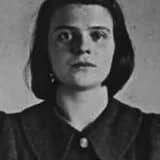
Sophie enrolled at the University of Munich to study biology and philosophy, joining her brother Hans in the White Rose resistance group.
In May 1942, Sophie Scholl enrolled at the University of Munich (Ludwig Maximilian University) to study biology and philosophy. There she reunited with her older brother Hans Scholl, a medical student who, along with several friends including Christoph Probst, Alexander Schmorell, and Willi Graf, had already begun forming a clandestine resistance group that would become known as the White Rose (Weiße Rose).
Sophie quickly became an active and integral member of the group, despite the immense danger this posed under the Nazi dictatorship. The group, deeply influenced by Christian ethics, philosophy (notably the writings of Aristotle and the Bible), and a profound moral opposition to the atrocities being committed by the Nazi regime, began writing and distributing anti-Nazi leaflets that exposed the crimes of Hitler's government and called on Germans to resist passively.
Her involvement was historically significant because it demonstrated that not all Germans acquiesced to Nazi rule; a small but courageous minority actively risked their lives to expose the truth. Sophie's participation also underscored the crucial, though often overlooked, role women played in resistance movements. The White Rose's leaflets, secretly typed, duplicated, and distributed by hand across German cities, represent one of the most notable instances of non-violent civil resistance within the Third Reich.