← All women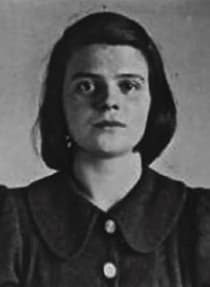
German · Activism · Politics
Sophie Scholl
May 9, 1921 – February 22, 1943
Early Life and Family Background
Sophie Magdalena Scholl was born on May 9, 1921, in Forchtenberg am Kocher, a small town in the Kingdom of Württemberg, Germany. She was the fourth of six children born to Robert Scholl, a liberal politician who would later serve as mayor of Forchtenberg and then Ulm, and Magdalene Scholl (née Müller), a former Protestant deaconess. Her siblings included Inge, Hans, Elisabeth, Werner, and a sister who died in infancy. The Scholl household was characterized by intellectual openness, a strong sense of ethics rooted in Lutheran Christianity, and a growing wariness of the political currents sweeping Germany in the early 1930s.
Sophie's childhood coincided with the rise of Adolf Hitler and the National Socialist German Workers' Party. Like many German children of her generation, she joined the Bund Deutscher Mädel (League of German Girls) at age twelve, initially drawn in by its promises of camaraderie, adventure, and national pride. However, her father Robert was a vocal critic of the Nazi regime from early on, frequently warning his children about the dangers of Hitler's dictatorship, and this dissonance between the family's private convictions and the public enthusiasm of the era planted early seeds of doubt in young Sophie.
Her worldview was further shaken when her brother Hans and several friends were arrested in 1937 for participating in the German Youth Movement, an organization deemed subversive by the Nazi state because of its independence from party-controlled youth organizations. This event, along with the regime's escalating persecution of Jews, dissidents, and the disabled, disillusioned Sophie and pushed her toward a more critical, independent examination of Nazi ideology.
Education and Intellectual Formation
Sophie was an academically gifted and artistically inclined student. She excelled in drawing and painting and had strong interests in philosophy, theology, and pedagogy. After completing her schooling, she worked for a time as a kindergarten teacher, partly in hopes that this would exempt her from compulsory service in the Nazi labor and auxiliary war organizations, though she was ultimately required to serve regardless.
In May 1942, Sophie enrolled at the University of Munich (Ludwig Maximilian University), where she studied biology and philosophy. Her decision to study in Munich was influenced in part by the presence of her brother Hans, who was studying medicine there. At the university, Sophie was exposed to a vibrant intellectual community that included professors and students who quietly opposed the Nazi regime, most notably philosophy professor Kurt Huber, who would later become an active member of the White Rose and a co-defendant in the eventual trial.
The White Rose Resistance Movement
Shortly after arriving in Munich, Sophie discovered that her brother Hans, along with fellow medical students Christoph Probst, Alexander Schmorell, Willi Graf, and others, had formed a clandestine resistance group known as the White Rose (Weiße Rose). The group was dedicated to non-violent resistance against the Nazi regime through the covert writing, printing, and distribution of leaflets that exposed the regime's crimes and called upon the German populace, particularly students and intellectuals, to resist passively and refuse complicity with the Nazi war machine.
Sophie quickly became a full and active participant in the group's activities, despite the extraordinary personal risk involved. Under the Nazi legal system, producing or distributing materials critical of the regime was considered high treason, punishable by death. The White Rose ultimately produced six leaflets between June 1942 and February 1943, distributing thousands of copies across Munich and mailing them to other German cities such as Stuttgart, Vienna, and Berlin to create the impression of a larger, more widespread resistance network.
The leaflets drew on philosophical, religious, and literary sources, quoting Aristotle, Novalis, Lao Tzu, and the Bible, and directly condemned the mass murder of Jews, the suppression of free thought, and the moral corruption of the Nazi state. The fourth leaflet, distributed in July 1942, was especially explicit in denouncing the persecution and extermination of Jews, one of the earliest and most direct public condemnations of the Holocaust made from within Germany itself.
Sophie's role in the group included drafting text, procuring paper and envelopes (a task complicated by wartime rationing and the risk of arousing suspicion through bulk purchases), operating the duplicating machine, and personally distributing leaflets in Munich and other cities, including a dangerous trip to Ulm. Her calm efficiency and steady nerve under pressure made her an invaluable member of the group, and her gender, ironically, sometimes helped her evade suspicion, as the Gestapo initially assumed the resistance was an exclusively male undertaking.
Arrest, Trial, and Execution
On the morning of February 18, 1943, Sophie and Hans traveled to the University of Munich carrying a suitcase filled with copies of the sixth and final White Rose leaflet, titled \"Fellow Fighters in the Resistance!\" This leaflet was written largely by Kurt Huber in response to Germany's catastrophic defeat at the Battle of Stalingrad and urged students to rise up against Hitler's tyranny before it consumed the nation entirely.
After distributing leaflets in lecture halls and corridors, Sophie, in a moment of impulsive defiance, dropped the remaining stack from the top floor of the atrium into the courtyard below. This act was witnessed by the building's custodian, Jakob Schmid, a Nazi Party member, who detained Sophie and Hans and immediately alerted the Gestapo. Both siblings were arrested on the spot.
During interrogation by the Gestapo, Sophie initially attempted to take sole responsibility for the leaflets in order to protect her brother and other members of the group, a testament to her selflessness and strategic thinking even under extreme duress. However, the Gestapo eventually implicated Christoph Probst as well, after finding an incriminating draft leaflet in Hans's possession.
On February 22, 1943, just four days after their arrest, Sophie, Hans, and Christoph Probst were tried before the Volksgerichtshof (People's Court), the Nazi regime's special court for political crimes, presided over by the infamous judge Roland Freisler. The trial was a farce lasting only a few hours, offering no meaningful legal defense. All three defendants were found guilty of treason and sentenced to death.
That same afternoon, Sophie was transported to Stadelheim Prison in Munich and executed by guillotine, reportedly the first of the three to be killed, followed shortly by Hans and Christoph Probst. She was only 21 years old. Witnesses, including prison officials and the chaplain, later recounted her remarkable composure in her final hours. She is reported to have said, "How can we expect righteousness to prevail when there is hardly anyone willing to give himself up individually for a righteous cause? Such a fine, sunny day, and I have to go, but what does my death matter, if through us, thousands of people are awakened and stirred to action?"
Personal Life
Sophie maintained a close relationship with Fritz Hartnagel, a German army officer whom she had begun a relationship with in the mid-1930s. Their extensive correspondence reveals Sophie's evolving political consciousness and her attempts to persuade Fritz of the immorality of the war and the Nazi regime he served. She never married and had no children, her life cut short at the age of 21.
Legacy and Historical Impact
Sophie Scholl's execution did not end the influence of the White Rose; rather, it amplified it. Copies of the group's sixth leaflet were smuggled out of Germany and reprinted by the Allies, who dropped millions of copies over Germany as propaganda, retitled "The Manifesto of the Students of Munich." Thomas Mann, in a BBC broadcast, publicly praised the group's courage.
In post-war Germany, Sophie Scholl became one of the most celebrated symbols of civilian resistance to Nazism. Numerous schools, streets, and squares across Germany bear her name, and she has been the subject of books, documentaries, and films, most notably the Oscar-nominated 2005 film Sophie Scholl: The Final Days, which dramatized her interrogation and final days based on newly discovered transcripts. In a 2003 poll by German television network ZDF, Sophie Scholl was voted one of the greatest Germans of all time.
Her life and death continue to serve as a powerful testament to individual moral courage in the face of totalitarianism, and she remains a central figure in Holocaust and Nazi resistance education worldwide, embodying the possibility of principled resistance even under the most repressive and lethal of regimes.
Dated achievements
4 indexed.
- May091921Science
Birth of Sophie Scholl in Forchtenberg, Germany
Sophie Magdalena Scholl was born in Forchtenberg am Kocher, Germany, the fourth of six children of Robert and Magdalene Scholl.
View details Sophie Scholl - Wikipedia - May091942Activism
Sophie Scholl enrolls at the University of Munich and joins the White Rose
Sophie enrolled at the University of Munich to study biology and philosophy, joining her brother Hans in the White Rose resistance group.