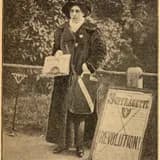
Sophia Duleep Singh died on 22 August 1948 at her home in Penn, Buckinghamshire, having lived to see British women achieve full voting equality in 1928.
Princess Sophia Duleep Singh died on 22 August 1948, at her home named Rathfarnham in Penn, Buckinghamshire, at the age of 71. By the time of her death, she had lived long enough to witness the fulfilment of the cause to which she had devoted so much of her adult life: the Representation of the People Act 1928 had granted British women full voting equality with men, twenty years after partial suffrage was achieved in 1918.
In her later decades, Sophia largely withdrew from high-profile activism but remained committed to charitable and humanitarian work. During the Second World War, she contributed to the Red Cross and provided shelter and support for Indian servicemen and refugees, reflecting a lifelong concern with the welfare of Indian soldiers and immigrants in Britain that had run alongside her suffrage activism. She also bred prize Pomeranian and Tibetan terrier dogs, indulging a lifelong passion for animals.
Sophia's death received relatively little public fanfare at the time, reflecting how thoroughly her contributions had been marginalised in mainstream historical narratives despite her prominent role in the suffrage movement — a marginalisation that has only been substantially corrected in recent decades through works such as Anita Anand's biography Sophia: Princess, Suffragette, Revolutionary (2015), which restored public awareness of her remarkable life and legacy as one of the few Asian women prominently involved in the British suffrage campaign.