← All women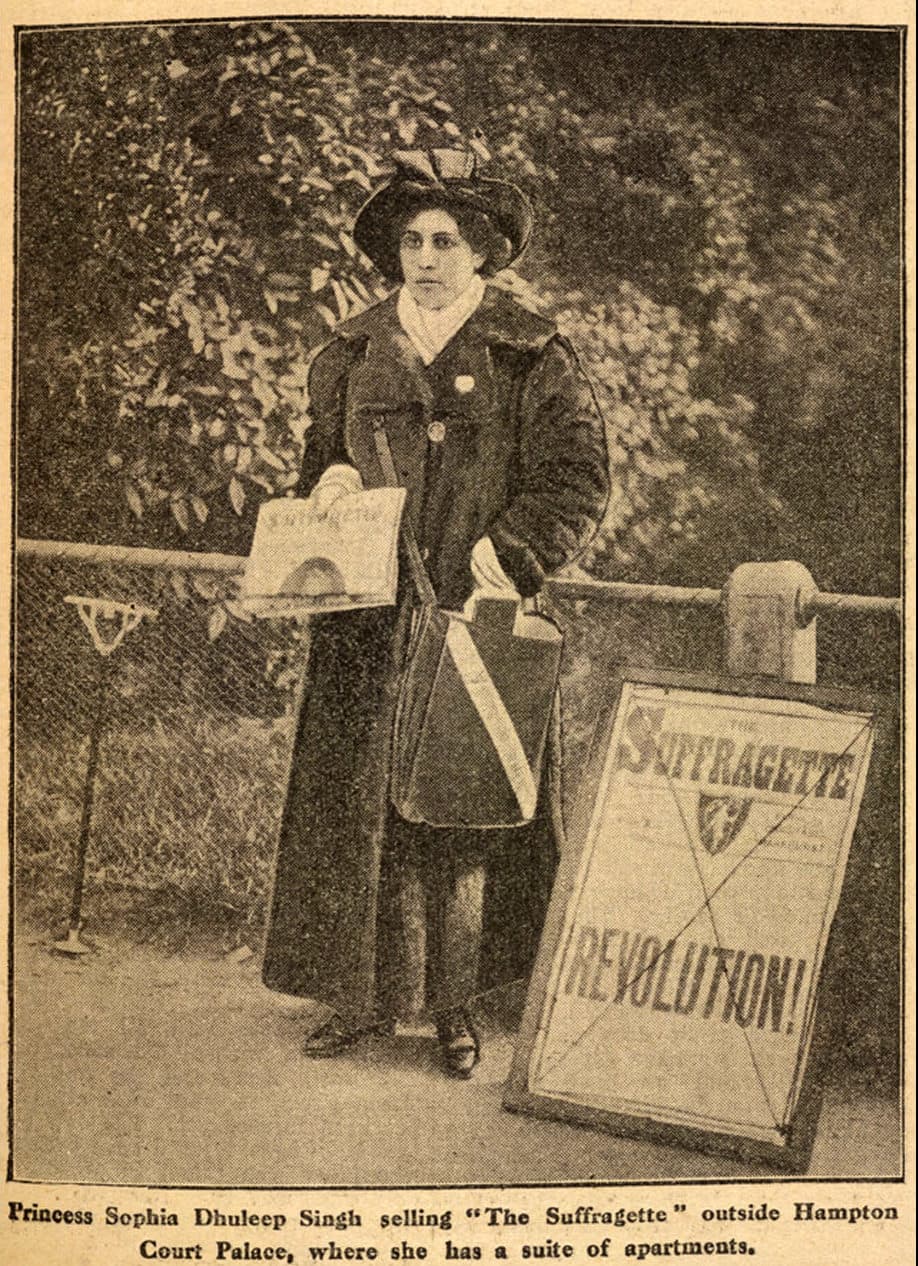
British, Indian · Activism · Politics
Sophia Duleep Singh
August 8, 1876 – August 22, 1948
Early Life and Background
Sophia Duleep Singh was born on August 8, 1876, in Belgravia, London. She was the daughter of Maharaja Duleep Singh, the last Maharaja of the Sikh Empire, and Bamba Müller. As a member of the Indian royalty, Sophia was born into a world of privilege and was later goddaughter to Queen Victoria. The fusion of her Indian heritage and British upbringing greatly influenced her identity and later activism.
Career Beginnings and Development
Though born into royalty, Sophia was deeply aware of her father's lost kingdom and the injustices suffered by Indians under British rule. Her early exposure to politics set the stage for her active participation in the suffrage movement. Sophia focused her attention on securing voting rights for women, a cause that would become her lifetime passion.
Major Works and Accomplishments
Sophia's commitment to women's rights intensified in the early 1900s. She joined the Women's Social and Political Union (WSPU), led by Emmeline Pankhurst, participating in protests and demonstrations. Her royal status brought significant attention to the movement, as she openly sold "The Suffragette" newspaper and participated in the "Black Friday" suffragette protest of 1910, wherein women clashed with police outside the House of Commons.
She expanded her activism by serving on the executive committee of the Fawcett Women's Suffrage Committee and was involved in the establishment of the Suffragette Fellowship. Throughout World War I, she also supported the micro-lending activities for Indian soldiers and the women left behind.
Awards, Honors, and Recognition
While Sophia did not receive any formal awards during her lifetime, her contributions to the suffrage movement were acknowledged posthumously as vital to the cause. Her legacy has been celebrated in various exhibitions and biographies, cementing her status as an influential activist.
Personal Life
Sophia never married, dedicating her life to causes she believed in. Her close relationships with suffragette leaders and her siblings framed her perspectives and commitments. Despite her struggles with family politics and British society, she remained steadfast in her principles.
Legacy and Historical Impact
Sophia Duleep Singh's legacy is evident in the profound changes resulting from her activism. She played a significant role in the suffrage movement, influencing public opinion and contributing to the eventual right to vote for women. Her life inspired future generations to fight for equality and justice.
Later Life and Death
In her later years, Sophia stepped back from public life, retreating to a more private existence. She died on August 22, 1948, in Springfield, her Surrey residence. Her contributions to women's rights and social justice remain highly regarded, and she is remembered as a pioneering figure in the struggle for equality.
Dated achievements
4 indexed.
- Aug081876Activism
Born in Belgravia, London
Sophia Duleep Singh was born on 8 August 1876 at Elveden Hall, Suffolk, the daughter of the exiled Maharaja Duleep Singh and goddaughter of Queen Victoria.
View details Wikipedia: Sophia Duleep Singh - Nov181910Activism
Took part in the suffragette protest known as 'Black Friday'
Sophia Duleep Singh joined the Women's Social and Political Union protest at Parliament on 18 November 1910, later known as 'Black Friday', where police violently confronted suffragettes.