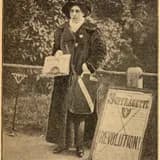
Sophia Duleep Singh joined the Women's Social and Political Union protest at Parliament on 18 November 1910, later known as 'Black Friday', where police violently confronted suffragettes.
On 18 November 1910, Princess Sophia Duleep Singh took part in a mass suffragette demonstration outside the Houses of Parliament, organised by the Women's Social and Political Union (WSPU) in protest at Prime Minister Herbert Asquith's decision to shelve the Conciliation Bill, which would have granted limited voting rights to women. The demonstration became infamous as 'Black Friday' after police, acting with unusual brutality, physically and sexually assaulted many of the roughly 300 women present, resulting in numerous injuries and arrests.
Sophia's participation was especially striking given her royal status and close personal ties to the British monarchy as a goddaughter of Queen Victoria and god-daughter figure within court circles. Her willingness to be seen in physical confrontation with police, risking arrest and scandal, lent significant publicity and moral weight to the suffrage cause, embarrassing a government that could not easily dismiss a princess as a marginal agitator.
The events of Black Friday were a turning point in public perception of police treatment of suffragettes, generating outrage and sympathy that fuelled the movement's momentum. Sophia's presence that day is frequently cited by historians as emblematic of her deep, active commitment—not merely symbolic support—for women's enfranchisement, and of her willingness to defy the establishment that had otherwise cosseted her family.