← All women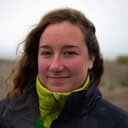
American · Exploration · Sports
Sonya Baumstein
Unknown – present
Overview
Sonya Baumstein is an American ocean rower, stand-up paddleboarder, and multi‑disciplinary expedition athlete best known for being the first person to stand‑up paddleboard across the Bering Strait on 1 August 2013.[1][6] She has completed a winter row across the Atlantic Ocean, long‑distance cycling and sea‑kayak journeys, and a technically demanding Western Alaska kayak/SUP expedition. In 2015 she prepared an ambitious attempt to become the first woman to row the North Pacific Ocean solo and non‑stop, drawing international media attention to women’s endurance sports and ocean conservation.[1][2][4][5]
Early Life and Education
Baumstein was born and raised in Orlando, Florida, in the United States.[1] In her own biographical statements she refers to herself as an “Earth Day baby,” but she has not publicly disclosed a full birth date or year, and no reliable primary source gives an exact date.[1] Growing up in central Florida, she developed a strong connection to water and the outdoors that would later influence her career as an expedition athlete and environmental advocate.
As a student, Baumstein became involved in rowing, a sport that would provide both technical skills and a mental framework for her later ocean crossings.[1][2] She went on to study at the University of Wisconsin–Madison, where she earned a B.A., and later completed an M.A. at the University of Central Florida in Orlando.[1] At Wisconsin she encountered a strong rowing culture and a community of endurance‑oriented athletes, experiences that helped normalize high training loads and competitive discipline. The combination of academic training and collegiate sport helped shape her identity as both a problem‑solver and a risk‑taker.
In her later self‑descriptions, Baumstein emphasizes a range of interests—citizen science, modern exploration, storytelling, sustainable fishing and energy, and ocean health—suggesting that her formative years blended athletic pursuits with intellectual curiosity about environmental systems and social change.[1]
Career Beginnings and Development
Baumstein describes herself as a “passionate, female adventurer/explorer,” and traces the origins of her expedition career to her background as a rower.[1] Having developed technical rowing skills, she sought opportunities to apply them beyond conventional regattas. According to her own account, “the first expedition came together as the Atlantic row,” indicating that her transition from athlete to expedition leader occurred when she committed to a transoceanic row rather than a competitive event.[1][2]
In winter 2011–12 she joined a team that rowed across the Atlantic Ocean in an open boat, from the Canary Islands to Barbados.[1][2] This voyage, which lasted 57 days from December 2011 to January 2012, was not framed primarily as a record attempt but as a demanding crossing in harsh winter conditions.[1][2] The experience proved formative, exposing her to the realities of navigation, sleep management, and risk in mid‑ocean settings. In interviews and profiles she has since pointed to this Atlantic crossing as the moment she realized “there was so much change [she] wanted to see in the world and that the best way to get there was to create a conversation about it” through expeditions.[1][2]
After the Atlantic row, Baumstein increasingly structured her life around human‑powered journeys. She emphasized self‑sufficiency, technical planning, and the use of expeditions as platforms for environmental messaging. Rather than specializing exclusively in rowing, she systematically added other modes of travel—cycling, sea kayaking, and stand‑up paddleboarding—to build versatility and resilience.
Major Expeditions and Accomplishments
Atlantic Ocean Row, 2011–2012
Baumstein’s first major expedition was a winter row across the Atlantic Ocean from the Canary Islands to Barbados. She and her crew departed on 1 December 2011 and completed the crossing after 57 days, arriving on approximately 26 January 2012.[1][2] The journey was undertaken in an open rowing boat, exposing them continuously to the elements.
The crossing placed Baumstein within a small global community of ocean rowers. Although Atlantic rows have been completed by various crews since the late twentieth century, a winter crossing in an open boat remained a substantial undertaking, with risks from storms, equipment failure, and isolation. On Wisconsin magazine, profiling her later attempts on the North Pacific, notes that the Pacific would be only the second ocean she had rowed, following this 2011–12 Atlantic expedition.[2]
The Atlantic row provided Baumstein with practical knowledge of long‑distance rowing logistics, including provisioning, navigation, and physical conditioning. It also gave her a narrative foundation for public speaking and environmental advocacy, illustrating how human‑powered travel can command attention and serve as a vehicle for discussing ocean health and climate‑linked changes in marine conditions.[1][2]
Tour Bike Expedition, March–May 2012
Shortly after the Atlantic crossing, Baumstein shifted to overland travel. From 15 March to 20 May 2012, she undertook a fully loaded tour‑bike journey from the Mexican border to Seattle, Washington.[1] Riding with all necessary gear, she traversed large portions of the American West.
This expedition diversified her skill set beyond rowing, demonstrating a capacity for route planning, self‑supported travel, and endurance over varied terrain. It also represented a deliberate choice to frame adventure in accessible terms; long‑distance cycling is more attainable for many people than ocean rowing, and by highlighting this ride among her “previous expeditions,” Baumstein provided an entry point for audiences less familiar with extreme maritime environments.[1]
Sea‑Kayak Expedition, June–August 2012
In June–August 2012, Baumstein undertook a coastal sea‑kayak expedition from Seattle (Ballard) to Juneau, Alaska.[1] Her expedition biography records the span as “June 2012 – August 2012,” with the editorial chronology placing the start and end around 1 June and 31 August respectively.[1] The route followed the complex waterways of the Pacific Northwest and Inside Passage, requiring careful navigation through tides, currents, and shipping lanes.
Traveling by sea kayak along this route exposed Baumstein to cold water, changeable weather, and limited access to services between coastal communities. The trip strengthened her small‑boat handling skills and experience in expedition camping and risk management in remote coastal environments. It served as a stepping stone toward even more isolated regions in Western Alaska and the Bering Strait, reinforcing her progression from structured athletic settings into self‑directed exploration.
Western Alaska Kayak/SUP Expedition, 2013
Between 15 June and 8 August 2013, Baumstein carried out a Western Alaska kayak/stand‑up paddleboard expedition, traveling along the Bering region coast.[1] Her expedition list specifies those dates and notes that the journey included a stand‑up paddleboard crossing of the Bering Strait.[1] Combining sea kayak and SUP travel demanded flexibility and a nuanced understanding of when each craft was appropriate for given conditions.
Western Alaska’s coasts pose challenges very different from those of the Inside Passage: colder water, more volatile weather systems, and fewer settlements, all of which complicate rescue and resupply. By operating largely self‑supported, Baumstein demonstrated significant competence in high‑latitude expedition planning and execution.
First Stand‑Up Paddleboard Crossing of the Bering Strait, 2013
Baumstein’s most widely recognized achievement occurred on 1 August 2013, during her Western Alaska expedition, when she became the first person to stand‑up paddleboard (SUP) across the Bering Strait.[1][6] Her expedition bio states that on that date she “became the first person to SUP the Bering Strait from Big Diomede to Alaskan mainland, just north of Wales, AK.”[1] A video profile produced that summer further highlights her as the first person to SUP the strait.[6]
The Bering Strait forms a narrow, strategically and symbolically important channel between Russia and the United States, connecting the North Pacific and Arctic Oceans. Conditions include strong currents, sea ice at certain times of year, frigid water temperatures, and frequent fog and wind. Crossing in a SUP—an inherently unstable, human‑powered craft that leaves the paddler fully exposed—significantly increases vulnerability compared to larger boats or even sea kayaks.
By completing the crossing from Big Diomede Island (in Russian territory) to the Alaskan mainland just north of Wales, Alaska, Baumstein expanded the perceived limits of stand‑up paddleboarding and small‑craft exploration.[1][6] As a woman achieving a global “first” in a niche but rapidly growing sport, she challenged gender stereotypes that often marginalize women’s accomplishments in extreme environments. The feat also drew attention to the environmental fragility of the Bering region, aligning with her interest in citizen science and ocean health.
North Pacific Row Attempt, 2015
Building on her Atlantic row and high‑latitude expeditions, Baumstein planned an attempt to become the first woman to row the North Pacific Ocean solo and non‑stop from Japan to North America.[1][2][4][5] By April 2015, this bid had been publicly announced on her official social media channels and in press coverage.[4][2] Her Facebook biography declared: “In April 2015, I will attempt to be the first woman to row the North Pacific Ocean.”[4]
Baumstein commissioned or obtained a specialized ocean‑rowing boat equipped for long‑distance, solo travel, including storage for provisions, navigation equipment, and communication systems. The planned route of approximately 5,700 miles from Japan toward San Francisco or the broader North American west coast would have taken several months, passing through waters notorious for storms and rough seas.[2][5]
Her attempt attracted coverage from outlets including ABC News and On Wisconsin magazine, which framed the endeavor as a bid to “make history” as the first woman to complete such a crossing.[2][5] In June 2015, she departed from the Japanese coast; however, after about a week at sea, she encountered severe weather and equipment‑related safety concerns. ABC News reported that at age 30, she sent a distress signal roughly 155 miles off Japan and was rescued on a Saturday, effectively ending the attempt.[5] While the precise rescue date is reported only by weekday and not widely documented with an exact calendar day, the incident underscored both the hazards of the North Pacific and the seriousness of her attempt.
Although the crossing was not completed and therefore does not count as a record “first,” the project was significant in demonstrating that a woman adventurer could credibly design and mount a solo, non‑stop North Pacific rowing attempt. It also amplified her environmental messaging, as she aimed to collect data and raise awareness about ocean conditions during the voyage.[2][5]
Professional Career Beyond Expeditions
Parallel to her expedition work, Baumstein has developed a career in finance and technology. According to her LinkedIn profile, she has worked as a public and corporate accountant and has described herself as a “problem solver, challenge seeker, public and corporate accountant, composite boat builder, lover of the outdoors + crypto finance.”[3]
By 2023 she was serving as Director of Finance and Head of Finance at the Helium Foundation, based in Port Townsend, Washington.[3] The Helium Foundation is associated with decentralized wireless and blockchain‑enabled infrastructure, indicating that Baumstein’s skills extend into emerging technology sectors. Her ability to move between high‑risk expeditions and complex financial roles illustrates a multidimensional professional identity, combining analytical capabilities with experiential knowledge of logistics and risk.
Advocacy, Public Speaking, and Media
Baumstein’s self‑description emphasizes her role as a speaker, educator, and environmental advocate in addition to being an athlete and outdoorswoman.[1][4] She has used her expeditions to “create a conversation” about topics including citizen science, sustainable fishing, sustainable energy, and ocean health.[1] Through public talks, interviews, and social media, she seeks to translate the drama of human‑powered journeys into accessible narratives about environmental change and personal resilience.
Her Bering Strait crossing, Atlantic row, and North Pacific attempt have been covered in various media formats. The University of Wisconsin’s On Wisconsin magazine published a feature, “Rowing to Extremes,” that profiles her background and goals, situating her within a lineage of university alumni who pursue unconventional careers.[2] A video titled “Sonya Baumstein: First Person to SUP the Bering Strait” documents her 2013 achievement and previews her North Pacific ambitions, further cementing her public image as a pioneering water‑based explorer.[6]
On social media, including a public Facebook page under her own name, Baumstein shares updates on expeditions, training, and advocacy efforts.[4] She uses these platforms to highlight not only personal achievements but also broader issues related to oceans and climate, reinforcing her dual identity as athlete and advocate.
Awards and Honors
As of the available sources, no major international awards, formal world records certified by organizations such as Guinness World Records, or governmental honors have been widely documented for Baumstein. Her first‑ever SUP crossing of the Bering Strait is recognized in her own expedition records and in media profiles, but it does not appear in the form of an officially ratified world record in the accessible literature.[1][6]
Nevertheless, her expeditions have earned her a place in institutional storytelling. The University of Wisconsin has highlighted her in alumni publications, signaling recognition within her alma mater’s community of notable graduates.[2] Her Bering Strait crossing and North Pacific attempt have also been featured in mainstream and specialized media, indicating informal but significant recognition of her contributions to women’s adventure sports and contemporary exploration.
Personal Life
Baumstein notes that she was “born and raised in Orlando, Florida, but these days [she finds herself] much more bi‑coastal traveling to and from the Pacific Northwest.”[1] This suggests a lifestyle divided between her Florida roots and an adopted base in the coastal communities of Washington State, including Port Townsend, where she works in finance and maintains proximity to maritime environments.[1][3]
Publicly available sources focus primarily on her professional and athletic activities. There is no widely cited documentation of marriage, children, or intimate relationships, and Baumstein herself emphasizes roles such as athlete, outdoorswoman, speaker, and environmental advocate in her self‑presentation.[1][4] In the absence of reliable sources, further personal details cannot be responsibly inferred.
Legacy and Historical Impact
Sonya Baumstein’s historical significance arises from her role in expanding the horizons of women’s participation in extreme, human‑powered exploration. Her first‑in‑history SUP crossing of the Bering Strait in 2013 stands as a clear milestone, both in the evolution of stand‑up paddleboarding as an expedition tool and in the broader narrative of small‑craft adventure.[1][6] By completing this crossing as a woman in a sport and subculture still heavily dominated by men, she contributed to dismantling stereotypes about who can undertake high‑risk, technically complex journeys.
Her career also illustrates a contemporary model of exploration that integrates physical challenge with environmental engagement. Baumstein explicitly links her expeditions to concerns about ocean health, sustainable resource use, and citizen science.[1] Even her unsuccessful North Pacific row attempt played a part in this legacy, drawing media attention to both the possibilities and dangers of solo ocean crossings and to the climatic forces that shape modern maritime weather.[2][5]
In women’s history, Baumstein belongs to a cohort of early twenty‑first‑century adventurers who leverage new media, institutional education, and nontraditional career paths to craft lives that combine professional work with recurring expeditions. Her trajectory—from collegiate rower to Atlantic crosser, multi‑modal expedition athlete, and fintech‑oriented finance professional—illustrates how women can navigate and connect multiple domains that once seemed mutually exclusive.
Later Life and Ongoing Work
As of the mid‑2020s, Baumstein continues to be active professionally and publicly. Her LinkedIn profile indicates her role as Director of Finance at the Helium Foundation from April 2023 onward, based in Port Townsend, Washington.[3] This position places her at the intersection of finance, technology, and decentralized infrastructure, areas that, like expedition planning, demand rigorous risk assessment and long‑range thinking.
Her personal website and social media remain focal points for her identity as an explorer and advocate, listing past expeditions and highlighting ongoing interests in outdoor adventure and ocean‑related issues.[1][4] No credible sources report her death, and all available evidence portrays her as a living figure whose exploratory work and advocacy continue to influence conversations around women in endurance sports, citizen science, and the future of human‑powered exploration.
Dated achievements
10 indexed.
- Dec012011Exploration
Start of Atlantic Ocean rowing expedition
Started a 57-day row across the Atlantic Ocean from the Canary Islands to Barbados.
View details Sonya Baumstein Bio - Jan262012Exploration
Completion of Atlantic Ocean rowing expedition
Completed her Atlantic Ocean row, arriving in Barbados after 57 days.
View details