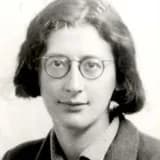
Simone Weil ranks first in the July 1928 entrance examination to the École Normale Supérieure, ahead of Simone de Beauvoir, in one of the earliest cohorts of women admitted.
In July 1928, when the results of the competitive entrance examination to the prestigious École Normale Supérieure (ENS) were announced, Simone Weil ranked first among the candidates, with Simone de Beauvoir placing second.[2][9] ENS had only recently begun admitting women, and Weil’s top ranking signaled an extraordinary achievement in a still‑male‑dominated institution.
This exam demanded mastery of philosophy, literature, and rigorous written and oral work. Weil’s success testified to her exceptional intellectual capacities, formed through studies at Lycée Victor‑Duruy and Lycée Henri‑IV, and to her determination to excel in a system not designed with women as its default participants.[16] Her first‑place ranking effectively made her one of the leading women in French higher education at the time, entering ENS as part of the earliest cohorts of women students.[2]
Historically, this event is significant as a barrier‑breaking milestone: a woman from an agnostic Jewish background surpassing all other candidates for France’s elite philosophical training, at the moment when women’s access to such institutions was still contested.[2][9] It prefigures Weil’s later authority as a philosopher and social critic and demonstrates how women were beginning to claim the highest intellectual credentials in interwar France. The result also shaped her future career—she would pass the agrégation and become a secondary‑school philosophy teacher—but its symbolic impact on women’s history lies in a woman taking first place in one of France’s hardest exams just as formal barriers to women’s admission were being dismantled.