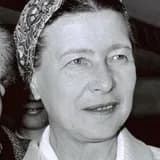
Death of Simone de Beauvoir in Paris, closing a career that reshaped modern feminist philosophy and literature.
Simone de Beauvoir died on 14 April 1986 in Paris, at the age of 78. Her death ended a career that had spanned the decisive intellectual and political transformations of twentieth-century France: the aftermath of World War I, the occupation, postwar existentialism, decolonization, the women’s movement, and the emergence of modern feminist theory. She was buried in Montparnasse Cemetery with Jean-Paul Sartre, symbolically closing one of the most famous intellectual partnerships of the century.
Her death was historically significant not because it marked an ending, but because it consolidated an inheritance. By 1986, Beauvoir’s ideas about gender, freedom, and the social construction of womanhood had already entered universities, activist circles, and public debate around the world. Her influence continued to expand after her death as feminist scholarship developed new ways of reading The Second Sex, her memoirs, and her fiction.
Beauvoir’s legacy lay in the combination of philosophical rigor and literary power she brought to the question of women’s lives. She helped transform feminist criticism from a marginal concern into a major intellectual force, and her death made clear that she had become one of the defining figures of modern thought.