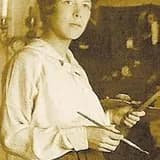
Sigrid Hjertén died on March 24, 1948, in Stockholm shortly after undergoing a lobotomy while institutionalized for mental illness.
Sigrid Hjertén died on March 24, 1948, in Stockholm, Sweden, at the age of 62. Her final years were marked by severe mental illness, diagnosed as schizophrenia, which led to her institutionalization at Beckomberga Hospital. In a tragic turn reflective of the era's often brutal psychiatric practices, she underwent a lobotomy in 1948, and died shortly afterward as a result of complications from the procedure.
Her death came at a time when she had already been largely separated from the art world for over a decade, her once-prolific output halted by her declining health and the constraints of institutional care. Despite this, her earlier body of work — vivid, psychologically probing paintings of domestic life, self-portraits, and Stockholm cityscapes — had already secured her reputation as one of Sweden's most original modernist painters.
Hjertén's death is now viewed as emblematic of the historical mistreatment of women artists struggling with mental illness, and of the era's harsh and experimental psychiatric interventions. In the decades since, feminist art historians have worked to recover and reassess her legacy, restoring her position as a major figure of Swedish Expressionism alongside contemporaries such as Isaac Grünewald, her husband. Her paintings are now held in major Swedish museums, including the Moderna Museet in Stockholm.