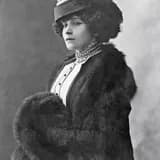
Colette's first novel, Claudine à l'école, was published under her husband Willy's name alone, launching the wildly popular Claudine series.
On 23 January 1900, Claudine à l'école was published in Paris, credited solely to Henry Gauthier-Villars, known as Willy, Colette's husband, despite having been written largely or entirely by Colette herself. The novel, drawing on her own convent-school adolescence in Burgundy, became an immediate sensation, spawning a series of sequels and a broader cultural phenomenon around the character Claudine, including merchandise, plays, and fashion trends.
This event is historically significant as the beginning of Colette's literary career, even though her authorship was initially obscured. Willy, an established literary entrepreneur, ran a virtual 'writing factory' and frequently claimed credit for the work of ghostwriters, including his wife. Colette later revealed that she had been essentially locked in a room by Willy to produce manuscript pages, illustrating the gendered power imbalances of the literary marketplace at the turn of the century.
The success of the Claudine novels made Colette (through Willy) one of the best-selling literary properties in France, yet she received neither credit nor royalties commensurate with her authorship for years. Her eventual, hard-won reclamation of her name on later editions marked an important early feminist assertion of female authorship in a male-dominated publishing world, and set the stage for her independent career after her 1910 divorce from Willy.