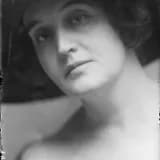
Sibilla Aleramo died in Rome on 13 January 1960, leaving behind a legacy as one of Italy's pioneering feminist writers.
Sibilla Aleramo died in Rome on 13 January 1960, at the age of 83, closing a long and turbulent life devoted to literature, love, and the cause of women's emancipation.
By the time of her death she had lived through both World Wars, the rise and fall of Fascism, and the birth of the Italian Republic, chronicling much of this personal and national upheaval in her diaries, letters, and poetry. Though her later decades were marked by financial precarity and declining literary fashion, she remained a respected, if sometimes marginalized, figure in Italian cultural life, and in her final years she was even a member of the Italian Communist Party, reflecting her enduring commitment to social causes.
Her death marked the end of a life that had begun in the constrained, patriarchal world of provincial nineteenth-century Italy and had become emblematic of the twentieth century's struggles for female autonomy, sexual freedom, and artistic self-expression. In the decades following her death, feminist scholars and literary historians rediscovered and re-evaluated her work, particularly her groundbreaking 1906 novel Una donna (A Woman), cementing her posthumous reputation as a foundational figure of Italian feminist literature and one of the first Italian women to write openly and autobiographically about the oppression of women within marriage and society.