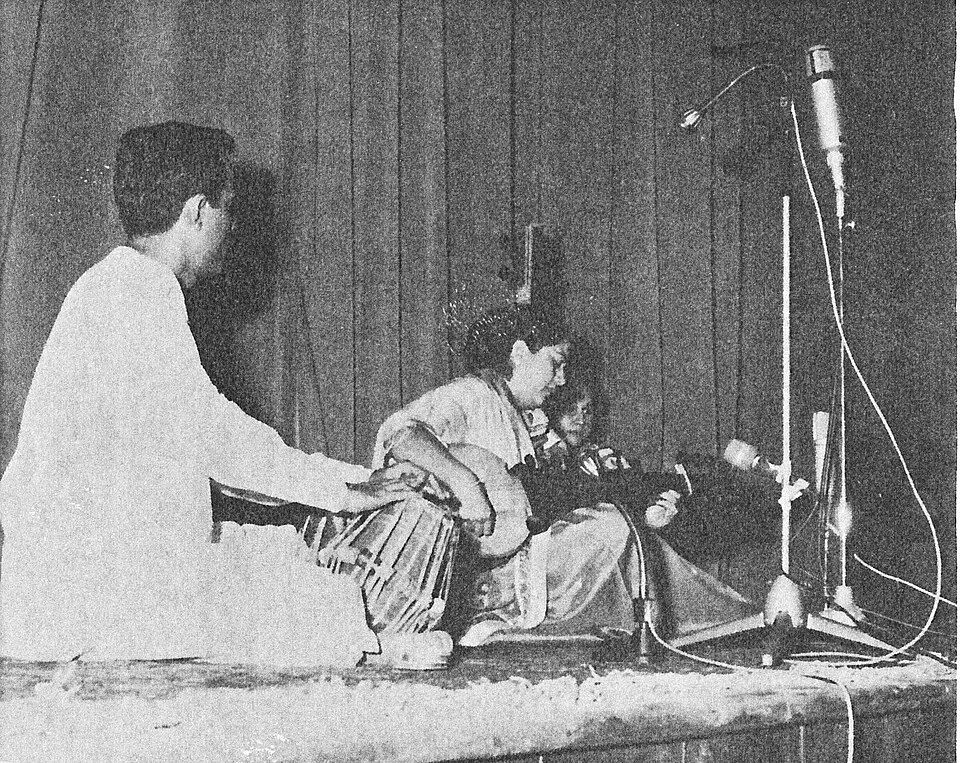
Sharan Rani Backliwal, who became India's first female sarod maestro, was born in Delhi on 9 April 1929.
Sharan Rani Backliwal was born on 9 April 1929 in Delhi into a wealthy business family with a deep appreciation for classical music and art. Her father, Rai Bahadur Omkarmal Bagla, was a respected businessman who encouraged his daughter's early fascination with music, an unusual choice for a girl from a conservative mercantile family in colonial India.
From a very young age, Sharan Rani showed a strong pull toward the sarod, a fretless stringed instrument central to Hindustani classical music but at that time played almost exclusively by men. Her family's support allowed her to pursue rigorous training under some of the greatest maestros of the era, including Allauddin Khan and later Hafiz Ali Khan, setting the stage for a career that would break longstanding gender barriers in Indian classical music.
Her birth and upbringing in a socially progressive, art-loving household were pivotal in shaping the trajectory of her life. It was rare during this period for women of her background to pursue public performing careers, especially on an instrument as physically demanding and traditionally male-dominated as the sarod. Her early exposure to music laid the foundation for a lifetime devoted to preserving and elevating Hindustani classical music, and she would go on to become an iconic, pioneering figure whose legacy reshaped perceptions of women's roles in Indian classical performance.
Images