← All women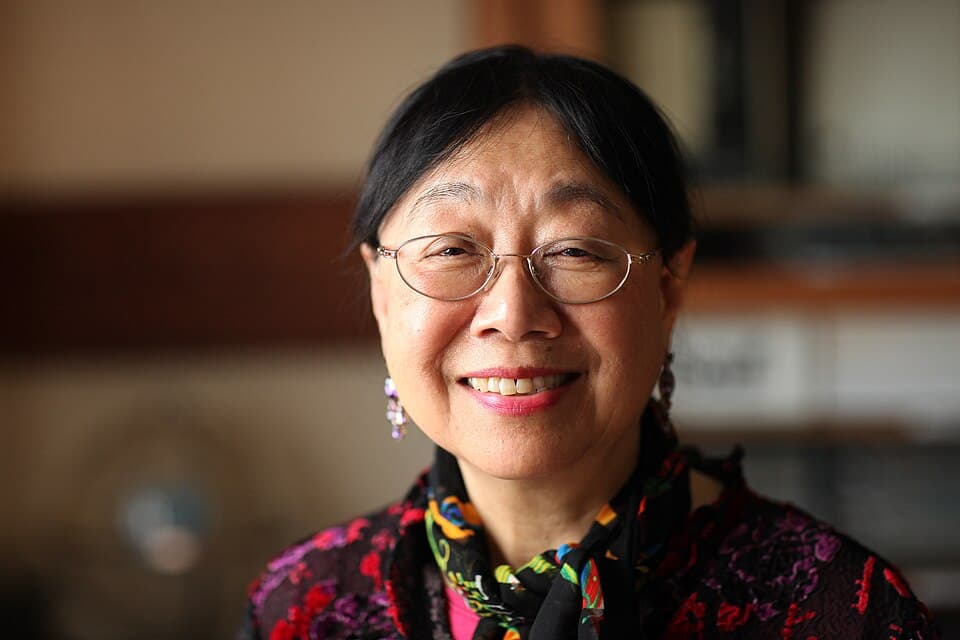
Hong Kong, American · Science
Sau Lan Wu
May 11, 1940 – present
Overview
Sau Lan Wu (Chinese: 吳秀蘭; born 11 May 1940) is a Chinese‑American experimental particle physicist whose career has spanned the formative decades of the Standard Model of particle physics. She has played key roles in three of the field’s central discoveries: the 1974 discovery of the J/ψ particle that confirmed the charm quark, the first direct observation of the gluon in 1979, and the 2012 discovery of the Higgs boson at CERN’s Large Hadron Collider.[1][2][3][11][17]
Wu spent nearly five decades at the University of Wisconsin–Madison, where she became Enrico Fermi Distinguished Professor of Physics and one of the institution’s most decorated scientists.[1][11][17][9] She is widely recognized both for her scientific leadership in large international collaborations and for breaking gender and racial barriers in high‑energy physics.
Early Life and Background
Wu was born on 11 May 1940 in Hong Kong, during the Japanese occupation in the Second World War.[1][3][10] She grew up in poverty; later accounts describe her childhood home as a cramped space behind a rice shop, and her family circumstances were precarious.[3][16] Her mother, reportedly the sixth concubine of a wealthy businessman who abandoned the family, was illiterate but strongly encouraged her daughter to seek economic independence through education.[16][3] These formative experiences instilled in Wu both resilience and a determination to escape the limited prospects available to poor girls in mid‑20th‑century Hong Kong.
Wu attended government schools in Hong Kong, where she excelled academically despite her circumstances.[16][3] As a teenager, she initially aspired to be an artist, but her trajectory changed after she read a biography of Marie Curie.[16][7] Curie’s story of scientific discovery and perseverance profoundly impressed Wu and inspired her to pursue physics. In the late 1950s she applied widely to American colleges—reportedly to around 50 institutions—and ultimately received a scholarship offer from Vassar College in the United States.[16][3][2]
Education and Early Scientific Formation
Wu arrived in the United States in 1960 to attend Vassar College in Poughkeepsie, New York, on a full scholarship, reportedly carrying only a small amount of money.[2][15][3] At Vassar she majored in physics, graduating summa cum laude with a Bachelor of Arts degree in 1963.[2][15][11][9] Her years there exposed her to research opportunities unusual for undergraduates at that time. She spent several summers at Brookhaven National Laboratory on Long Island, gaining early experience with particle‑physics experiments.[16][3][15]
After Vassar, Wu entered graduate school in physics at Harvard University. She received her Master’s degree in 1964 and completed her Ph.D. in 1970.[8][14][2] She was part of one of the first cohorts of women to receive graduate degrees directly from Harvard in physics, rather than via Radcliffe College.[9] At Harvard she was often the only woman in her cohort and faced gender‑based barriers; accounts note that she was barred from entering male dormitories where study groups met, forcing her to prepare for exams and problem sets largely on her own.[16][3] These experiences sharpened her determination to succeed in a field in which women, and particularly Asian women, were rare.
Wu’s thesis work at Harvard focused on experimental high‑energy physics, aligning her with the wave of increasingly large accelerator‑based experiments that would transform the field in the 1970s.[3][12] Upon completing her Ph.D. in 1970, she moved into postdoctoral positions that placed her at the center of this revolution.
Career Beginnings: MIT and the November Revolution
After earning her doctorate, Wu became a research associate at the Massachusetts Institute of Technology (MIT), working with Nobel laureate Samuel C. C. Ting.[3][13][2][11] Her research was based at Brookhaven National Laboratory (BNL), where Ting’s group was conducting high‑energy experiments in search of new resonances.
In 1974, Wu was part of Ting’s team that discovered the J/ψ particle, a meson whose properties provided the first clear experimental evidence for the existence of the charm quark.[1][3][11][15] The near‑simultaneous discoveries of the same resonance by Ting’s group at BNL and Burton Richter’s group at the Stanford Linear Accelerator Center (SLAC) triggered what became known as the “November Revolution” in particle physics.[3][1] The J/ψ discovery forced a rapid rethinking of quark models and helped solidify the emerging Standard Model.
While Ting and Richter would later share the 1976 Nobel Prize in Physics, the discovery was the product of intense collaborative work. Wu’s contributions included experimental analysis and detector operations essential for validating the resonance as a new particle rather than an artifact.[3][1][11] Her participation in this world‑shaping discovery established her reputation as a rising star in experimental high‑energy physics.
University of Wisconsin–Madison and Pioneering Status
In 1977, Wu joined the University of Wisconsin–Madison as an assistant professor of physics.[13][3][11][9] At that time, she became one of the first two women ever appointed to the physics faculty in the department’s roughly century‑long history.[3][13][9] Her hiring marked a significant institutional milestone, as physics departments in the United States were still overwhelmingly male at the professorial level.
Wu quickly built a major experimental program at Wisconsin, forging strong ties with European accelerator laboratories. She was promoted to associate professor in 1980 and to full professor in 1983.[9] Over the years she held distinguished titles at the university, including Hilldale Professor, Vilas Professor, and ultimately Enrico Fermi Distinguished Professor of Physics.[11][17][9] From this base she led large cohorts of graduate students, postdoctoral researchers, and technical staff in collaborations at DESY in Germany and later at CERN in Switzerland.
Gluon Discovery and the Consolidation of QCD
After the charm quark discovery, Wu turned her attention to probing the theory of the strong interaction, quantum chromodynamics (QCD). In the late 1970s she joined the TASSO collaboration at the DESY laboratory in Hamburg, which was studying electron–positron collisions at the PETRA collider.[6][11][17] QCD predicted that in addition to two‑jet events corresponding to quark–antiquark pairs, there should be characteristic three‑jet events when a gluon is radiated.
In 1979, Wu played a leading role in the analysis that produced the first direct experimental evidence for gluons.[6][11][1][14] By reconstructing events with three well‑separated jets and comparing their distributions with theoretical predictions, the TASSO collaboration demonstrated that the data were consistent with gluon bremsstrahlung as expected from QCD. This result is widely regarded as the first direct observation of gluons, the vector bosons that mediate the strong force between quarks.
Wu’s leadership in this work was widely recognized. Her team’s analysis helped transform QCD from a promising theoretical framework into an experimentally confirmed cornerstone of the Standard Model. The discovery also showcased her ability to lead large, technically demanding analyses at international facilities—an ability that would become even more important in the era of the Large Hadron Collider.[6][11][17]
Recognition and Mid‑Career Honors
Wu’s contributions to the gluon discovery were formally recognized when, on 7 August 1995, she and collaborators Paul Söding, Bjørn Wiik, and Günter Wolf received the High Energy and Particle Physics Prize of the European Physical Society (EPS).[11][14][15] The prize citation honored their leading roles in the discovery of three‑jet events at DESY as evidence for gluons, cementing the 1979 result as a landmark in particle physics.
The following year, on 9 October 1996, Wu was elected a Fellow of the American Academy of Arts and Sciences.[2] This election recognized not only her scientific accomplishments but also her standing as a leader in international collaborations and an influential mentor. She had previously been elected a Fellow of the American Physical Society, adding to a growing list of honors.[11]
Over the course of her mid‑career, Wu held multiple prestigious professorships at the University of Wisconsin–Madison. She also became known for building a strong pipeline of young physicists, many of whom went on to careers at major universities and laboratories. Her work helped position Wisconsin as a central node in global high‑energy physics.[9][17]
The Higgs Era and Work at CERN
By the 1990s and 2000s, Wu had increasingly focused her research on the search for the Higgs boson, the last missing component of the Standard Model. She became a key member and leader within the ATLAS collaboration at CERN, assembling a large team from Wisconsin to work on detector development and data analysis.[11][15][17]
At the Large Hadron Collider (LHC), Wu’s group concentrated on several crucial Higgs decay channels, especially H→γγ (Higgs decaying to two photons) and H→ZZ*→4ℓ (Higgs decaying to two Z bosons, each decaying to a pair of leptons).[6][11][9] These channels, though rare, offer relatively clean signatures in the ATLAS detector and were central to establishing the existence of the new particle.
On 4 July 2012, CERN announced that the ATLAS and CMS collaborations had observed a new boson with a mass around 125 GeV with a significance above five sigma—strong evidence for the Higgs boson.[6][11][15] Wu and her team were among the first within ATLAS to achieve a five‑sigma observation of the new particle, and their analyses in the diphoton and four‑lepton channels were crucial to the discovery claim.[6][11][9] For Wu, this marked her third participation in a major particle discovery, following the charm quark and the gluon.
Beyond the initial discovery, Wu continued to be deeply involved in precision measurements of the Higgs boson’s properties, including its couplings and possible deviations from Standard Model predictions. Her work helped establish the Higgs sector as a fertile area for probing physics beyond the Standard Model, even as the particle itself appeared remarkably consistent with theoretical expectations.[6][11][17]
Later Career, Retirement, and Ongoing Work
Throughout her career, Wu maintained a dual presence at the University of Wisconsin–Madison and at CERN in Geneva. She was widely known for her intense dedication to research, often spending extended periods at CERN to oversee her group’s work on ATLAS.[15][17] At Wisconsin she continued to teach and mentor students, fostering a new generation of experimentalists.
On 20 October 2005, the International Astronomical Union officially named minor planet 177770 SaulanWu in her honor, a symbolic recognition of her impact on fundamental physics.[1] In the 2010s and early 2020s she continued her Higgs research and remained a prominent figure in high‑energy physics, frequently profiled in scientific and popular media.[4][5][7][15]
In a departmental announcement dated 12 March 2026, the University of Wisconsin–Madison Department of Physics congratulated Wu on her retirement, effective 1 January 2026, and highlighted her nearly fifty‑year career at the institution.[9] The announcement emphasized her central roles in the discoveries of the charm quark, gluon, and Higgs boson and described her career as “one of the most consequential in modern experimental particle physics.”[9] She holds the title of Professor Emeritus and remains associated with CERN and Wisconsin as a senior figure in the field.[17][9]
Personal Life
Wu has often spoken publicly about the personal challenges and motivations that shaped her career. Her mother’s insistence that she secure her own livelihood through education deeply influenced her life choices.[16][3] Accounts emphasize that Wu’s decision to pursue physics instead of art was catalyzed by reading about Marie Curie, reflecting an aspiration not only for intellectual fulfillment but also for a stable, self‑determined life.[16][7]
Biographical profiles indicate that Wu married theoretical physicist Tai Tsun Wu, with whom she shared both personal and intellectual interests, though detailed information about their private life and any children is less extensively documented in major reference sources.[3][12] Wu has tended to keep her family life out of the spotlight, focusing public attention on her research and mentorship.
Her personal story—rising from poverty in wartime Hong Kong to the top ranks of particle physics—has been widely cited as an inspiration for young scientists, particularly women and students of Asian descent. Interviews and profiles highlight her persistence in the face of discrimination, her demanding standards in the laboratory, and her commitment to training the next generation of physicists.[3][13][15]
Awards, Honors, and Distinctions
Over the course of her career, Wu has accumulated numerous honors that reflect both her scientific achievements and her pioneering status:
- Co‑recipient of the 1995 European Physical Society High Energy and Particle Physics Prize for the first direct observation of gluons in three‑jet events at DESY.[11][14][15]
- Fellow of the American Physical Society, recognizing her significant contributions to the field of particle physics.[11]
- Fellow of the American Academy of Arts and Sciences, elected in 1996.[2]
- Enrico Fermi Distinguished Professor of Physics at the University of Wisconsin–Madison, along with previous appointments as Hilldale Professor and Vilas Professor.[11][17][9]
- Minor planet 177770 SaulanWu named in her honor by the International Astronomical Union in 2005.[1]
In addition to these formal honors, Wu has been the subject of numerous profiles in institutional and popular publications that celebrate her contributions to three major particle discoveries and her role as a trailblazing woman in science.[3][7][13][15]
Legacy and Historical Impact
Sau Lan Wu’s legacy is multi‑layered, encompassing scientific, institutional, and social dimensions. Scientifically, she is one of the few experimental physicists whose career spans three of the most important discoveries underpinning the Standard Model: the charm quark, the gluon, and the Higgs boson.[1][2][11][17] Her work helped transform speculative theoretical constructs into empirically verified components of nature’s fundamental architecture.
Institutionally, Wu played a key role in building the University of Wisconsin–Madison into a major center for experimental particle physics. She established a strong pipeline between Wisconsin and leading international laboratories, particularly DESY and CERN, and trained generations of students and postdocs who now populate research institutions around the world.[9][17] Her leadership in large collaborations, from TASSO to ATLAS, exemplifies the collaborative ethos of modern high‑energy physics.
Socially and historically, Wu stands as a pioneering figure for women and Asian scientists in a field long marked by exclusion. As one of the first two women professors in her department at Wisconsin and one of the few women visible in leading roles in major collider experiments in the late 20th century, she helped expand the perceived boundaries of who could be a particle physicist.[3][13][9] Her story—from impoverished childhood in Hong Kong to a namesake asteroid and global recognition—has become a powerful narrative of persistence against structural and cultural barriers.
As of the mid‑2020s, Wu continues to be recognized as a central figure in the history of particle physics. Profiles and historical accounts increasingly place her alongside the most influential experimentalists of her era, highlighting not only the discoveries she helped secure but also the paths she opened for those who follow.[3][7][11][15]
Later Life and Continuing Influence
Following her retirement from formal teaching duties at the University of Wisconsin–Madison, effective 1 January 2026, Wu holds the title of Professor Emeritus and remains connected to the university and to CERN.[9][17] She continues to be cited in discussions of future collider projects and ongoing Higgs boson studies, and her career is frequently referenced in efforts to broaden participation in physics.
Wu’s life and work are now the subject of historical and educational initiatives, including oral histories and profiles created by professional societies and advocacy groups for women in science.[3][2][7][12] These materials ensure that her contributions—and the barriers she confronted—are documented for future generations. In this way, her influence extends beyond the laboratory, shaping the historical record of how modern particle physics was built and who built it.
Dated achievements
9 indexed.
- May111940
- Nov011974Science
Participation in discovery of J/ψ particle and charm quark
Wu was part of the team that discovered the J/ψ particle, providing evidence of the charm quark.
View details