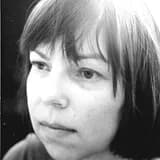
Sarah Kirsch died on 6 May 2013 at her home in Heide, Schleswig-Holstein, Germany, at the age of 78.
Sarah Kirsch died on 6 May 2013 at her home in the rural district of Tielenhemme near Heide in Schleswig-Holstein, northern Germany, where she had lived in self-imposed seclusion for many years, continuing to write poetry and paint. She was 78 years old.
Her death marked the end of a literary career spanning more than five decades, during which she became recognized as one of the most important German-language poets of the postwar era. Kirsch had largely withdrawn from public literary life in her later years, living quietly and continuing to produce work characterized by close observation of nature, seasons, and the rural landscapes surrounding her.
Tributes poured in from across the German literary establishment, recognizing her as one of the last major voices to have borne direct witness to the division and eventual reunification of Germany through poetry that consistently resisted political conformity while retaining extraordinary lyrical precision and emotional depth.
Her death was widely covered in German media and by international literary institutions such as the Poetry Foundation, who noted her singular importance in bridging East and West German literary traditions. Her archive and papers continue to be studied by scholars of German literature, and her poetry remains a staple of German literary curricula, ensuring her legacy as an emblematic figure of both socialist-era dissidence and postwar German lyric poetry.