← All women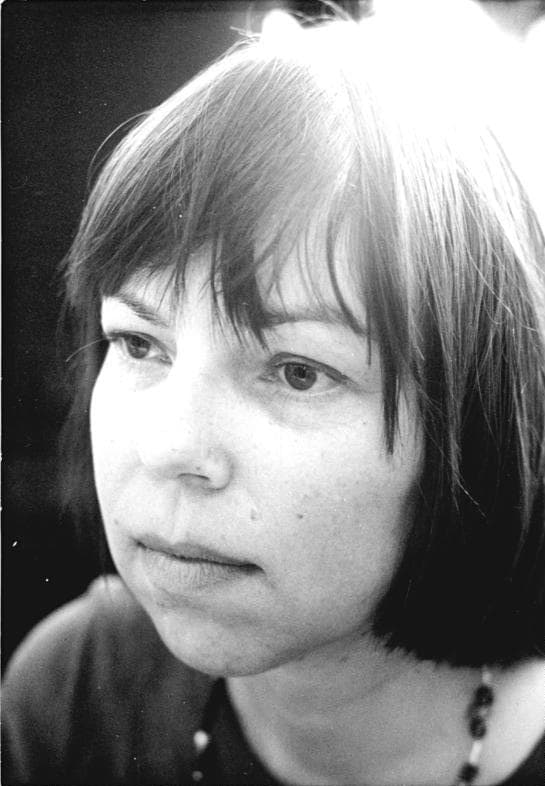
German · Literature · Activism
Sarah Kirsch
April 16, 1935 – May 6, 2013
Early Life and Background
Sarah Kirsch was born Ingrid Hella Irmelinde Bernstein on 16 April 1935 in the village of Limlingerode, in the Thuringian region of Germany, then under Nazi rule. She grew up during the tumultuous final years of the Third Reich and the chaotic aftermath of World War II, experiences that shaped her generation's fraught relationship with German history and identity. In the postwar reorganization of Germany, her home region fell within the Soviet occupation zone, which in 1949 became the German Democratic Republic (GDR).
In a pointed and deeply personal act of protest, Ingrid Bernstein later adopted the pen name "Sarah" — a traditionally Jewish name — reportedly in response to antisemitic comments made by her father. This renaming was both a repudiation of her family's past attitudes and a quiet, symbolic act of solidarity with victims of the Holocaust, foreshadowing the moral courage that would characterize much of her later life and work.
Kirsch studied biology at the University of Halle from 1954 to 1959, an unusual academic background for a poet, but one that profoundly influenced her later work: her poetry is marked by precise, almost scientific attention to the natural world, flora, fauna, and seasonal change. Following her scientific studies, she pursued further training in creative writing at the Johannes R. Becher Institute for Literature in Leipzig, a state-sponsored institution intended to cultivate socialist-realist writers for the GDR's cultural apparatus, studying there from 1963 to 1965.
Career Beginnings and Development
Kirsch's literary career began in earnest in the early 1960s within the tightly controlled cultural environment of East Germany, where writers were expected to conform to the doctrines of socialist realism. Her early poetry collections, however, quickly distinguished themselves through their lyrical intensity, deep engagement with nature, and subtle emotional and political undercurrents that resisted easy ideological categorization.
Her first major collection, Landaufenthalt ("Sojourn in the Country," 1967), established her reputation as a poet of remarkable sensitivity to landscape and interior life. She followed this with Zaubersprüche ("Conjuring Spells," 1973), which became one of her most celebrated and widely read works, cementing her status as a leading voice in East German poetry. Her poetry from this period often blended personal, even domestic, subject matter — love, motherhood, solitude — with an acute awareness of political constraint, producing work that could be read on multiple levels: as intimate lyric and as veiled social commentary.
Dissidence and the Biermann Affair
Kirsch's career reached a decisive turning point in November 1976, when the GDR government revoked the citizenship of the popular dissident singer-songwriter Wolf Biermann while he was touring in West Germany. This act of state repression provoked outrage among East Germany's literary and artistic community. Kirsch was among the courageous signatories of an open letter of protest, joining prominent writers such as Christa Wolf, Stefan Heym, Günter Kunert, and Volker Braun in publicly condemning the government's action.
This was an extraordinarily risky move within the context of the GDR's authoritarian surveillance state, where dissent could result in professional blacklisting, Stasi surveillance, imprisonment, or forced emigration. Kirsch, like several of her co-signatories, suffered serious professional and personal consequences. She was expelled from the Schriftstellerverband (Writers' Union of the GDR) and found herself increasingly marginalized within the East German literary establishment.
Faced with mounting political pressure and diminishing prospects for creative freedom, Kirsch made the difficult decision to leave East Germany in 1977, relocating to West Berlin and eventually settling in rural Schleswig-Holstein in northern West Germany. This emigration placed her among a significant cohort of East German writers and intellectuals — including Biermann himself — who fled or were expelled from the GDR during the late 1970s as the state cracked down on dissent following the Biermann affair.
Major Works and Literary Style
Following her move to the West, Kirsch continued to produce an extensive and highly regarded body of poetic work. Her later collections, including Erdreich (1982), Katzenleben ("Cat Lives," 1984), Schwingrasen (1991), and Erlkönigs Tochter ("Erlking's Daughter," 1992), further developed her signature style: densely imagistic, deeply attuned to seasonal and natural cycles, often melancholic, and marked by an unconventional, unpunctuated free verse that lent her work a distinctive rhythmic intimacy.
Critics frequently noted her deft blending of the personal and the political, her poetry often reading as a form of interior landscape mapped onto the physical landscapes of the German countryside — first the fields of Thuringia and Mecklenburg, later the marshes and coastlines of Schleswig-Holstein. Her work has been compared to that of other significant 20th-century women poets for its unflinching engagement with solitude, nature, love, and loss.
Kirsch was remarkably prolific throughout her career, publishing more than twenty volumes of poetry, as well as prose works and translations. Her writing bridged the literary traditions of East and West Germany at a time when the two states' cultural output was often starkly divergent, making her one of the few poets whose work was recognized as significant on both sides of the Iron Curtain, and later as part of a unified German literary canon.
Awards and Honors
Sarah Kirsch received numerous prestigious literary awards throughout her career, reflecting her standing as one of the preeminent German poets of her generation. Most notably, she was awarded the Georg Büchner Prize in 1996, Germany's most distinguished literary honor, recognizing her lifetime contribution to German letters. Other honors included the Petrarca-Preis (1976), the Villa Massimo fellowship in Rome, the Friedrich-Hölderlin-Preis, and the Peter Huchel Prize, among many others across her decades-long career.
These accolades affirmed her position not merely as a significant East German dissident writer, but as one of the truly major poets of the German language in the postwar 20th century, whose influence spanned both German states and continued after reunification in 1990.
Personal Life
Kirsch married the poet Rainer Kirsch in 1958, and the couple's shared literary life brought them both into East Germany's literary circles; they divorced in 1968. She had one son, Moritz. After her divorce, and increasingly following her emigration to the West, Kirsch led a private and often reclusive life, ultimately settling permanently in the small village of Tielenhemme near Heide in rural Schleswig-Holstein, where she lived for over three decades until her death. In addition to poetry, she was known to be an accomplished painter, and her rural home became both sanctuary and subject for much of her later creative output.
Legacy and Later Life
In her later years, Kirsch largely withdrew from public literary and media life, rarely giving interviews and living quietly amid the marshland landscapes that populated her late poetry. Nonetheless, she continued to write and publish steadily, producing works that were consistently praised by critics for maintaining the lyrical precision and emotional depth that had defined her earlier career.
Sarah Kirsch died on 6 May 2013 at her home in Tielenhemme, at the age of 78. Her death was mourned across the German literary world as the loss of one of the last major poetic voices to have directly experienced and chronicled, through verse, the division and reunification of Germany. Literary institutions, including the Poetry Foundation internationally, marked her passing as the end of an era in German-language poetry.
Kirsch's legacy endures through her extensive body of published work, her example of literary courage in the face of state repression, and her singular contribution to German poetry's engagement with nature, politics, and the interior life. Her papers and literary estate remain subjects of scholarly study, and her poetry continues to be widely taught, translated, and read as an essential part of the 20th-century German literary canon.
Dated achievements
3 indexed.
- Apr161935Literature
Birth of Sarah Kirsch in Limlingerode, Germany
Sarah Kirsch, born Ingrid Bernstein, was born on 16 April 1935 in Limlingerode, Thuringia, Germany.
View details Sarah Kirsch - Wikipedia - Aug161976Activism
Signs open letter protesting expulsion of Wolf Biermann from East Germany
Kirsch co-signed a landmark open letter protesting the GDR's expatriation of singer-songwriter Wolf Biermann, becoming a leading dissident voice.