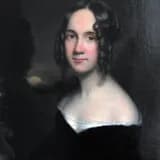
Sarah Josepha Buell marries lawyer David Hale in Newport, New Hampshire, beginning a brief but formative intellectual partnership.
On October 23, 1813, Sarah Josepha Buell married David Hale, a young lawyer, in Newport, New Hampshire.[9] The marriage was a turning point in her intellectual life. David Hale encouraged his wife’s literary interests and undertook to give her, in his words, the “equivalent of a college education” at a time when universities were effectively closed to women.[5][9] Together they read history, philosophy, and poetry, reinforcing her literary talents and broadening her intellectual horizons.
The couple would have five children, and for nearly a decade Sarah’s primary work was within the domestic sphere.[9] Yet David’s support laid the groundwork for her later public career. When he died suddenly in 1822, Sarah was left a widowed mother compelled to support her family through writing and teaching.[5][9] The educational foundation and confidence he had fostered proved crucial as she transitioned from private study to professional authorship.
Within the context of early 19th‑century America, this marriage illustrates how one man’s respect for a woman’s intellect could quietly challenge prevailing norms.[5] While David Hale did not live to see his wife become a leading editor, his role in nurturing her education helped enable her subsequent achievements as novelist, poet, and advocate for women’s education. The wedding date thus marks the beginning of a partnership that, though brief, significantly influenced the trajectory of women’s literary history in the United States.