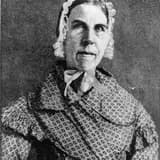
Sarah Grimké died in Hyde Park, Massachusetts, at age 81, having devoted her life to abolition and women's rights.
Sarah Moore Grimké died on December 23, 1873, in Hyde Park, Massachusetts, where she had spent her later years living with her sister Angelina Grimké Weld and brother-in-law Theodore Dwight Weld. She was 81 years old at the time of her death.
In her final decades, Sarah remained committed to reform causes, continuing to write and support the causes of abolition (until the end of the Civil War achieved emancipation) and women's suffrage. She and her sister famously cast ballots in a symbolic, illegal vote in the 1870 Massachusetts town election to protest women's disenfranchisement, an act of civil disobedience that echoed her lifelong defiance of unjust laws.
Her death marked the passing of one of the earliest and most theologically grounded voices for women's equality in the United States. Though she never saw women achieve the right to vote in her lifetime, her writings, particularly her groundbreaking Letters on the Equality of the Sexes, laid crucial intellectual foundations for the American suffrage movement. Later generations of feminist scholars and historians have recognized Sarah Grimké as a pioneering figure whose work anticipated arguments used by suffragists well into the twentieth century. Her legacy endures through her writings, which remain studied as some of the first sustained American feminist theological arguments.