← All women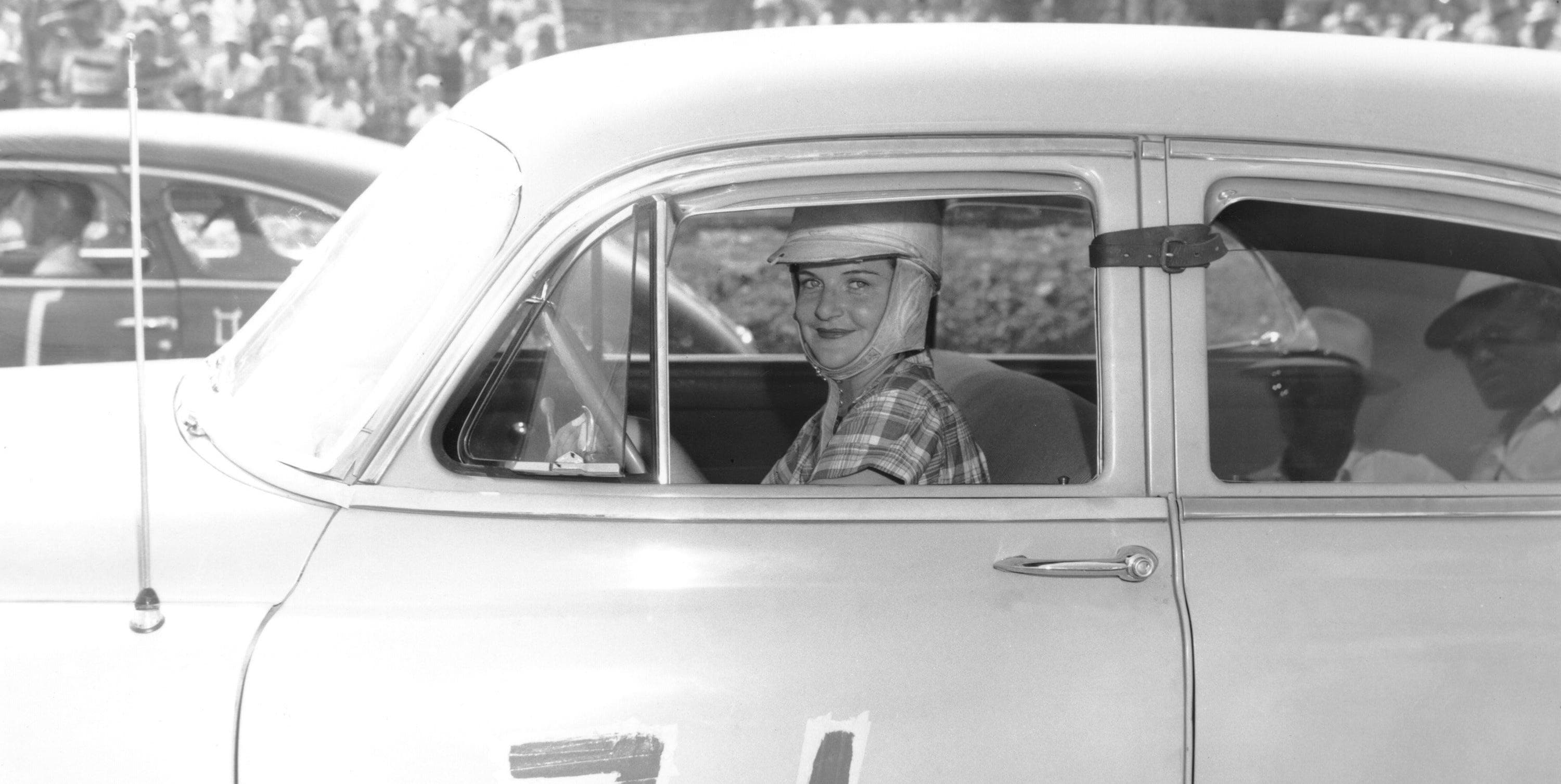
American · Sports
Sara Christian
August 25, 1918 – March 7, 1980
Early life and background
Sara Williams Christian was born on August 25, 1918, in Dahlonega, Georgia, a small mountain town in north Georgia that would later claim her as one of its most notable residents.[2][11] Growing up in the rural South between World War I and World War II, she came of age in a region and era where automobiles were becoming part of everyday life, yet formal motorsport remained largely informal and male‑dominated.
Sources describe Christian’s upbringing as rooted in North Georgia’s developing car culture, though details of her family background and schooling are sparse in the historical record.[6][11] Dahlonega’s proximity to early stock car hubs in Georgia and nearby states provided contextual opportunities for exposure to racing. The culture of "moonshine runners" and local speed contests in the Southeast formed an unofficial foundation for what would become NASCAR, and Christian matured within this milieu.
By the 1940s, Christian was closely connected to the automotive trade through her husband Frank Christian, a car dealer and later a NASCAR team owner.[3][4] That connection was critical: many early racers came from dealership and garage networks that had both cars and mechanical expertise. Around these circles, Sara learned performance driving and became increasingly involved with cars as more than simple transportation.
Path into motorsport
Christian’s first known competitive driving experiences pre‑date NASCAR. The Georgia Racing Hall of Fame notes that she competed in "old barrel racing" events at the beaches of Jacksonville, Florida, as early as 1941, and took part in a "powder puff" race at the new Atlanta Speedway in 1948, where she was "discovered" as a driver.[10] These events were typical of the era’s limited avenues for women: special races were often organized with women drivers, separated from mainstream competitions.
Despite the gendered framing of such races, they provided Christian with practical racing experience—handling cars aggressively on sand and asphalt, managing speed and course layouts, and building confidence behind the wheel. Her performances caught the attention of racing insiders, including her husband, whose cars she would later drive in NASCAR competition.[6][10]
By the late 1940s, Christian had moved beyond novelty events. She and Frank Christian were part of the network of drivers, owners and officials drawn to Bill France Sr.’s new sanctioning body, the National Association for Stock Car Auto Racing (NASCAR), formed in 1948.[15] When NASCAR announced a new "Strictly Stock" division for 1949—racing near‑stock passenger cars for a national championship—the Christians were among those prepared to participate.
1949: Breaking NASCAR’s gender barrier
Christian’s historical significance is rooted in the 1949 Strictly Stock season, the first championship campaign of what would become NASCAR’s premier series. On June 19, 1949, she started the inaugural Strictly Stock race at Charlotte Speedway, North Carolina.[3][6][13] Driving a 1947 Ford owned and prepared by Frank Christian, she qualified 13th and finished 14th in a 33‑car field before a crowd estimated at 13,000.[3]
This start made Christian the first female driver ever to compete in a NASCAR race.[2][3][13][15] She was also the only woman in that particular event, and contemporary and modern accounts emphasize that her entry was not framed as a publicity stunt. The Henry Ford Museum’s "Women in the Winner’s Circle" exhibit confirms that she "finished 14th out of 33 drivers and was the only woman to participate, thereby becoming the first female to drive in a race promoted by NASCAR."[6]
Christian did not stop at Charlotte. Over the course of the 1949 season, she competed in six of NASCAR’s eight Strictly Stock races.[1][6] Her schedule included challenging dirt ovals and the famous Daytona Beach & Road Course, demonstrating that she was a regular competitor rather than a one‑race curiosity.
Key races in the inaugural season
On July 10, 1949, Christian raced at the Daytona Beach & Road Course, an early NASCAR venue that combined pavement with the hard‑packed sand of Daytona Beach.[6][12] This race was notable because Christian was joined by fellow women drivers Louise Smith and Ethel Mobley, creating a rare field that included three women.[12] Christian finished 18th, while Frank Christian placed sixth.[12] Several sources describe this event as producing NASCAR’s first—and, for a long time, only—husband‑and‑wife driver pairing in the same race.[10][12]
On August 7, 1949, Christian competed at Occoneechee Speedway in Hillsboro, North Carolina, another dirt track on the schedule.[6] She finished 23rd, a modest result but part of the steady participation that was building her season points total.
Her breakthrough performance came on September 11, 1949, at Langhorne Speedway in Langhorne, Pennsylvania. Here, Christian finished 6th, becoming the first woman to earn a top‑10 finish in a NASCAR race.[3][6][12] The Henry Ford exhibit and multiple retrospectives highlight this race as a milestone, noting that winner Curtis Turner invited Christian to join him in Victory Lane celebrations in recognition of her achievement.[12]
Christian’s finest NASCAR result followed shortly afterward. In the ninth race of the season, held on October 2, 1949, at Heidelberg Raceway in Pittsburgh, Pennsylvania, she recorded a 5th‑place finish.[3][4][6][12] This made her the first woman to score a top‑five finish in NASCAR’s premier series, and contemporary as well as modern sources have long described this as the highest finish by a woman in NASCAR’s top division.[4][6][12][14]
Christian continued her campaign at North Wilkesboro Speedway on October 16, 1949, finishing 12th.[6] Across the 1949 season, she competed in six of the eight events and finished 13th in the final points standings.[1][6][15] NASCAR Hall of Fame materials and Autoweek both point out that this 13th‑place points finish remains the best season result ever achieved by a woman in NASCAR’s premier series.[1][4]
Later racing and the measured-mile record
Christian’s documented NASCAR activity continued into 1950. She participated in at least one Strictly Stock race that season, at Hamburg Speedway in Hamburg, New York, on August 27, 1950, where she finished 14th.[6][9] The Henry Ford exhibit notes that she raced in a total of seven NASCAR events across 1949 and 1950, recording two top‑10 finishes.[6]
After stepping back from regular NASCAR competition, Christian remained involved in high‑speed driving. On February 10, 1953, she became one of the few drivers to break the measured‑mile record at Daytona Beach, averaging over 100 mph in a timed run along the famous sand course.[6] This record attempt underscored her capabilities beyond wheel‑to‑wheel oval racing, showing that she could handle high‑speed trials that demanded precise control and bravery on a challenging surface.
Although details of her racing activity after 1953 are limited, available sources agree that her active competition career was relatively short—concentrated in the late 1940s and early 1950s—yet historically significant due to the barriers she broke.[2][6][15]
Awards, honors and recognition
Christian’s pioneering performances were recognized during her racing career. In 1949, she was voted "Woman Driver of the Year" by the United States Drivers' Association, reflecting both her competitive success and her symbolic importance as the first woman in NASCAR.[6][8][10][12]
Decades after her retirement and death, Christian’s contributions continued to gain recognition in the motorsport community. In 2004, she was inducted into the Georgia Automobile Racing Hall of Fame (also referred to as the Georgia Racing Hall of Fame), which honors drivers and figures central to the state’s racing heritage.[3][6][10] Autoweek notes that she and Frank Christian are the only couple jointly recognized in this Hall of Fame, underscoring their shared impact on Georgia’s racing history.[4]
The NASCAR Hall of Fame in Charlotte preserves Christian’s racing uniform and highlights her achievements in Hall exhibits and online features, emphasizing the role she played in expanding opportunities for women in the sport.[1][13] Museum and media outlets—including the Henry Ford Museum, Jalopnik, Skirts and Scuffs, Dive‑Bomb and various NASCAR retrospectives—have produced profiles and articles that keep her story in public view.[6][12][14][11][15]
Personal life
Christian’s racing career was closely tied to her marriage to Frank Christian, a car dealer and team owner who supplied and prepared the cars she drove.[3][4][6] The couple lived in Georgia, and Frank’s automotive business gave them access to vehicles and mechanical support necessary for participation in early NASCAR.
Their partnership extended onto the racetrack: as noted, Frank also drove in NASCAR events, including the 1949 Daytona Beach & Road Course race where he finished sixth and Sara 18th.[12] The Georgia Racing Hall of Fame and other sources describe them as the first and only husband‑and‑wife racing team in NASCAR history, at least during that era.[10][12] This joint involvement made them a distinctive presence in a sport where both drivers and team owners were overwhelmingly male.
Details about Christian’s life outside racing—such as children, later employment or hobbies—are not extensively documented in the sources consulted. The focus of historical coverage has largely been on her status as a pioneering female driver and her role within the Christian racing enterprise.
Legacy and historical impact
Sara Christian’s legacy rests on a cluster of "firsts" and enduring records that have come to define her place in motorsport history:
- First female driver to compete in a NASCAR race, at Charlotte Speedway on June 19, 1949.[2][3][13][15]
- First woman to earn a top‑10 NASCAR finish, at Langhorne Speedway on September 11, 1949.[3][6][12]
- First woman to record a top‑five finish in NASCAR’s premier series, at Heidelberg Raceway on October 2, 1949.[3][4][6][12]
- Highest season points finish by a woman in NASCAR’s top division, 13th in the 1949 Strictly Stock standings, a benchmark that has stood for decades.[1][4][6][15]
- One of the few drivers to break the measured‑mile speed record at Daytona Beach, averaging over 100 mph on February 10, 1953.[6]
These accomplishments have been repeatedly highlighted in historical and journalistic treatments of women in NASCAR. Jalopnik emphasizes that Christian competed in the first ever NASCAR race and remains the only woman to score a top‑five finish in the premier series, although some later female drivers have matched or surpassed her results in other NASCAR divisions.[14] The NASCAR Hall of Fame describes her as a pioneering figure whose 1949 season "changed what was possible" for women in the sport.[1]
Christian’s impact is also symbolic. In an era when women were actively discouraged from high‑risk professional sports and often barred outright, her appearance on NASCAR grids directly challenged prevailing assumptions. She competed not in segregated "ladies’" events but in the same races, under the same rules, in the same cars as men. Her ability to finish respectably, and at times exceptionally, helped broaden public perceptions of women’s capabilities in motorsport.
Subsequent generations of female racers—such as Janet Guthrie, who became the first woman to race in the Daytona 500 and Indianapolis 500 in the 1970s, and Danica Patrick, who earned high‑profile results in both IndyCar and NASCAR in the 2000s and 2010s—have often been discussed in relation to Christian’s pioneering role.[12][14] In this sense, her relatively brief career functions as a foundational chapter in the longer story of women’s increasing participation in professional racing.
Later life and death
After the early 1950s, Christian withdrew from active top‑level competition. The sources available offer limited information about her everyday activities in the later decades of her life, focusing instead on her racing accomplishments and subsequent recognition.
On March 7, 1980, Sara Christian died of natural causes at the age of 61.[3] Motorsport Memorial records her death on that date and notes her age, situating the end of her life within a period when NASCAR had grown significantly but when female drivers remained uncommon.[3]
Following her death, Christian’s legacy was gradually formalized through Hall of Fame inductions and museum exhibits. Her 2004 induction into the Georgia Automobile Racing Hall of Fame marked official recognition from her home state’s racing community.[3][6][10] As interest in documenting women’s contributions to motorsport grew in the 1990s and 2000s, her story was increasingly retold in articles, online features and historical projects.
Today, Christian is widely acknowledged as a trailblazer whose brief but impactful racing career helped open doors for women in stock car racing. Her accomplishments remain a reference point in discussions of gender and sport, and her name appears in timelines and curated exhibits on female participation in NASCAR.[6][11][13][15]
While much about her personal life remains under‑documented, the available record clearly establishes her as one of the key figures in women’s motorsport history—a driver whose competitive results and courage challenged the racing world to rethink who belonged behind the wheel.
Dated achievements
10 indexed.
- Aug251918Sports
Birth of Sara Christian in Dahlonega, Georgia
Born in Dahlonega, Georgia, on August 25, 1918; later became NASCAR’s first female driver and a pioneering stock car racer.
View details Wikipedia – Sara Christian - Jul101949Sports
NASCAR start at Daytona Beach & Road Course
Competed at the Daytona Beach & Road Course NASCAR Strictly Stock race, finishing 18th in a field that included multiple women drivers.