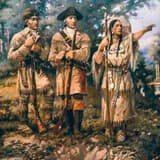
Clark named "Pompy’s Tower" along the Yellowstone River in honor of Sacagawea's son, Jean-Baptiste.
On July 25, 1806, as the Lewis and Clark Expedition journeyed along the Yellowstone River, William Clark named a prominent sandstone butte "Pompy’s Tower" after Sacagawea’s son Jean-Baptiste, whom Clark affectionately called Pomp. This naming signified not only the personal bond formed with Sacagawea and her family during the expedition but also memorialized their presence and the trip's influential encounters. Today known as Pompeys Pillar, this landmark stands as a testament to Sacagawea's and her son's enduring legacy, underlining the familial and human elements that played crucial roles in the narrative of the westward expedition.