← All women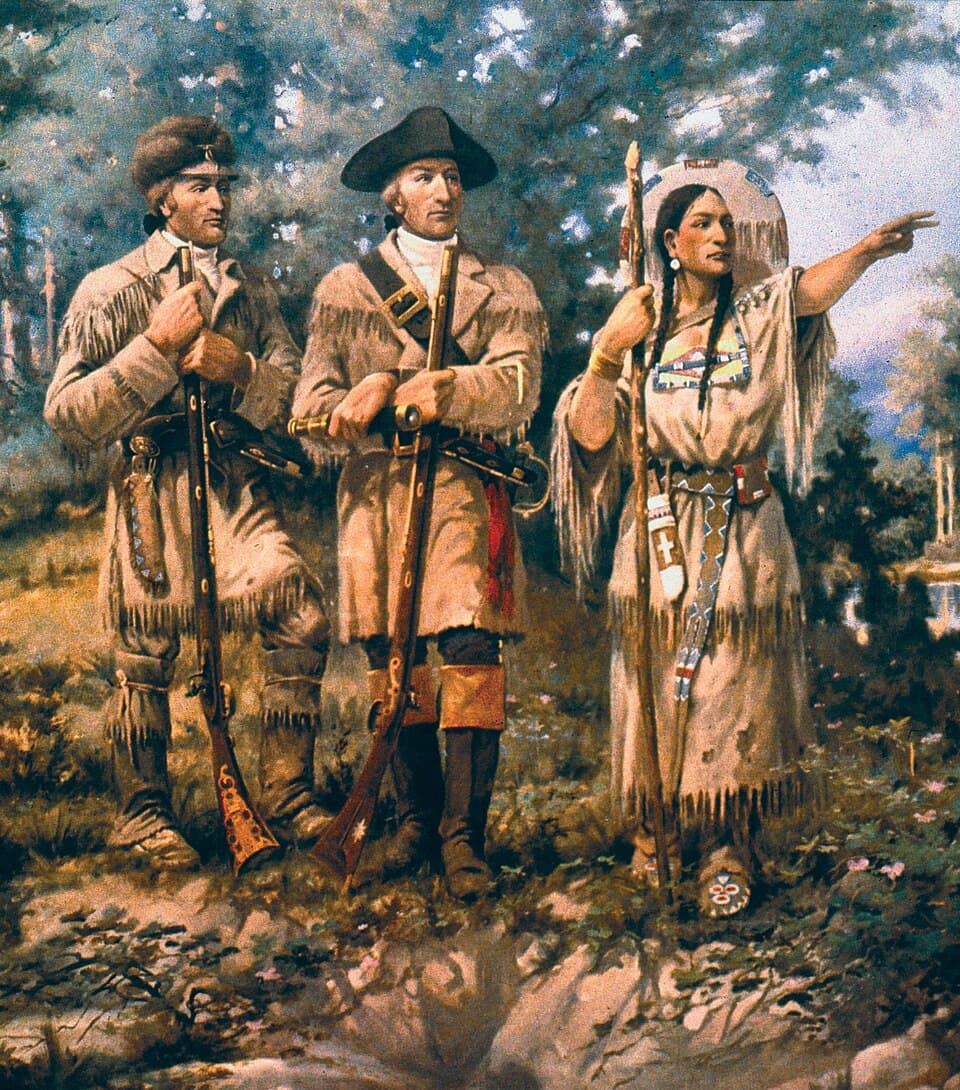
Shoshone · Exploration · Activism
Sacagawea
1788 – December 20, 1812
Early Life and Background
Sacagawea, also spelled Sacajawea or Sakakawea, was a young Lemhi Shoshone woman whose life became intertwined with one of the most famous expeditions in United States history, the Lewis and Clark Expedition (1804–1806). Most scholarly accounts place her birth around c.1788, near the Continental Divide in the region of the present‑day Idaho–Montana border, likely in what is now Lemhi County, Idaho. She belonged to the Agaidika, or “Salmon Eater,” band of the Northern Shoshone, a group whose seasonal movements and subsistence patterns were closely tied to salmon runs and mountain valleys.
As a child, Sacagawea would have grown up in a Shoshone cultural world that emphasized mobility, kinship networks, and intimate knowledge of landscapes and resources. Her early life was disrupted around c.1800, when Hidatsa raiders attacked her Shoshone band near the upper Salmon River. She was kidnapped and taken east to the Hidatsa‑Mandan villages near present‑day North Dakota. This forced relocation radically changed her circumstances: she moved from her Shoshone mountain homeland to agricultural riverine communities where she was an outsider and captive.
In the Hidatsa‑Mandan villages, Sacagawea was likely traded, sold, or gambled into the household of Toussaint Charbonneau, a French‑Canadian fur trader and interpreter. Sources differ on whether their relationship is best understood as marriage, enslavement, or a mix of both, reflecting the blurred lines of coercion and ownership in frontier societies. As a teenager, Sacagawea thus lived at the intersection of Native and Euro‑American worlds, speaking multiple languages and navigating complex power dynamics that would later shape her role in the Corps of Discovery.
Connection to the Lewis and Clark Expedition
In 1804, as Meriwether Lewis and William Clark overwintered at Fort Mandan in preparation for their journey west, they sought local interpreters to help communicate with Native nations they would encounter beyond the Missouri River. They engaged Toussaint Charbonneau as an interpreter and agreed that his young Shoshone wife, Sacagawea, would accompany him. At the time she was pregnant, and her participation in the expedition was not a formal appointment in the way the white male soldiers were enlisted, but rather an arrangement through her husband.
Despite this indirect entry, Sacagawea quickly became central to the captains’ plans. Her Shoshone origins positioned her as a potential intermediary with Shoshone groups in the Rockies, whom Lewis and Clark hoped would provide horses necessary to cross the mountains. Her presence with a baby would also serve, in their view, as a powerful visual signal of peaceful intent: a war party was unlikely to travel with a young woman and infant. In these ways, gender and kinship were strategically integrated into U.S. exploratory policy.
Joining the Corps of Discovery
On February 11, 1805, while the expedition wintered among the Mandan and Hidatsa, Sacagawea gave birth to her son, Jean‑Baptiste Charbonneau, at or near Fort Mandan. William Clark affectionately nicknamed the child “Pomp” or “Pompy”, a term that would later be commemorated in the naming of Pompeys Pillar. The fact that Sacagawea soon undertook a transcontinental journey with a newborn has become one of the most striking aspects of her story.
On April 7, 1805, Sacagawea, Charbonneau, and the infant Jean‑Baptiste departed Fort Mandan with Lewis and Clark as the Corps of Discovery pushed westward into largely unmapped territory. Sacagawea was the only woman traveling with the main party, a status repeatedly noted by historians. The expedition comprised U.S. Army personnel, civilian boatmen, and interpreters, charged by President Thomas Jefferson to explore the Louisiana Purchase, seek a viable route to the Pacific, and establish diplomatic relations with Native nations.
As the expedition moved up the Missouri River, Sacagawea’s daily work included preparing food, caring for her child, and assisting in communication when her languages were useful. Her presence itself—an Indigenous woman with a baby among armed men—often reassured Native communities that the party did not come primarily as a war expedition.
Major Contributions and Pivotal Incidents
One of the earliest documented instances of Sacagawea’s critical contribution occurred on May 14, 1805, when a pirogue carrying important equipment and documents capsized on the Missouri River. As the boat overturned and supplies spilled into the water, Sacagawea acted quickly to retrieve key items, including trade goods, scientific instruments, and, most importantly, some of Lewis and Clark’s journals and papers. Both captains later praised her calmness and diligence in their journals, crediting her with saving resources that could have been irretrievably lost.
The journals she helped rescue would become foundational sources for understanding the expedition. They contained detailed observations of geography, flora and fauna, and Native societies. Without them, the expedition’s scientific and political impact would have been substantially diminished. Sacagawea’s intervention thus helped safeguard not only the immediate mission but also the long‑term historical record.
To honor her actions, Lewis and Clark on May 20, 1805 named a tributary of the Musselshell River in present‑day Montana the Sacagawea River, also known as Bird Woman’s River. This naming was a rare recognition of an Indigenous woman in the official geography of U.S. exploration. It symbolized the captains’ esteem for her bravery and signaled that her contributions had earned a place on the emerging map of the West.
Interpreting and Mediating with Native Nations
As the expedition approached Shoshone territory, Sacagawea’s role as interpreter and cultural intermediary became increasingly important. In mid‑August 1805, the party encountered a band of Shoshone led by the chief Cameahwait. Sacagawea soon realized that Cameahwait was her brother, from whom she had been separated since her kidnapping years earlier. The emotional reunion on August 17, 1805 quickly took on diplomatic significance.
Sacagawea served as a key interpreter between Cameahwait, the Shoshone, and the captains. Communication moved through a chain: Sacagawea spoke Shoshone and Hidatsa; Charbonneau translated Hidatsa to French; another interpreter or the captains translated French to English. Despite this complexity, her ability to speak Shoshone and her family connection fostered trust. Through these negotiations, the expedition secured much‑needed horses and guides for crossing the Rocky Mountains. Historians widely agree that without Shoshone horses, the expedition’s plans could have failed or been drastically altered.
In addition to this celebrated episode, Sacagawea also participated in less dramatic but crucial daily acts of mediation. She could identify edible plants, explain local customs, and help the captains present themselves in ways that were more understandable or acceptable to Native hosts. Her presence as a young woman and mother softened the image of the expedition in many communities, mitigating fear and potential hostility.
Gender, Power, and Violence
While Sacagawea’s importance to the expedition is widely acknowledged, primary sources also reveal the vulnerabilities she faced as an Indigenous woman. On August 14, 1805, Meriwether Lewis recorded that Toussaint Charbonneau struck Sacagawea during a quarrel. Lewis noted that William Clark severely reprimanded Charbonneau for his violent conduct, an intervention that suggests the captains valued Sacagawea and were willing to defend her to some degree.
This brief journal entry provides a rare window into the intimate power dynamics within the party. Sacagawea had been taken from her people as a child and placed in Charbonneau’s household under conditions that likely involved coercion. Her legal and social status offered her little formal protection. The record of the assault underscores that, even while she was critical to the expedition’s diplomacy and survival, she remained exposed to domestic violence and exploitation. Modern scholars interpret this incident as part of a broader pattern whereby Native women on the frontier endured intersecting forms of oppression—colonial, patriarchal, and economic—even when their labor was indispensable to colonial ventures.
Geographical Knowledge and Route Planning
Although popular retellings sometimes exaggerate Sacagawea’s role as a universal "guide," historians emphasize specific, documented contributions to geographic decision‑making. One of the clearest examples occurred on July 13, 1806, during the expedition’s return journey.
At that time, Clark was exploring potential routes back toward the Missouri River. Sacagawea advised him to take a particular pass through the Rockies, drawing on her knowledge of the region associated with her Shoshone homelands. The route she indicated is now known as Bozeman Pass in Montana. Clark accepted her counsel and used this pass to traverse the mountains efficiently.
Bozeman Pass later became a significant corridor for travel and communication, including wagon routes and eventually railroads and highways. The documented fact that Sacagawea recommended this route has therefore become a cornerstone of arguments that she exercised meaningful agency in the expedition’s geography. It illustrates how Indigenous women’s local and regional knowledge—not just men’s military mapping—shaped the pathways of U.S. expansion.
Personal Life During and After the Expedition
Throughout the expedition, Sacagawea’s relationship with William Clark developed into a warm and enduring connection. Clark often referred to her and Jean‑Baptiste affectionately in his journals. On July 25, 1806, traveling along the Yellowstone River, Clark climbed a sandstone butte, carved his name into the rock, and named it “Pompy’s Tower” after Jean‑Baptiste’s nickname. The butte, now called Pompeys Pillar, is a national monument and one of the few physical sites where the expedition’s presence is still literally inscribed on the landscape.
After rejoining the main party and ultimately returning eastward, Sacagawea, Charbonneau, and their son left the expedition at the Mandan‑Hidatsa villages. Documentary evidence about her subsequent life is sparse. In 1812, she likely gave birth to a daughter, often called Lisette (Lizette) Charbonneau, though records are limited and her later fate is uncertain.
In 1813, William Clark signed adoption papers for Jean‑Baptiste and Lisette, formalizing his guardianship over Sacagawea’s children. Clark had previously expressed interest in educating Jean‑Baptiste in St. Louis, reflecting the captains’ belief that the boy, born in the midst of the expedition, deserved opportunities in the Euro‑American world they represented. The adoption underscores Clark’s continuing sense of responsibility and affection, and it shows how Sacagawea’s family remained linked to the expedition’s leadership even after her death.
Later Life and Death: Competing Traditions
Sacagawea’s death is a subject of ongoing historical debate. The most widely accepted account, based on documentary evidence, holds that she died on December 20, 1812 at Fort Manuel Lisa on the Missouri River, in what was then Dakota Territory. A fort record notes the death of one of Charbonneau’s wives from "putrid fever"—likely typhus—which historians generally identify as Sacagawea. Reference works such as Britannica and many scholarly studies adopt this date as her probable death.
However, alternative traditions exist. In the late nineteenth century, some researchers and Native oral histories identified an elderly woman on the Wind River Reservation in Wyoming, known as Porivo or “Bazil’s Mother”, as Sacagawea. This woman claimed in 1875 to be Sacagawea and reportedly died in 1884. These accounts suggest that Sacagawea may have left Charbonneau, returned to Shoshone country, and lived into old age among her people. The evidence for this identification is contested and largely circumstantial, relying on naming patterns and testimony rather than contemporary documentation.
Most modern historians consider the 1812 death at Fort Manuel Lisa more likely, but they acknowledge the uncertainties created by fragmentary records and the possibility of misidentified individuals. The coexistence of these narratives reflects broader tensions between colonial archives and Indigenous oral histories. Regardless of which date is accepted, Sacagawea’s life was short in years but immense in historical impact.
Legacy, Memory, and Honors
In the decades after her probable death, Sacagawea was not immediately elevated to national icon status. Her prominence grew substantially in the late nineteenth and early twentieth centuries. Authors, including Eva Emery Dye, wrote romanticized accounts of the Lewis and Clark Expedition that emphasized Sacagawea as a heroic guide and cultural bridge. These works blended fact and legend, often exaggerating her role but also bringing her story to a wide audience.
The National American Woman Suffrage Association adopted Sacagawea as a symbol of women’s strength, independence, and importance in the early twentieth century. Suffragists erected statues and plaques in her honor across the United States, arguing that her contributions to exploration demonstrated women’s capability and justified their demand for political rights. She became a "pan‑racial" icon—presented in ways that appealed to white reformers but also resonated with some Native communities seeking recognition of Indigenous women’s resilience.
Over time, more monuments, rivers, lakes, and mountain ranges have been named for Sacagawea than for any other American woman. Geographic features, state parks, schools, and civic institutions bear her name, including Sacajawea Historical State Park in Washington, which interprets her story as part of the broader Lewis and Clark narrative. Her image was further institutionalized when the U.S. Mint selected her to appear on the Golden Dollar coin introduced in 2000, depicting Sacagawea carrying Jean‑Baptiste. This coin circulated widely and cemented her place in everyday visual culture as a representative figure of Native women and national history.
Historians and educators have also emphasized her role in school curricula, children’s books, and public history projects. The U.S. National Park Service, National Women’s History Museum, and other organizations provide interpretive materials that seek to balance celebration of her achievements with honest discussion of the hardships and limited agency she experienced. Recent scholarship questions earlier heroic narratives and explores Sacagawea as a complex figure whose life illustrates both Indigenous women’s contributions to imperial projects and the violence of colonization.
Historical Significance and Interpretive Debates
Sacagawea’s historical significance rests on several intertwined dimensions:
- Exploration and Geography: She played an indispensable role in the Lewis and Clark Expedition, particularly in mediating with the Shoshone and advising on routes such as Bozeman Pass. Her actions helped the expedition achieve its objectives and informed American geographic knowledge of the West.
- Diplomacy and Cultural Mediation: As a multilingual Indigenous woman, she facilitated communication between Euro‑American explorers and Native nations, helping negotiate exchanges of horses, food, and information. Her presence with a baby served as a powerful symbol of peaceful intent.
- Women’s and Indigenous History: Sacagawea has become an emblem of Native women’s resilience and the often‑overlooked contributions women made to large‑scale historical processes, from exploration to empire‑building. Her story is central to discussions of gender, race, and power on the frontier.
- Myth and Memory: The gap between what is firmly documented and what has been mythologized about Sacagawea is itself a subject of study. Romanticized accounts, suffragist symbolism, and modern debates about her death illustrate how historical figures can be reinterpreted to serve changing political and cultural agendas.
Contemporary historians emphasize the need to distinguish between archival evidence and later embellishments while still recognizing the powerful role that stories about Sacagawea have played in movements for women’s rights and Indigenous recognition. She is now widely taught not only as a "guide" but as a young Shoshone woman whose life reveals the human complexities behind U.S. expansion—including kidnapping, enslavement, domestic violence, and constrained choices, alongside courage, skill, and adaptability.
Assessment of Her Place in Women’s History
In women’s‑history frameworks, Sacagawea is often described as one of the most memorialized women in the United States. Her visibility contrasts with the relative anonymity of many other Indigenous women who performed similar roles in trade, diplomacy, and local exploration but left fewer written traces. This disparity raises questions about why certain figures become iconic while others do not.
Sacagawea’s iconic status stems partly from the Lewis and Clark journals, which provide specific episodes that later authors could elevate; partly from suffragist efforts to find historical female exemplars of capability and independence; and partly from a broader fascination with the "frontier" in American culture. Her life has been used to symbolize both American expansionist heroism and, in more recent interpretations, the costs of that expansion to Native peoples. She has served as a symbol for women’s rights, Native pride, multicultural inclusion, and, at times, patriotic myth‑making.
For historians today, Sacagawea is significant not just for what she did, but for what her story reveals about the making of history itself: how limited records, competing oral traditions, and later political uses shape the narratives that enter textbooks and public monuments. As a young Shoshone woman who traversed the continent with a baby and helped the United States map and negotiate the West, she occupies a central place in any serious almanac of women’s history, representing both extraordinary individual contribution and the structural forces that framed Indigenous women’s lives in the early nineteenth century.
Dated achievements
9 indexed.
- Feb111805Exploration
Birth of son Jean-Baptiste "Pomp" Charbonneau
Sacagawea gave birth to her son Jean-Baptiste, nicknamed "Pomp" by William Clark, before departing with the Lewis and Clark Expedition.
View details Women's History - Sacagawea - Apr071805Exploration
Departs Fort Mandan with Lewis and Clark as only woman in Corps of Discovery
Sacagawea departed Fort Mandan with Lewis and Clark, making her the only woman in the Corps of Discovery.