← All women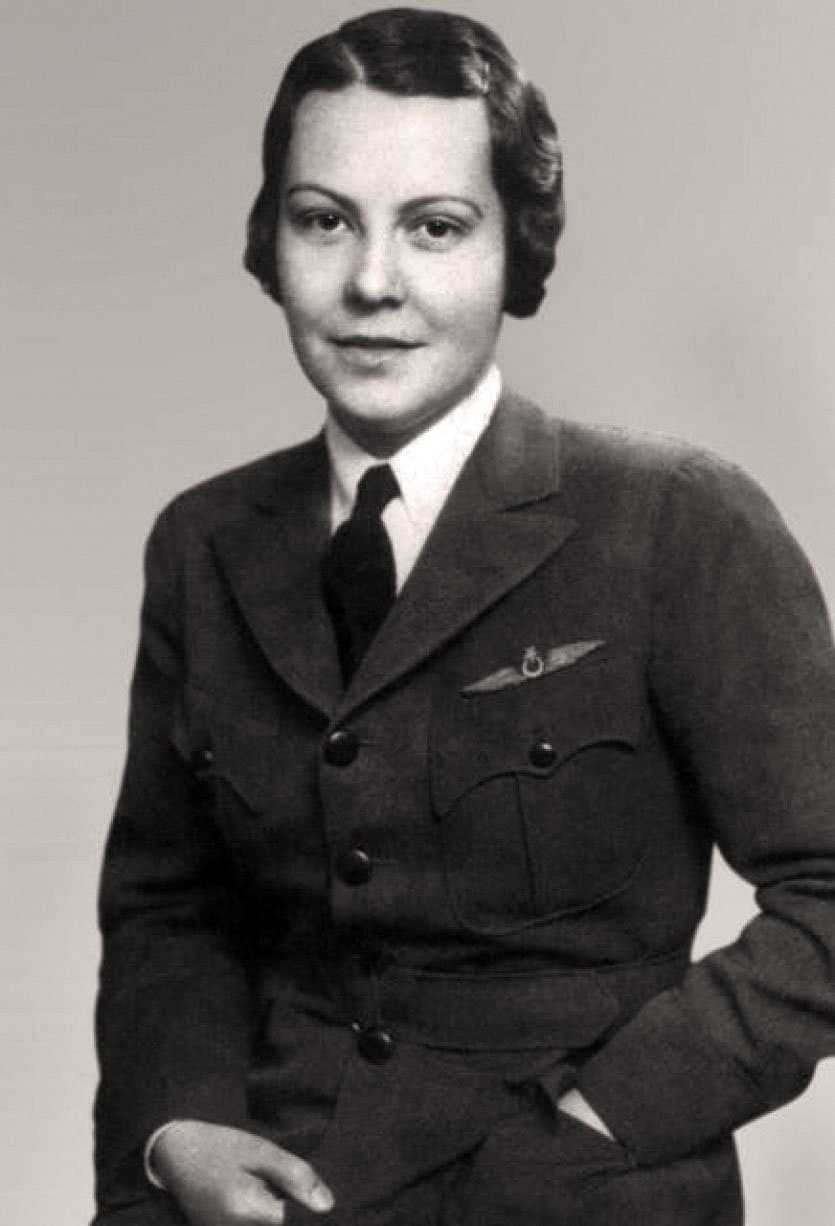
Turkish · Aviation
Sabiha Gokcen
March 22, 1913 – March 22, 2001
Early life and background
Sabiha Gökçen was born on 22 March 1913 in Bursa, then part of the Hüdavendigâr Vilayet of the Ottoman Empire.[1][4][13] She was the sixth child of Mustafa İzzet Bey and Hayriye Hanım, and spent her early childhood in a society undergoing profound political upheaval as the Ottoman Empire moved toward collapse and war.[4] Multiple biographical sources indicate that she was orphaned at a young age and grew up in poverty, cared for by older siblings.[3][12] Her childhood coincided with the Balkan Wars, World War I, and the Turkish War of Independence, events that shaped the emerging national consciousness of the era.
Accounts from Turkish and international biographies note that she attended elementary school in Bursa during the years of conflict.[12] Her life changed dramatically in the mid-1920s when she encountered Mustafa Kemal Atatürk, the founder and first president of the Republic of Türkiye. During a visit Atatürk made to Bursa, often dated around 1925, Gökçen reportedly approached him to ask for assistance in continuing her education.[4][12][16] Moved by her determination, Atatürk adopted her as one of his manevi evlatlar, or foster children; she became one of eight or nine adopted children in his household, depending on the source.[5][13]
Following her adoption, Gökçen moved to Ankara, the new republican capital, to live with Atatürk’s family.[12] She received her early education at Çankaya Primary School and later studied at Üsküdar Girls’ College (also associated with Üsküdar American Academy) in Istanbul.[4][11] These institutions, emblematic of the secular and modernizing direction of the republic, exposed her to formal education and a social environment far removed from her impoverished childhood. Atatürk gave her the surname “Gökçen”, often translated as “belonging to the sky” or “of the heavens,” a name that would prove prophetic.[4][16]
Career beginnings and development
Gökçen’s path into aviation began in the mid-1930s. On 5 May 1935, she attended the opening ceremony of the Türkkuşu (Turkishbird) Flight School, established by the Turkish Aeronautical Association to promote civil aviation.[4][6][10] Atatürk, who saw aviation as a symbol of modernity and national strength, encouraged her interest, and she enrolled as Türkkuşu’s first female trainee.[6][10] This decision placed her at the forefront of efforts to integrate women into technical and aeronautical fields in the new republic.
At Türkkuşu, Gökçen initially trained in gliding. She quickly distinguished herself, earning advanced glider pilot licences and instructor qualifications in Ankara.[4][6] Later in 1935, she was selected by the Turkish Aeronautical Association as part of the first group of students sent abroad for specialized training. On 10 July 1935, she began studies at the Koktebel Higher Glider School in the Soviet Union, where she trained alongside seven male Turkish pilots and received a glider instructor diploma.[6][12][14] This experience exposed her to advanced aeronautical techniques and marked her emergence as an internationally trained aviation professional.
Returning to Türkiye, Gökçen continued to expand her skills. On 25 February 1936, she completed her first powered flight, transitioning from glider aviation to engine-driven aircraft.[6] This was a critical technical step that enabled her to move into more demanding training environments. In 1936, supported by Atatürk and the Turkish Aeronautical Association, she entered the Eskişehir Military Aviation School, where she trained on fighter and bomber aircraft.[1][4][8] Sources note that she became one of the first Turkish women to earn a pilot’s licence and that her missions at Eskişehir led to her recognition as the world’s first female combat/fighter pilot.[1][3][8]
Combat missions and major accomplishments
By the mid-1930s, Gökçen had progressed from civil glider pilot to military trainee on powered aircraft. In 1936, she flew training and operational missions in fighter and bomber aircraft with the Eskişehir school, and contemporary and later sources credit her as the world’s first female combat pilot at around age 23.[1][2][6] Her flight record would ultimately reach approximately 8,000 hours, including participation in 32 different military operations, according to multiple encyclopedic and aviation sources.[1][2][5][18]
In 1937, Gökçen completed her formal military pilot training at the Eskişehir Air School, becoming Türkiye’s first female military pilot.[6][10] That same year, she took part in the Dersim military operations in eastern Anatolia, a campaign aimed at suppressing an uprising in the Dersim region. Turkish and international aviation histories report that she flew bomber missions during this campaign, piloting aircraft such as the Breguet XIV, and that these missions are central to her recognition by Guinness World Records as the first female air force combat/fighter pilot.[1][5][10][13]
Her role in Dersim is historically significant and contested. From an aviation perspective, it established her as the first documented woman to fly combat sorties in a national military operation.[1][5][10] At the same time, later historians and commentators have noted the heavy human toll of the campaign and have debated the ethical implications of celebrating combat participation in such operations. Nonetheless, the documented fact of her bomber missions remains a key element of her profile in works on women’s military history and aviation.
Also in 1937, Gökçen received the Turkish Aeronautical Association’s "Number 9 Jeweled (Distinguished) Medal", awarded for her performance during the Dersim missions and recognizing her as the first female pilot trained by the association.[4][12][16] This medal marked her as one of a small group of elite Turkish aviators. In the following year, 1938, she became chief trainer of the Türkkuşu Flight School, according to aviation histories, imparting her knowledge to new generations of pilots.[5]
Over the course of her flying career, Gökçen reportedly flew more than 22 different aircraft types, primarily light bombers and acrobatic aircraft.[4][18] She amassed around 8,000 flight hours, of which 32 were combat or combat-oriented operations.[2][18] These numbers underline the breadth of her technical experience in both civil and military aviation at a time when few women anywhere in the world had similar opportunities.
Awards, honors, and recognition
Gökçen’s pioneering achievements brought her both national and international recognition. Domestically, the Turkish Aeronautical Association’s "Number 9 Jeweled Medal" in 1937 was among her earliest major honors, marking her as the first female pilot trained and decorated by the association.[4][12][16] She also held senior instructional positions, such as chief trainer at Türkkuşu, and was widely respected within Turkish aviation circles.
Internationally, one of her most notable honors came in 1991, when she received the Gold Medal of the Fédération Aéronautique Internationale (FAI), the International Aviation Federation.[4] This decoration is awarded to individuals who have made outstanding contributions to the development of aeronautics, placing her among a select group of globally recognized aviators.
In 1996, Guinness World Records listed her as the first female combat pilot, codifying in a widely consulted reference work the narrative that had circulated in Turkish sources since the 1930s.[1][2][15] That same year, the United States Air Force selected her as the only female pilot featured on its poster titled "The 20 Greatest Aviators in History".[1][5][17] This poster brought together notable aviators from different eras and nations, and her inclusion highlighted her enduring international reputation.
Another major form of recognition was spatial and symbolic rather than a medal: in 2001, Istanbul’s second international airport was named "Istanbul Sabiha Gökçen International Airport" in her honor.[1][4][18] The airport, serving the Asian side of Istanbul, functions as a daily monument to her legacy, with millions of passengers encountering her name. Official airport and corporate biographies emphasize her role as the world’s first female combat pilot and recount her life story as part of the facility’s identity.[4][9]
Personal life
The available sources focus largely on Gökçen’s professional achievements and her relationship to Atatürk’s household, providing limited detail on her private life. She is consistently described as one of Atatürk’s adopted children, raised in his domestic circle alongside other foster sons and daughters.[5][13] Through this connection, she gained access to education and social networks that would have been difficult to obtain given her orphaned background.
Biographical entries generally do not detail marriage, children, or extensive personal relationships, suggesting either that such aspects were not widely publicized or that she remained single and devoted much of her time to her aviation career and later instructional roles.[1][8] The emphasis in most accounts is on her professional identity as a pilot and on her symbolic role as an embodiment of Atatürk’s reforms, rather than on domestic life.
Her personal identity as a woman in a masculinized profession, however, is central to the way she is remembered. Turkish and international narratives highlight that she navigated environments—military academies, air bases, and combat operations—where she was often the only woman, thereby bearing the weight of representation for women in aviation.[5][12][17] This dual role as individual professional and emblem of women’s advancement shapes her historical profile.
Legacy and historical impact
Gökçen’s legacy is multifaceted. In the field of aviation, she is widely remembered as the world’s first female combat/fighter pilot and Türkiye’s first female military pilot, achievements affirmed by Turkish institutional sources and by international references such as Guinness World Records.[1][2][3][8] Her career demonstrated that women could master complex technical skills and perform in frontline military roles long before most air forces formally opened combat cockpits to women.
Within Turkish history, she stands as a symbol of the early republic’s modernization and secularization policies, especially its efforts to expand opportunities for women in education and professional life. Her adoption by Atatürk, schooling in Ankara and Istanbul, and placement in high-profile technical institutions illustrate the ways state power could be used to promote individual trajectories that challenged traditional gender norms.[4][11][16]
Internationally, her story features in museum exhibits, women-in-aviation histories, and digital projects such as the Museum of Women Pilots and various "centennial of women pilots" initiatives, which present her as a pioneering figure in the global history of women’s flight.[18][6] She is frequently cited alongside other early women aviators, such as Marie Marvingt and pioneering Turkish civil pilots, in discussions of how women entered and transformed aviation.
At the same time, contemporary scholars and commentators have debated aspects of her legacy, particularly her participation in the Dersim campaign. While aviation narratives focus on technical achievement, some historians and journalists point to the campaign’s human cost and question the uncritical celebration of combat roles in such operations. This tension illustrates broader issues in how women’s military history intersects with national memory and the politics of commemoration.
Nonetheless, the long-standing honoring of Gökçen—through medals, international recognition, and the naming of a major airport—indicates that she remains a powerful symbol of women’s capacity to break barriers in technical and military fields. Her life continues to feature in educational materials, documentaries, and media profiles, inspiring new generations of women interested in aviation and aerospace.[15][17]
Later life and death
After her most active years as a combat and training pilot, Gökçen remained connected to aviation and public life. She served as an instructor and later as a respected elder figure in Turkish aeronautics, sharing her experience with younger pilots and participating in commemorative events.[4][6] The award of the FAI Gold Medal in 1991 and the international recognition she received in the 1990s suggest that she continued to be engaged with aviation organizations and public ceremonies late into life.[4][1]
She spent her later years primarily in Ankara, close to the institutions—governmental and military—that had shaped her career. During these years, her narrative as Atatürk’s adopted daughter and as the world’s first female combat pilot was solidified in Turkish public memory. Airport biographies, encyclopedia entries, and media profiles from this period present a coherent image of her as a heroic figure of the early republic.[4][8][16]
Sabiha Gökçen died on 22 March 2001 in Ankara, at the age of 88.[1][4][5][13] Notably, her death occurred on the same calendar date as her birth, 22 March, a coincidence frequently mentioned in biographical sketches.[6] She was buried with honors, and her passing prompted renewed reflection on her role in Turkish history and in the global story of women in aviation.
In the same year, Istanbul’s second international airport was named Istanbul Sabiha Gökçen International Airport, ensuring that her name would be encountered daily by travelers and citizens.[1][4][18] Since her death, she has remained a reference point in discussions of women’s participation in combat and in the military, and her life story continues to be used in educational and commemorative contexts to illustrate both the achievements and the complexities of women’s entry into historically male-dominated fields.
Dated achievements
10 indexed.
- Mar221913Aviation
Birth in Bursa
Sabiha Gökçen was born in Bursa, Ottoman Empire, on March 22, 1913.
View details Sabiha Gökçen - Wikipedia - May051935Aviation
First female trainee at Türkkuşu Flight School
In 1935, Sabiha Gökçen became the first female trainee at Türkkuşu Flight School.
View details