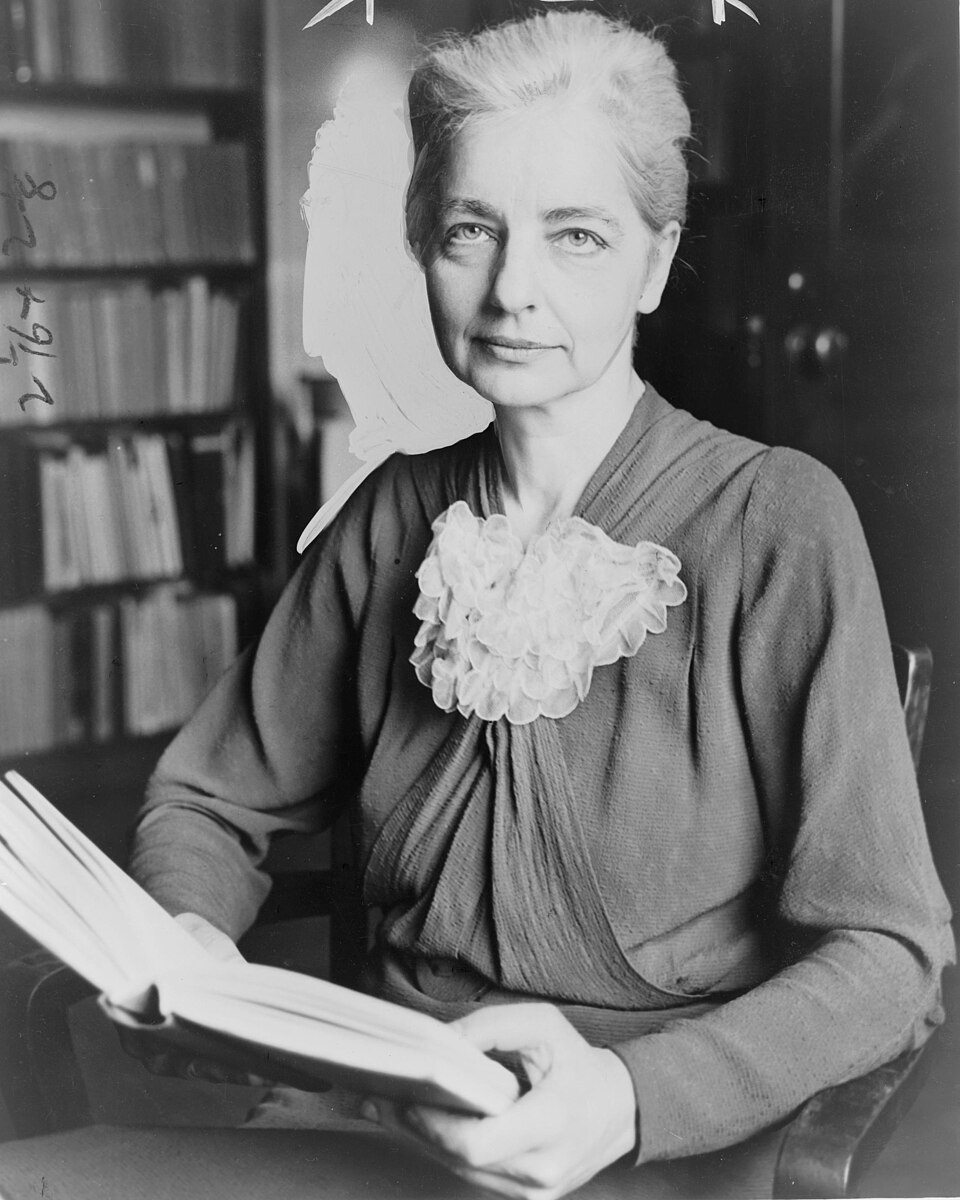
Ruth Fulton (later Benedict) was born in New York City on June 5, 1887, later becoming one of the most influential American anthropologists of the 20th century.
Ruth Fulton was born on June 5, 1887, in New York City, to Frederick Fulton, a homeopathic physician, and Bertrice Shattuck Fulton, a schoolteacher and librarian. Her father died when she was very young, an early loss that profoundly shaped her introspective and often melancholic temperament. She was raised partly on family farms in upstate New York and later in Missouri, Ohio, and Minnesota as her mother took various teaching positions.
As a child, Ruth suffered from partial deafness following a bout of measles, which contributed to her sense of being an outsider—an experience she later drew upon in her anthropological work exploring cultural difference and the concept of the 'abnormal' within different societal frameworks. She was an academically gifted student, eventually attending Vassar College on scholarship, graduating in 1909 with a degree in English literature.
This birth marks the beginning of a life that would fundamentally reshape American anthropology. Benedict would go on to challenge scientific racism, pioneer the culture-and-personality school of thought, and mentor a generation of anthropologists including Margaret Mead. Her early experiences of displacement, loss, and perceived difference gave her a lifelong sensitivity to questions of normalcy, deviance, and cultural relativism that became the hallmark of her scholarly contributions.
Images