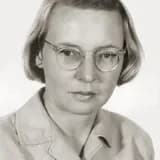
Payne-Scott's observations of solar radio bursts in 1944 laid groundwork for the new field of radio astronomy in Australia.
During the mid-1940s, Ruby Payne-Scott worked with the CSIR (Council for Scientific and Industrial Research) Radiophysics Laboratory in Sydney, initially engaged in radar research for wartime purposes. This wartime radar expertise was quickly repurposed after the conflict to study solar radio emissions, an entirely new scientific frontier.
On 5 March 1944, Payne-Scott, working alongside colleagues including Joseph Pawsey and Lindsay McCready, recorded significant solar radio noise bursts using converted radar equipment. This work would form part of the foundational observations that led to the seminal 1947 paper identifying different types of solar radio bursts, work that essentially created the discipline of solar radio astronomy.
This was a period when the connection between solar activity and radio emissions was barely understood, and Payne-Scott's meticulous observational techniques and her development of novel instrumental and analytical methods, including early forms of what would become known as astronomical interferometry, were critical to establishing credibility for this nascent field.
Her contributions during this period were pioneering not only scientifically but also because she was one of the very few women conducting frontline physics research in Australia, let alone leading observational campaigns in an entirely new area of astrophysics. Her work here directly contributed to Australia's later prominence in radio astronomy.